
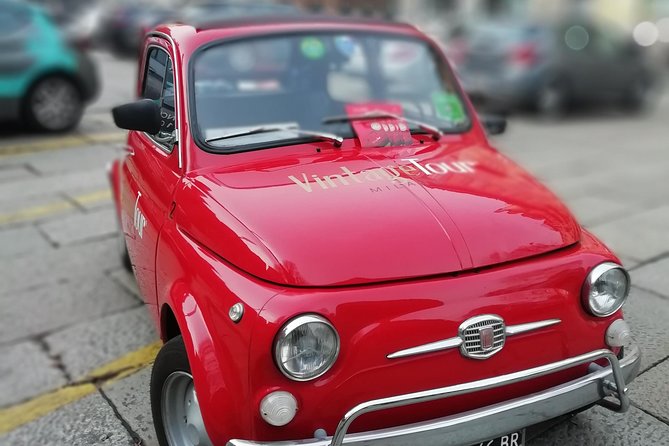
Reviewed · VESPA & FIAT 500 TOURS
2 hour Vintage Fiat 500 Central City Tour in Milan
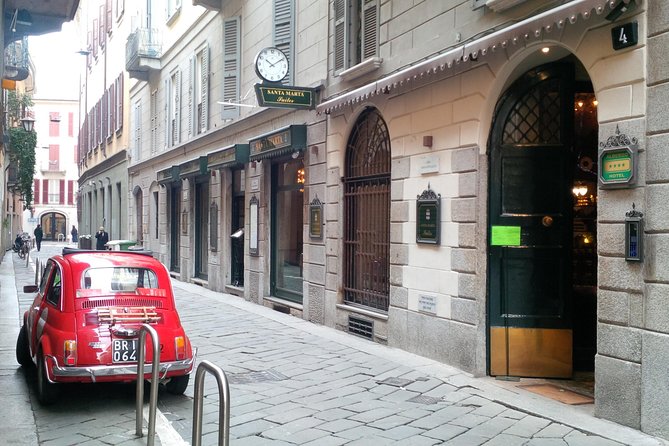
A Fiat 500 is Milan on wheels. You get live commentary while a pro chauffeur threads traffic, plus the hotel pickup option saves you time. It is also a tiny car with no AC, and seating can feel tight in summer or for taller passengers.
I like that the ride is private in practice, not a cattle-call shuffle. Many guides, including Luca, are praised for strong English and for making the history feel like street-level stories, with time for photo stops and personal questions.
At about 2 hours, it is a fast way to build your bearings before you walk the city on your own, but you should pick your expectations: this is not a long, museum-style day. Some stops are more about seeing from close range and hearing context, then getting in and out efficiently.
In This Review
- Key Things I’d Prioritize Before You Go
- Entering Milan in a Classic Fiat 500
- Price and Value for a Tiny, Private Ride
- Your 2-Hour Route, Stop by Stop (and How Stops Actually Feel)
- The Art and Design District: Milan’s Modern Face
- The Duke Ludovico Sforza Residence Area and Sala delle Asse
- Santa Maria delle Grazie: Dominicans, Late Gothic, and The Last Supper Context
- San Maurizio al Monastero Maggiore: The Sistine Chapel of Milan
- Roman Imperial Palace Ruins Near Marchesi 1824
- Banca d’Italia Palace: 1907 Architecture With Roman Inspiration
- The Pinacoteca and the Codex Atlanticus Drawings
- An Affordable Shopping Street: Window Shopping With Purpose
- Milan’s First Hospital Site, Founded by Francesco Sforza
- Duomo di Milano From Via Larga: Size, History, and Layers
- Comfort, Photos, and the Honest Reality of the Fiat 500
- What Makes the Guide Matter, Especially in 2 Hours
- Who Should Book This Tour (and Who Might Skip It)
- FAQ
- Is this tour private and how many people can ride?
- Do you get hotel pickup in Milan?
- Where does the tour start and end?
- Is the tour offered in English?
- Does the Fiat 500 have air conditioning and seat belts?
- Can kids join the tour?
- Do I need a passport on the day of travel?
- Should You Book the 2-Hour Vintage Fiat 500 Central City Tour?
Key Things I’d Prioritize Before You Go
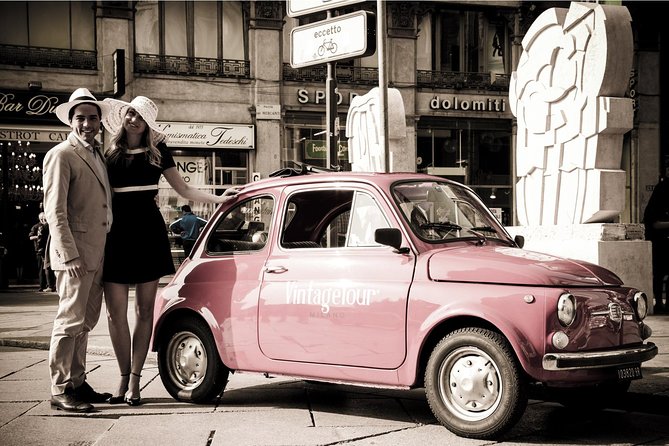
- A real private car experience: your group rides together in the Classic Fiat 500, not a big shared fleet.
- Hotel pickup in Zone 1 only: you avoid the hassle of getting to Via Palestro yourself.
- Two stops of your choice: you can steer the walk time toward what you care about most.
- Big Leonardo and Duomo context: you cover key sites tied to Leonardo da Vinci and the Cathedral area.
- A photo magnet: the Fiat 500 tends to draw smiles, waves, and plenty of roadside attention.
- Comfort planning matters: no AC, no seat belts, and very compact spacing, especially for three people.
Entering Milan in a Classic Fiat 500
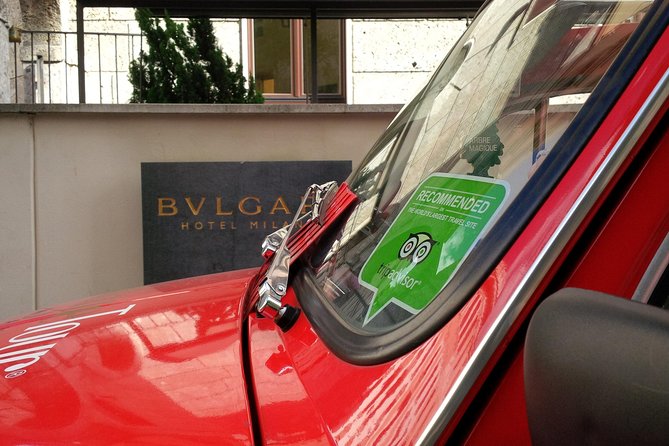
This tour is built around a simple idea: Milan is best understood when you can move fast enough to cover ground, but slow enough to notice details. The vintage Fiat 500 is perfect for that. It is small enough to feel like you are slipping through the city with locals, yet your driver-guide handles the tricky parts like traffic and route timing.
What makes it work is the human side. A good driver-guide does more than point at landmarks. The best part here is the way the commentary turns place names into a story you can remember. Luca and other guides are repeatedly mentioned for being easy to talk to, with English that lands clearly, plus entertaining explanations that make you want to look twice at buildings you might otherwise speed past.
More Vespa and Fiat 500 drives in Milan:
- Florence Vespa Tour: Tuscan Hills and Italian Cuisine
★ 5.0 · 4,019 reviews - Vespa Sidecar Tour By Night with Pickup
★ 5.0 · 1,803 reviews - Rome Morning Vespa Sidecar Tour in Rome with Cappuccino
★ 5.0 · 1,771 reviews
Price and Value for a Tiny, Private Ride
It costs $362.95 per group (up to 3) for about 2 hours. That sounds steep if you compare it to a bus ticket. But compare it to what you actually get in Milan traffic: private driving time, live English commentary, and access to areas and viewpoints you might not reach quickly on foot.
For couples, this is often a high value match because you get a curated overview without coordinating schedules with other travelers. For small families or friend groups of three, it can still make sense if you are prioritizing “see a lot fast” and “get local context.” Just be honest with yourself about the vehicle fit. The car is described as tiny across multiple reviews, and seating can be genuinely awkward for bigger or taller people, especially in the back.
Here is the practical takeaway: this is not a comfortable lounge ride. It is a fun, high-style way to get oriented, learn fast, and decide what to do next.
Your 2-Hour Route, Stop by Stop (and How Stops Actually Feel)
Your tour includes live commentary onboard and a route that can shift based on traffic, accidents, or city guidance. In other words, expect flexibility. The schedule is designed so you can get the highlights, then add up to two walking stops of your choice along the way.
The sightseeing is shaped around major Milan anchors and a few “how did that happen here?” surprises.
The Art and Design District: Milan’s Modern Face
You start with an area framed as the art and design district. Even if you are not shopping for art, this stop is useful because it sets tone. Milan can feel like fashion and architecture are constantly on display, and this is your cue to pay attention to storefronts, facades, and street layout.
Because your time is limited, think of this part as a mood-setter. You are not trying to do a deep gallery visit here unless your chosen stops align that way. Use it to get your rhythm, take quick photos, and get your bearings.
A few more Milan options to weigh
- Milan: Cathedral and Duomo’s Terraces Entrance Ticket
★ 4.6 · 61,054 reviews - Milan: City Sightseeing Hop-On Hop-Off Bus with Audio Guide
★ 4.0 · 6,256 reviews - Milan: Milan Cathedral Direct Entrance – Terrace Excluded
★ 4.5 · 5,782 reviews - Milan: Guided Walking Tour & Last Supper Visit with Ticket
★ 4.7 · 5,409 reviews
The Duke Ludovico Sforza Residence Area and Sala delle Asse
Next you move into a setting tied to Renaissance power. This was the residence of Milan’s Duke Ludovico Sforza, and Leonardo da Vinci worked there first as a military and civil engineer, later as an artist. The centerpiece is the frescoed ceiling of Sala delle Asse, where naturalistic depiction meets strong symbolism.
Why this matters: it is a reminder that Leonardo is not just a painter you associate with one famous work. In Milan, he shows up as a thinker working across engineering, politics, and art. If you have the curiosity for that, this stop tends to click.
Possible consideration: depending on how the day’s route plays out, you may not get a long, quiet, linger-and-read experience. This is more like seeing the context and absorbing the story quickly.
Santa Maria delle Grazie: Dominicans, Late Gothic, and The Last Supper Context
Santa Maria delle Grazie is one of Milan’s standout churches, built by the Dominicans from 1463 to 1482, and known for late Gothic style. Leonardo da Vinci painted The Last Supper in the refectory of the monks between 1495 and 1498.
This stop is the “big-brain” moment of the tour. You see the religious architecture and hear how it connects directly to Leonardo’s most famous mural. Even if you are not focused on the interior details, the way your guide frames the building’s purpose and timeline helps you understand why the site is so central.
A practical note: this kind of landmark often draws crowds outside your tour window. Your job is to stay flexible and keep moving when your driver signals it is time, so you do not feel rushed later.
San Maurizio al Monastero Maggiore: The Sistine Chapel of Milan
Then you get one of those Milan surprises people remember. San Maurizio al Monastero Maggiore is described as a Renaissance church erected in 1503 based on a project by Giovanni Giacomo Dolcebuono. It hosts frescoes and pictures and has been nicknamed the Sistine Chapel of Milan.
This is the stop where the tour earns its “special” factor. It is not just a familiar headline name. It gives you an artistic payoff that feels different from the Duomo rhythm and the grand, dramatic church impressions.
A consideration: because your car ride is compact and your overall time is short, your viewing time may be brief. If you want maximum time for photos and details inside, try to choose this as one of your two stop picks when possible.
Roman Imperial Palace Ruins Near Marchesi 1824
After the Renaissance art stops, you get history layered in a different direction. Behind the Marchesi 1824 pastry shop on Corso Magenta, you can spot the ruins of a Roman Imperial Palace where Emperor Maximian resided around 286 A.D.
This stop works because it changes the mental map. Milan is not one era piled on another. It is a constant redevelopment story. Your guide’s commentary helps you notice the idea that modern streets sit over older power.
Practical tip: keep an eye out for your guide’s exact reference points. With ruins, the details can be small, and the fast timing matters.
Banca d’Italia Palace: 1907 Architecture With Roman Inspiration
Another great “wait, that is important?” moment is the Banca d’Italia palace built in 1907, designed by Luigi Broggi and Cesare Nava, inspired by architecture of the Vittoriano in Rome.
This stop is for people who like architecture that is not obvious at first glance. Your guide can make you see how institutions signal power through design, even in the early 1900s.
Possible drawback: if you prefer pure sightseeing landmarks over architecture commentary, you might want to mentally file this as “short and context-driven.” It can still be worth it, especially if you like learning how Milan evolved beyond the classics.
The Pinacoteca and the Codex Atlanticus Drawings
Next comes the Pinacoteca and an exhibition of drawings from the Codex Atlanticus, described as the biggest collection of Leonardo’s drawings.
Even when time is short, this kind of stop can shift how you think about Leonardo. It reinforces that he was constantly drawing, planning, and studying. It is not only about finished paintings.
Consideration: because this is tied to an exhibition context, your actual viewing time can depend on how your route and chosen stops align. If you want this to be a major focus, plan your day around it, not just as a quick glance.
An Affordable Shopping Street: Window Shopping With Purpose
You also pass through an affordable shopping street. That can sound generic until you remember the purpose of this tour. Your guide can point you toward areas where you will actually have options, and you get a quick “what is around here” scan before you decide where to spend real shopping time.
I like shopping-street stops on city tours when the guide gives practical pointers, like where you can realistically browse without wasting time crossing the whole city. This tour is built for exactly that kind of orientation.
Milan’s First Hospital Site, Founded by Francesco Sforza
A key stop is Milan’s first hospital, founded in 1456 by Francesco Sforza and now the main site of the State University.
This is one of the most interesting storyline pivots in the itinerary. You shift from art and religious institutions into public life and care. Hearing that this modern educational space has roots as a hospital changes how you interpret the feel of the streets around it.
Practical note: if your guide has you viewing from outside or at a quick pace, you will still get the historical anchor. For deeper investigation, you will likely want to come back later on your own.
Duomo di Milano From Via Larga: Size, History, and Layers
The tour finishes with the Cathedral area from via Larga. The Duomo di Milano is described with impressive dimensions, and it is framed as one of the largest Catholic churches in the world. The site has deep layers: it was previously occupied by the Basilica of Sant’Ambrogio, and in 838 the Basilica of Santa Tecla was founded next to the first church. In 1075, fire devastated both buildings. After centuries, the Duomo was established in the same location. Construction began in 1386.
Why this portion matters: it gives you a “you are here” moment without trying to turn the day into a full cathedral visit. From a distance, you can take in scale, then decide if you want to do more later.
A practical consideration: the best views depend on lighting and crowds. Since your route can shift for traffic, treat Duomo time as your chance to frame the Cathedral, then plan your in-depth visit for another time slot.
Comfort, Photos, and the Honest Reality of the Fiat 500
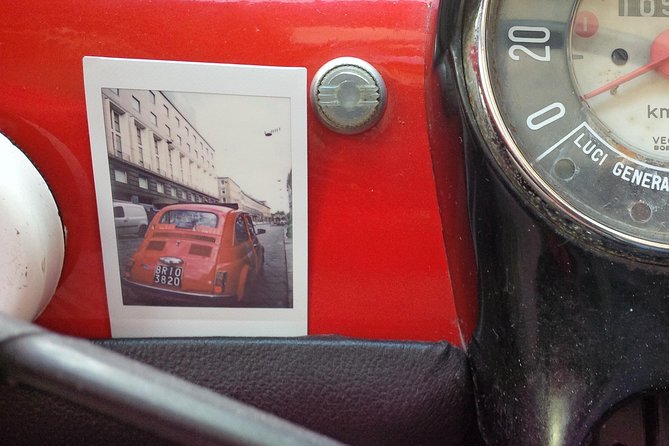
This is the part people either love immediately or need to plan for. The Classic Fiat 500 is described repeatedly as tiny. Several reviews point out limited legroom, especially for taller passengers or when three people are onboard. One review even mentions that a passenger ended up sitting sideways to make it work.
So here is how I’d plan it in real terms:
- If you are tall, test the fit in your mind. The back seat can feel especially tight.
- If you travel in summer, remember there is no AC. Dress light and be ready for warm air.
- Seat belts and air bags are not provided, so keep your posture and movement minimal while the car is moving, and hold on where needed.
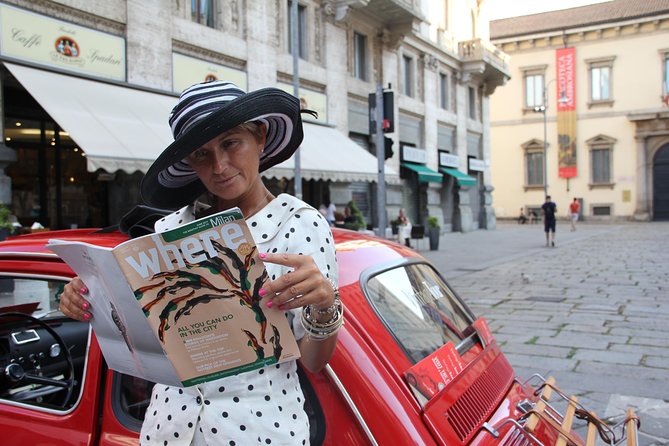
The good news is that the Fiat creates a fun, playful vibe. People waved and took pictures as the car moved. That can be a genuine highlight, not a distraction, if you are open to attention.
Also, some reviews mention an open moonroof style experience. Even if your exact car differs, assume you might get more air and sun than in a modern vehicle. Bring sunglasses and sunscreen if you are going midday.
What Makes the Guide Matter, Especially in 2 Hours
The real star of this tour is the driver-guide relationship. People praise Luca for being friendly, conversational, and quick with stories tied to the places you see. They also mention strong English, which is huge for tours in Milan where locals speak fast and dialects can show up.
You should also know that the best guides actively manage your time. One review praises extra time for walking around a castle area. Another mentions that the guide waited while someone visited a sight on foot. You do not just ride, you get a flexible pace.
So ask yourself: do you want facts, or do you want context? This tour is designed for context. If you like being told why Milan looks the way it does, you will likely enjoy it.
Who Should Book This Tour (and Who Might Skip It)
This tour fits you well if:
- You are in Milan for a short time and want a fast overview across eras.
- You love Leonardo da Vinci context, especially around Santa Maria delle Grazie and related sites.
- You want a private experience that feels personal, not like a crowded bus tour.
- You care about getting local tips for where to eat or what to do next after your ride.
You might skip it if:
- Comfort is your top priority and you cannot tolerate tight seating.
- You hate the idea of no AC in warm weather.
- You want a long, museum-heavy itinerary where you spend hours inside specific sites.
FAQ
Is this tour private and how many people can ride?
Yes. It is a private tour, and the car holds up to 3 people per booking.
Do you get hotel pickup in Milan?
Hotel pickup is offered for selected hotels in Zone 1 only. If you are outside that area, you may need to make your own way to the meeting point.
Where does the tour start and end?
The start and end point is Via Palestro, 16, 20121 Milano MI, Italy. The activity ends back at the meeting point.
Is the tour offered in English?
Yes. It is offered in English, with live commentary onboard.
Does the Fiat 500 have air conditioning and seat belts?
No. The car does not have AC, and it has no seat belts. The tour also notes there are no air bags.
Can kids join the tour?
Children must be accompanied by an adult.
Do I need a passport on the day of travel?
Yes. A current valid passport is required on the day of travel.
Should You Book the 2-Hour Vintage Fiat 500 Central City Tour?
I’d book it if you want Milan in fast motion, with real stories and a sense of getting your bearings. The mix of Renaissance anchors tied to Leonardo, major church context, plus quick hits of Roman-era traces and even an architecture stop makes it an efficient intro. The private setup and the chance to make two stops of your choice also lets you shape the tour around what you care about.
But choose carefully if you are sensitive to tight seating or warm interiors. This is a fun throwback ride, not a modern comfort bubble. If you can handle that tradeoff, this is exactly the kind of experience that makes a short Milan trip feel bigger.
Latest reviews around Milan
- The secrets to Learn Fresh Pasta & Gelato in a Glam Home★ 5.0 · 150 reviews
- Verona and Lake Garda Day Trip from Milan★ 4.5 · 214 reviews
- Venice and Verona Full Day Tour by Train from Milan★ 4.5 · 131 reviews
- Venice Day Trip from Milan with Guided City Tour★ 4.0 · 383 reviews
- Transfer Milan City Centre – Bergamo Airport★ 4.5 · 975 reviews
- Small-Group Lake Como & Lugano by Swiss Train + Boat Cruise★ 5.0 · 1,084 reviews
- The Last Supper and Sforza Castle Tour – group tour★ 4.5 · 151 reviews
- Full-day Skip-The-Line Milan, The Last Supper and Duomo Cathedral★ 5.0 · 293 reviews
Vespa & Fiat 500 Tours, compared.
Florence Vespa Tour: Tuscan Hills and Italian Cuisine
Read our review →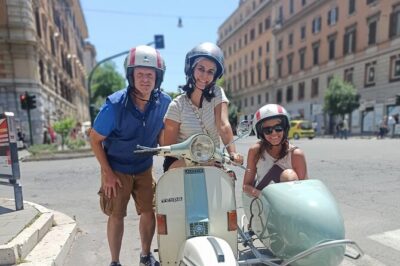
Rome Morning Vespa Sidecar Tour in Rome with Cappuccino
Read our review →
Chianti Vespa Tour with Lunch from Florence & E-car Option
Read our review →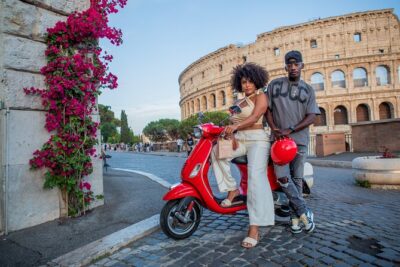
Rome Vespa Scooter Tour with Professional Photographer
Read our review →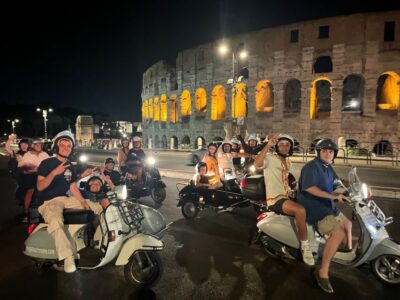
Highlights Vespa Sidecar Tour with Coffee and Gelato
Read our review →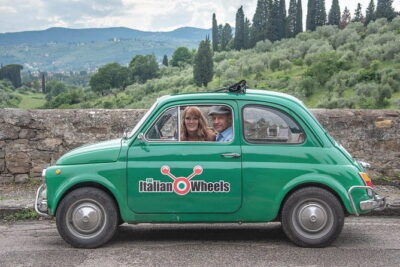
Self-Drive Vintage Fiat 500 Tour from Florence: Tuscan Hills and Italian Cuisine
Read our review →
Browse the lists this tour appears in