Reviewed · FLORENCE TOURS
Medici Legends & Renaissance Wonders: Florence Small Group Tour
Florence can feel like a lot to take in. This small-group tour uses the Medici family lens to help you connect the city’s big landmarks to the people and ideas that shaped the Renaissance. If you want a fast start without guessing your way through the streets, this is built for you.
I love how the route mixes famous icons with Medici-specific stops that explain why each place mattered. I also like the pacing, with a whisper system and a tight group size that makes it easier to follow the story while walking.
One possible drawback: the Medici focus may feel uneven to you if you’re expecting a heavy, museum-style deep dive into the family. Some buildings are mainly seen from the outside, and the time is short, so you will want a follow-up if you want even more Medici detail.
In This Review
- Medici Legends in a Nutshell: What Makes This Tour Work
- A Medici-Inside Look at Florence in 1 Hour 45 Minutes
- Where You Start at Caffè Scudieri Firenze and How the Walk Feels
- San Lorenzo: Where Medici Burials Anchor the Story
- Biblioteca Medicea Laurenziana: Michelangelo Meets Medici Messaging
- Medici Chapels and Sagrestia Nuova: Art as Family Branding
- Palazzo Medici Riccardi and Cosimo de’ Medici’s Banking Power
- Duomo Complex Views: Duomo, Baptistery, Giotto’s Campanile, and the Dome
- Palazzo Vecchio and Piazza della Signoria: Power in Public Space
- Ponte Vecchio to Palazzo Pitti: From Medici Merchants to Ruling Residences
- Uffizi Gallery in a Short Stop: What You Should Expect
- Guide Style That Can Make or Break This Tour
- Who This Tour Fits Best, and Who Might Want More Time Elsewhere
- The Value Question: Is $119.77 Worth It?
- Should You Book Medici Legends and Renaissance Wonders?
- FAQ
- How long is the Florence Medici Legends and Renaissance Wonders tour?
- What is the group size limit?
- Is the tour offered in English?
- Are admission tickets included for the stops?
- Where do I meet and where does the tour end?
- What happens if the weather is poor or plans change?
Medici Legends in a Nutshell: What Makes This Tour Work

- A Medici narrative, not a random highlights tour, so you understand how power, art, and banking tied together in Florence
- Limited to 15 people, which keeps the walk lively but still personal
- Whisper system support, useful in busy squares like the Piazza del Duomo and around Palazzo Vecchio
- A smart “first day” route, sweeping from San Lorenzo through the Duomo complex, then toward Ponte Vecchio and Uffizi
- Icon stops with context, like Brunelleschi’s dome and Giotto’s Campanile, explained through the Renaissance world they created
A Medici-Inside Look at Florence in 1 Hour 45 Minutes
This is a short tour, about 1 hour 45 minutes, designed to get you oriented fast. You cover a lot of Florence without feeling like you’re sprinting through everything alone.
What you get here is a thread. Instead of treating Florence’s sights as separate postcards, you’ll see how the Medici helped sponsor architecture, art, and status symbols that still define the city today.
The small group size, up to 15 travelers, matters more than you’d think. In tight streets and crowded viewpoints, it keeps you from losing the guide to the crowd.
A few more Florence options to weigh
- Florence: Skip-The-Line Uffizi Gallery Timed Entry Ticket
★ 4.5 · 27,832 reviews - Tuscany Day Trip from Florence: Siena, San Gimignano, Pisa and Lunch at a Winery
★ 5.0 · 21,634 reviews - Florence: Timed Entrance Ticket to Michelangelo’s David
★ 4.6 · 16,983 reviews
Where You Start at Caffè Scudieri Firenze and How the Walk Feels
You meet at Caffè Scudieri Firenze, Piazza di San Giovanni 19R, and you finish near Ponte Vecchio. The start time is 12:15 pm, which is handy if you want to use the morning for museums or the evening for dinner plans.
Expect the walk to be brisk and story-driven. Each stop is around five minutes, so this tour works best when you treat it like a guided map with explanations, not like a sit-down lecture.
It’s also a good sign that the tour is described as suitable for most travelers. Still, do plan around walking through central Florence, with lots of stone, steps, and changing street noise.
San Lorenzo: Where Medici Burials Anchor the Story
The tour begins at Basilica di San Lorenzo, right in Florence’s main market district. This church isn’t just impressive, it’s a family statement in stone.
You’ll learn that it serves as the burial place for principal Medici members, from Cosimo il Vecchio to Cosimo III. That detail is the kind that makes the rest of the tour click, because you can start mapping Medici influence from their legacy in the ground up.
The only practical catch: the admission ticket is not included, so you should treat this stop as an exterior orientation plus quick highlights. If you want to go inside at length, you’ll likely need a separate visit.
Biblioteca Medicea Laurenziana: Michelangelo Meets Medici Messaging
Next comes the Biblioteca Medicea Laurenziana, funded through the patronage of Medici pope Clement VII. The big idea here is that the Medici wanted to be seen as more than money.
You’ll hear how the library was meant to signal a shift from merchants to people of learning and ecclesiastical standing. Then you get to connect that message to the famous architecture designed by Michelangelo, including its Mannerism feel.
This is one of the most “Renaissance-coded” stops on the route because it turns power into culture on purpose. It also gives you a reason to care about what’s in the building, even if you’re only catching a brief look.
Nearby, and just as well reviewed:
- Florence: Michelangelo’s David Skip-the-Line Entry Ticket
★ 4.5 · 12,764 reviews - The Best tour in Florence: Renaissance & Medici Tales – guided by a STORYTELLER
★ 5.0 · 12,316 reviews - Florence: Leonardo Interactive Museum Entry Ticket
★ 4.5 · 11,763 reviews - The Best Tour in Florence: Renaissance and Medici Tales
★ 5.0 · 10,810 reviews
Medici Chapels and Sagrestia Nuova: Art as Family Branding
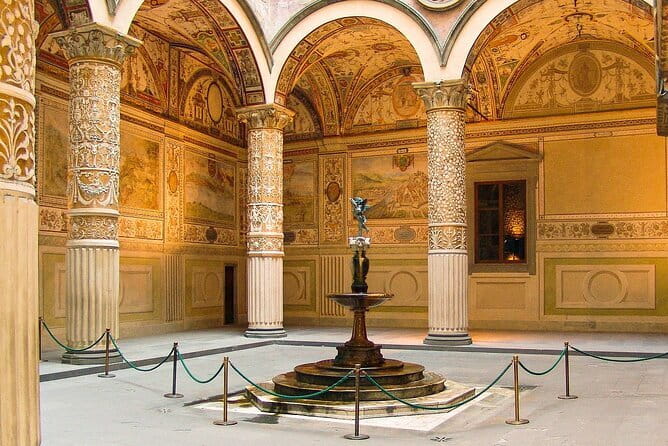
At Cappelle Medicee, the tour focuses on how the Medici reinforced their role over generations. The chapels were built between the 16th and 17th centuries, extending Brunelleschi’s 15th-century church.
You’ll also hear about the Sagrestia Nuova (New Sacristy), designed by Michelangelo. This matters because it shows the Medici using top-tier artists to make their status feel permanent, spiritual, and authoritative.
Again, admission isn’t included, so you’re likely looking at what you can see quickly and absorbing the story while you move. If you’re a “stop-and-stare” person, save time later for a deeper chapel visit.
Palazzo Medici Riccardi and Cosimo de’ Medici’s Banking Power
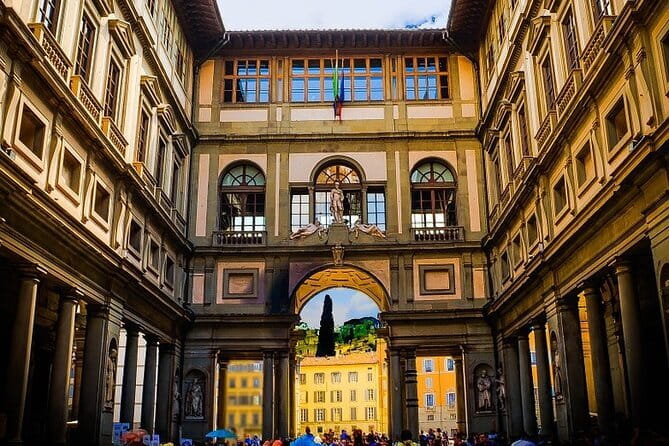
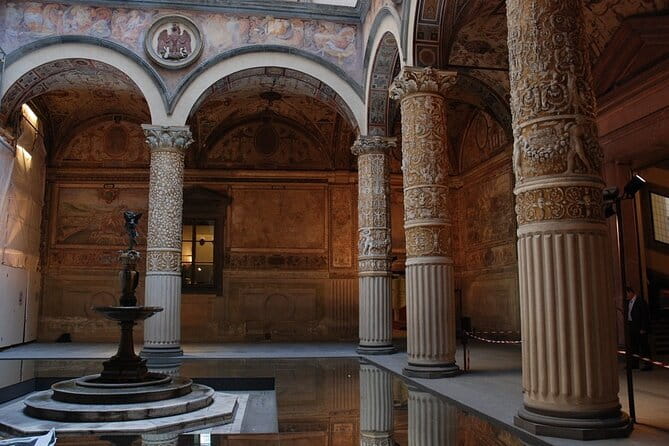
The stop at Palazzo Medici Riccardi is where you get a real timeline sense of Medici ambition. The palace was designed for Cosimo de’ Medici, head of the Medici banking family, and built between 1444 and 1484.
What you’ll learn from the guide’s explanation is how architecture acted like proof of power. In a city where prestige was public, a palace was more than a home, it was a political tool.
It’s also a nice counterweight to the church stops. You see that Medici influence wasn’t only religious or artistic. It was also financial and civic, all tied together.
Duomo Complex Views: Duomo, Baptistery, Giotto’s Campanile, and the Dome
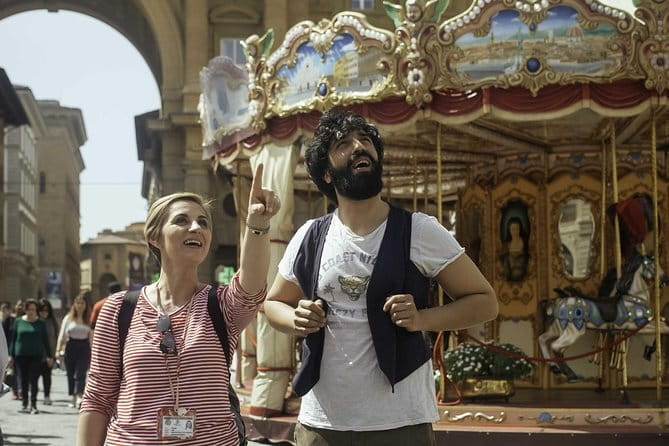
The heart of the tour is the Duomo complex, and it’s handled with smart layering. You see the cathedral, then the Baptistery area, then come back around for the skyline hits that include the Brunelleschi dome and Giotto’s Campanile.
Here’s the anchor detail you should remember: Florence’s cathedral, Cattedrale di Santa Maria del Fiore, began in 1296 in Gothic style, based on a design attributed to Arnolfo di Cambio. The whole complex, with the Baptistery and Giotto’s Campanile, is part of a UNESCO World Heritage Site for Florence’s historic center.
The Battistero di San Giovanni is another key stop. It was constructed between 1059 and 1128 in Florentine Romanesque style, which gives you a sense of the older layers of the city before the Renaissance took over the spotlight.
Then you hit the big moment: the Cupola del Brunelleschi. It’s described as the largest brick dome ever constructed and once the largest in the world. Even in a quick stop, this is the kind of landmark that makes you pause, because it’s hard to believe something so large was built with brick.
You’ll also see Campanile di Giotto, celebrated for its polychrome marble and sculptural decoration. This is a great place for the guide’s storytelling, because the details are too easy to miss when you’re just taking photos.
Palazzo Vecchio and Piazza della Signoria: Power in Public Space
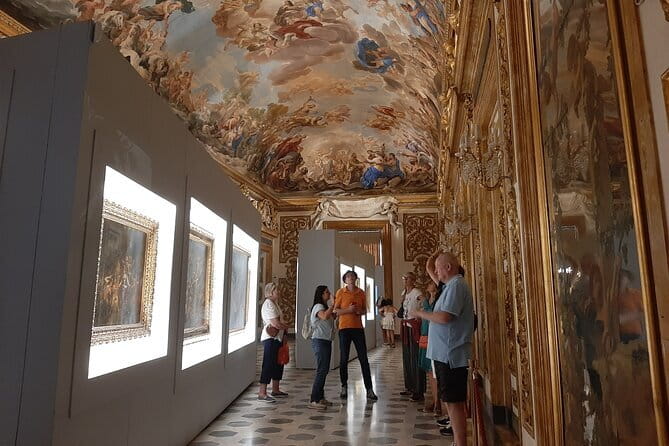
After the Duomo area, you move to Palazzo Vecchio and Piazza della Signoria. Palazzo Vecchio is the town hall, described as a fortress-palace and one of Tuscany’s most striking public buildings.
You’ll learn how the square works as a stage for politics and public life. From here, you get a clear view of the setting that surrounded civic identity for centuries.
The tour also connects the area to major art culture. Piazza della Signoria is treated as a gateway, and it sits close to where you’ll go next for the painting masterpieces.
This section is one of the best “walk and understand” parts. You’re not just looking at stone, you’re learning how people used these spaces to show who mattered.
Ponte Vecchio to Palazzo Pitti: From Medici Merchants to Ruling Residences
Next is Ponte Vecchio, the oldest bridge over the Arno River in Florence. The shops are the reason it’s famous, and the tour points out how the trade shifted over time.
Historically, shops on the bridge were tied to butchers and tanners, and today the tenants are described as jewelers and art dealers. That change alone tells you how the city’s economy and identity evolved.
Then comes Palazzo Pitti, which is a major Medici power pivot. The Medici bought it in 1549, and it became the chief residence of the ruling families of the Grand Duchy of Tuscany.
You’ll hear how it grew into a treasure house as later generations collected art, jewelry, plates, and other luxury items. This is where the tour makes the Medici theme feel less like a label and more like a pattern: wealth, then art, then control, then legacy.
Uffizi Gallery in a Short Stop: What You Should Expect
The tour ends by sending you to Gallerie degli Uffizi. Uffizi is described as one of the most important and most visited Italian museums, known for its Renaissance painting collection.
The guide narrative frames it as a journey through art from the 12th to the 16th centuries, with references to major artists like Michelangelo, Leonardo da Vinci, Raphael, and Botticelli. You’ll also hear that there are over 80 halls filled with masterpieces.
Now the practical part: the admission ticket is not included. That means you should plan to buy your own Uffizi entry if required. Also, because the tour is only 1 hour 45 minutes, you should treat this as a taste, not a full museum day.
The best way to use this ending is simple. Leave the tour with a shortlist of names or rooms the guide helped you prioritize, then go back later with more time.
Guide Style That Can Make or Break This Tour
The strongest part of the experience is the way the guide turns buildings into stories. Names like Manuel, Martina, Amanda, and Giacomo are tied to praise for putting the Medici story into motion.
I like tours where the guide is not only reciting dates but also pointing out small symbols, family connections, and why specific choices mattered. Several guides are described as using humor and role play, and that can keep a short tour from feeling like a checklist.
One caution to plan for: a guide’s audio can matter in open-air squares. Even with a whisper system included, street noise can be loud, so if you rely heavily on sound clarity, you should pay attention to how the system works for you on the day.
Who This Tour Fits Best, and Who Might Want More Time Elsewhere
This is perfect for you if:
- You’re doing Florence for the first time and want a Medici-flavored introduction
- You don’t want to spend the day piecing together context between distant sights
- You like walking tours where the guide makes connections for you
It may not be perfect if:
- You’re expecting a museum-level Medici deep dive at every stop
- You’re sensitive to missing small details due to crowds and street noise
- You want long interior time at churches and palaces, because admission is often not included
If you crave more, use this tour as your map. Then follow up on the places you care about most, especially the Medici-related sites that need extra time.
The Value Question: Is $119.77 Worth It?
At $119.77 per person, you’re paying for three things that matter in Florence: a licensed guide, a small group, and structured time. You’re not just paying for sightseeing, you’re paying for interpretation, timing, and help spotting the story behind the stone.
The value is strongest if you’re short on time and want to make your first day count. The tour’s format also helps you avoid feeling lost, which can be a hidden cost when you’re trying to connect Medici sites on your own.
The main “value tradeoff” is that some stops are quick and may require you to pay extra for specific admissions later. If you’re coming with a plan to see Uffizi and related interiors deeply, this tour can still pay off by steering you toward what to prioritize.
Should You Book Medici Legends and Renaissance Wonders?
Book it if you want a fast, story-driven Florence orientation with a focused Medici thread, and you like learning while walking. With a group capped at 15, a licensed guide, and a whisper system, it’s built for understanding, not just photos.
I’d especially book it early in your Florence trip. The tour gives you names, connections, and “why this place” context, so your later museum time feels more purposeful.
Skip or supplement it if you’re already a Medici specialist or you know you want long, ticketed interior time right now. In that case, you may still enjoy the route, but plan extra time for the deeper visits you’ll want afterward.
FAQ
How long is the Florence Medici Legends and Renaissance Wonders tour?
The tour runs for about 1 hour 45 minutes.
What is the group size limit?
The tour has a maximum of 15 travelers.
Is the tour offered in English?
Yes, it is offered in English.
Are admission tickets included for the stops?
No. Admission tickets are listed as not included for the stops noted, including major sights like the Duomo complex and Uffizi.
Where do I meet and where does the tour end?
You meet at Caffè Scudieri Firenze, Piazza di San Giovanni 19R, 50123 Florence, and the tour ends near Ponte Vecchio (50125 Florence).
What happens if the weather is poor or plans change?
The experience requires good weather. If it’s canceled due to poor weather, you’ll be offered a different date or a full refund. You can also cancel for a full refund if you do it at least 24 hours before the start time.
Latest reviews around Florence
- Florence Sunset Food Tour with Wine & Dine at a Tuscan farmhouse★ 5.0 · 194 reviews
- Wine Tasting Experience in Ponte Vecchio: Best Tuscany selection!★ 5.0 · 197 reviews
- Val d’Orcia Brunello Wine Tour with Montalcino and Montepulciano★ 4.5 · 359 reviews
- Wine Experience In Chianti Hills from Florence★ 4.5 · 195 reviews
- Walking Food Tour of Florence with Tastings and Wine★ 5.0 · 518 reviews
- Uffizi Gallery Small Group Tour with Guide★ 4.5 · 879 reviews
- Florence Accademia Guided Tour – Shared, Private & Combo Options★ 4.5 · 370 reviews
- Florence: Tuscany Grand Tour-Siena, San Gimignano, Chianti & Pisa★ 5.0 · 149 reviews
Florence Tours, compared.
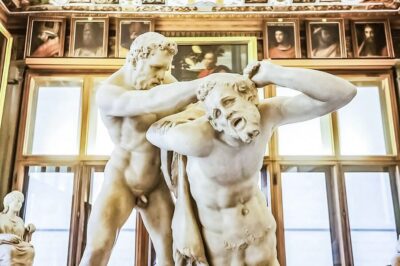
Skip-The-Line Uffizi Gallery Timed Entry Ticket
Read our review →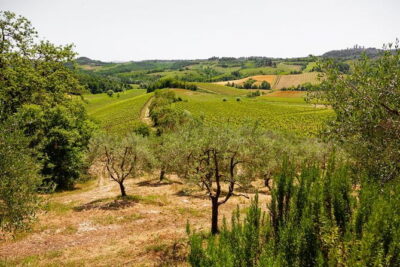
Tuscany Day Trip from Florence: Siena, San Gimignano, Pisa and Lunch at a Winery
Read our review →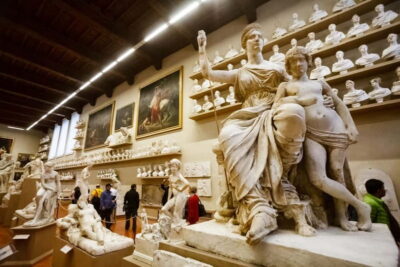
Timed Entrance Ticket to Michelangelo’s David
Read our review →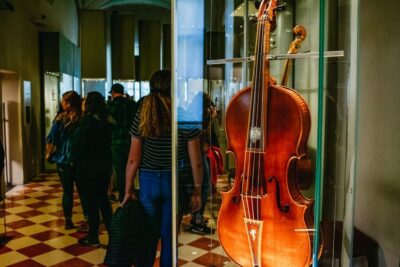
Michelangelo’s David Skip-the-Line Entry Ticket
Read our review →
The Best tour in Florence: Renaissance & Medici Tales – guided by a STORYTELLER
Read our review →
The Best Tour in Florence: Renaissance and Medici Tales
Read our review →