
Reviewed · HISTORICAL TOURS
Bologna historical art walking tour with hidden gems and tastings
Bologna hides art in plain sight. This 3 to 4 hour walking tour turns the city center into a living art textbook, with history you can actually see on the walls. I like that it keeps one steady theme, Bologna’s art and architecture, and pairs major landmarks like Piazza Maggiore with smaller moments you would miss on your own.
Two things I really love: the guide’s storytelling, and the way the stops connect civic power to what you see in churches and palaces. Riccardo Bacchi brings the details to the front, from civic symbolism to frescoes, and the pacing makes it feel like a clear route instead of random wandering.
One consideration: the walk is fast paced, because you cover a lot of big-name sites plus side streets in a short time. If you want a slower, sit-down kind of tour, you may need breaks or a day plan that leaves extra time afterward.
In This Review
- Key Highlights You Should Know
- Piazza Maggiore, Neptune, and the four “speaking” corners
- Palazzo d’Accursio and the city power behind the frescoes
- San Petronio, the world’s biggest sundial, and why time mattered
- Archiginnasio di Bologna and the oldest university in Europe
- Quadrilatero market maze and the food heritage angle
- Santo Stefano church complex: one place, many layers of Bologna
- Santa Maria della Vita: terracotta motion by Niccolò dell’Arca
- Asinelli and Garisenda towers, plus a street-level view that sticks
- Finestrella and UNESCO canal history, plus wooden pillar surprises
- Palazzo Comunale ceilings, frescoes, and Bramante staircases
- What the tastings add, and what you might actually taste
- Price, pace, and who this tour fits best
- Should you book this Bologna art walking tour?
- FAQ
- How long is the Bologna historical art walking tour?
- What language is the tour offered in?
- How much does the tour cost?
- Where does the tour start?
- Does the tour include admission tickets?
- Is there a mobile ticket?
- Is the group size limited?
- What tastings are included?
- What is the cancellation policy?
Key Highlights You Should Know
- A compact route with major civic and religious anchors: Piazza Maggiore to Archiginnasio to San Petronio
- Art that shows up in surprising places: terracotta sculpture at Santa Maria della Vita, plus anatomical lessons inside the university
- Tower views without climbing: street-level perspective on Asinelli and Garisenda
- UNESCO canal systems: Finestrella and Bologna’s working-water history
- Tastings built into the experience: a medieval-style rice cake plus local wine sampling
- Small group size: up to 25 people, led in English
Piazza Maggiore, Neptune, and the four “speaking” corners
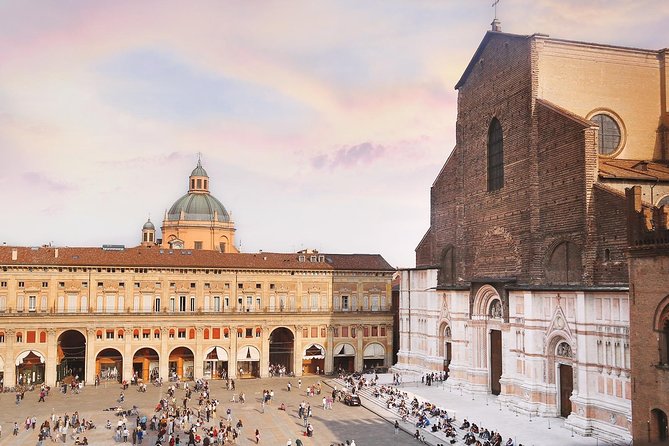
The tour begins right where Bologna likes to show off. Piazza Maggiore is a stage set of medieval structure, Renaissance balance, and civic symbolism, all packed into a walkable square. From the start, you learn to read the buildings like a map, not just a backdrop.
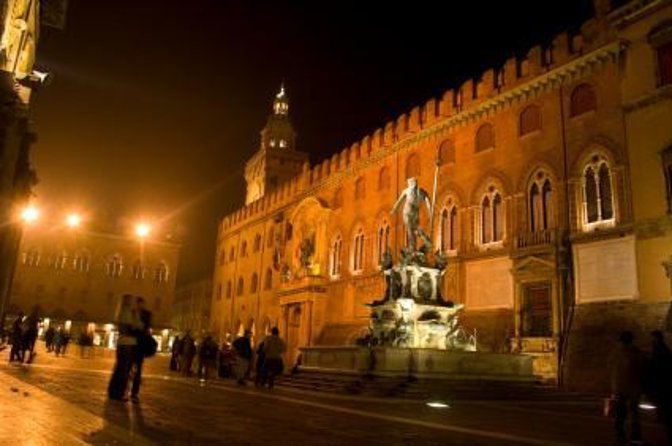
You’ll spend time with the old medieval facades and the four “speaking” corners, a detail that instantly changes how you look at the architecture. Then you’ll get a proper look at Neptune’s fountain, plus the facade details that link the square to the Council Palace and its old clock. Even if you think you’ve seen the main square already, this kind of guided attention usually makes it feel new.
Practical tip: bring comfortable shoes. This first stop can be busy, and you’ll want to be able to shift your position easily for views.
More Walking Tours in Bologna
- Bologna: City Center Walking Tour
★ 4.5 · 3,478 reviews - Bologna: Walking Food Tour with a Local Guide
★ 4.8 · 882 reviews - Bologna: City Center Guided Wine Walking Tour
★ 4.9 · 210 reviews
Palazzo d’Accursio and the city power behind the frescoes
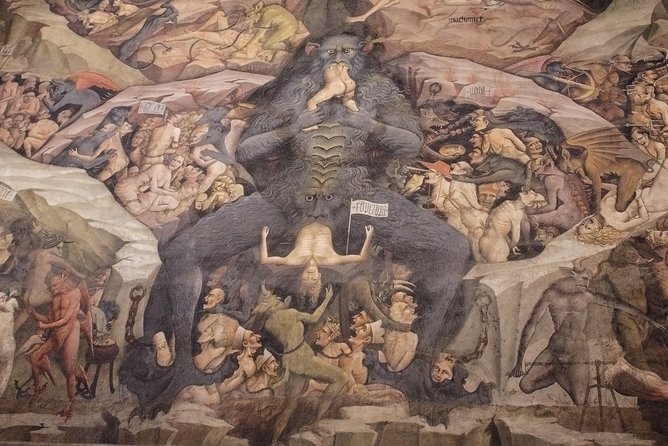
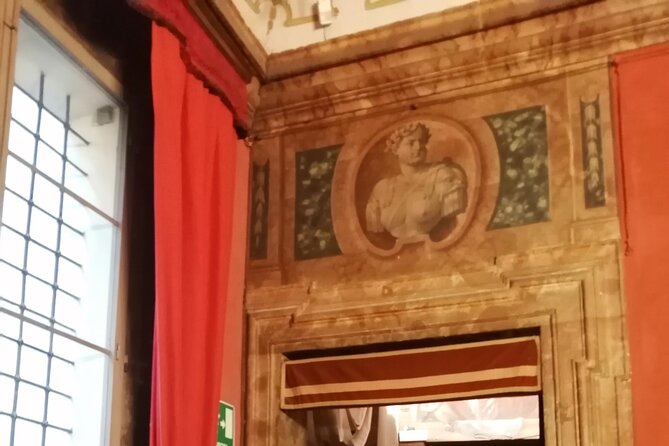
Next you step into a civic palace world. Palazzo d’Accursio is where Bologna’s governing story shows up in frescos, noble rooms, and private spaces tied to church authority. You’re looking at art that served public life, not art that sat quietly behind ropes.
You’ll see rooms on the first and second floors, including frescos and a private chapel of the bishop. The tour also highlights a memorable piece of design linked to Bramante: the big stairs for horses, a reminder that these buildings were built for movement and ceremony. Another stop in the palace brings you to the room of the seniors, plus the earthquake’s virgin by Francesco Francia.
What I like here is the cause and effect. You start to connect why certain rooms exist, why staircases matter, and why specific artworks were placed where people could see them. It’s architecture with a job.
San Petronio, the world’s biggest sundial, and why time mattered
Basilica di San Petronio is one of the tour’s biggest “wow” stops, and it lasts long enough to absorb. You’ll learn about the biggest sundial in the world, a detail that makes the building feel scientific as well as sacred. It’s a reminder that Bologna treated measurement and faith as part of one cultural system.
Inside, you’ll focus on medieval frescos in the Cappella Bolognini, plus the four ancient crosses. The stop also includes famous paintings by Parmigianino and Lorenzo Costa, so you get both a timeline lesson and an art lesson in the same footprint. This is one of those visits where the guide helps you notice what your eyes might skip.
Possible drawback: it can be a lot to take in if you’re expecting only one style. San Petronio carries medieval features and later masterpieces in the same visit, so you’ll want to let the guide pace your attention.
Archiginnasio di Bologna and the oldest university in Europe
From civic power and church scale, you shift into education and medicine at Archiginnasio di Bologna. This is the headquarters of the oldest university in Europe, and it shows in the sheer number of coats of arms and institutional details.
You’ll see Renaissance palace rooms and a huge collection of coats of arms, which gives you a visual lesson in who held influence. Then the tour turns to the “secret powerful medecine” side of the story, with references to what was taught and how knowledge was shared. One standout is the wooden anatomical theatre, a space designed for teaching bodies, not just displaying art.
The stop also includes the Stabat Mater room with precious books, including Leonardo da Vinci’s Flights of the birds (you’ll hear about it as part of a broader story of study and curiosity). You’ll also walk through a long hall for books and ancient codes, which is a strong payoff if you like old scholarship.
If you enjoy academic history, this is a high value stop. If you do not, it still works because the guide explains why these spaces existed and what they were meant to do.
A few more Bologna options to weigh
- Bologna: Walking Food Tour and Highlights with a Local Guide
★ 4.9 · 179 reviews - Bologna: Guided Walking Tour
★ 4.9 · 158 reviews - Bologna Walking Tour with Audio and Written Guide
★ 4.5 · 132 reviews - Milan: Guided Walking Tour & Last Supper Visit with Ticket
★ 4.7 · 5,409 reviews
Quadrilatero market maze and the food heritage angle
Now you walk from institutional spaces into everyday life. The Quadrilatero is the medieval market labyrinth, with stalls, older food shops, and signs of guild traditions. You’ll get the sense that Bologna’s art story is not only in palaces and churches, it is also in commerce, labeling, and the rituals of buying and selling.
This is a short stop, but it’s tuned for discovery. You’ll notice ancient coats of arms and clues tied to guilds, which helps you understand how craft organizations shaped the city. You’re not just looking at storefronts, you’re learning why certain places became identity markers.
Quick practical advice: the market areas can be crowded. Keep an eye on your footing and expect slow walking when groups stop for photos and explanations.
Santo Stefano church complex: one place, many layers of Bologna
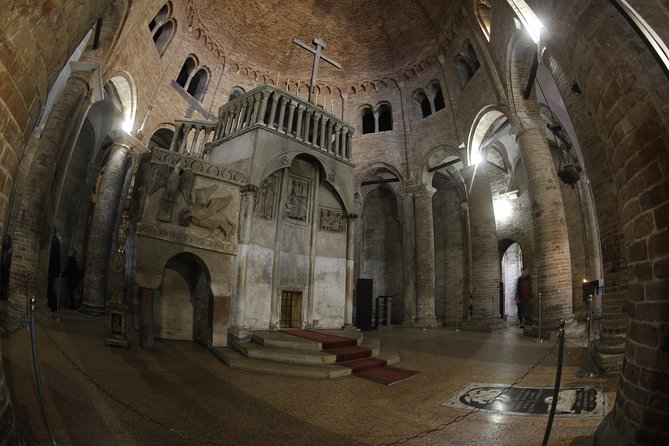
Basilica – Santuario di Santo Stefano is a different kind of history lesson. It’s a single complex of churches that collects Bologna’s timeline in one area, starting from Roman temple references tied to a natural spring and moving forward through later eras.
You’ll walk through a cloister connected to Dante Alighieri, with the monks’ cells around it, so the place feels lived in even centuries later. The tour also points out capitals headed by animal faces, which adds a playful, sculptural layer to the seriousness of the setting.
This stop is longer than some of the others, and that’s intentional. It gives you room to slow down and actually connect the architectural changes you see across time.
Santa Maria della Vita: terracotta motion by Niccolò dell’Arca
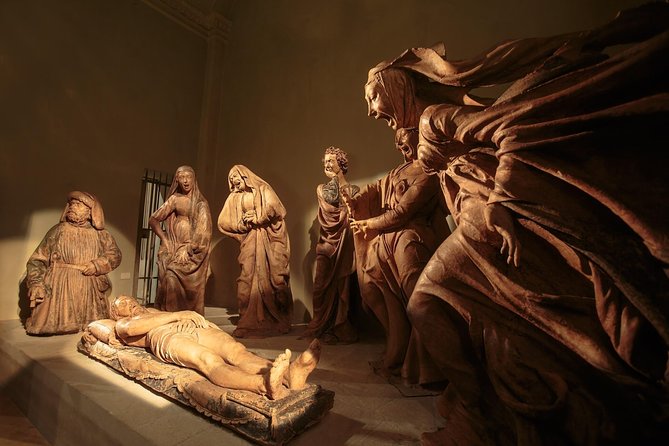
If you want one stop that feels emotionally modern, this is it. Chiesa di Santa Maria della Vita is known for a terracotta masterpiece sculptured in 1470 by Niccolò dell’Arca. The tour calls out the sculpture’s avanguardist interpretation of movements and emotions, and you’ll see why once you’re standing close enough to register expression and form.
It’s a strong contrast to the more formal civic and academic spaces earlier. Here, the art reaches for feeling. You also get a lesson in how religious art in Bologna could be intense and dramatic, not distant and decorative.
Practical note: this is an indoor art stop. If you’re traveling in warmer months, it can be a welcome break from street heat, with a cooler, calmer feel.
Asinelli and Garisenda towers, plus a street-level view that sticks
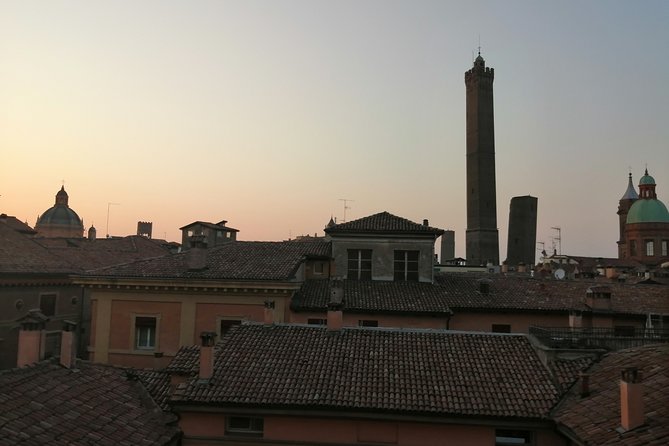
After the church sculpture, the tour shifts upward in your imagination, not your legs. You’ll get a great view from street level of Bologna’s symbols: the Asinelli Tower and the leaning Garisenda Tower, with Asinelli at 98 meters tall.
This matters because tower views in Bologna are easy to get wrong. If you only look from one angle, you miss the relationship between the towers and the way they frame the city’s skyline. This stop gives you the right perspective point without turning it into a climb.
If you like photos, this is your moment. It’s also a good reset, because it breaks up the museum and church density.
Finestrella and UNESCO canal history, plus wooden pillar surprises
Next you move to Finestrella, a rare example of medieval canals designed to supply silk and hemp textile manufacturing. It is tied to UNESCO heritage, and the story gives you a reason for the canal system beyond “pretty water.”
You’ll also see an example of a surviving 13th century house with original wooden pillars. This kind of structure is a reminder that the city’s “big stories” also live in the details of homes and local building techniques.
What I like about these two stops together is they connect art and industry. Bologna’s creative life was not separate from manufacturing and trade. The water and the wood tell that story in a practical way.
If you’re the type who enjoys understanding how cities work, these are excellent stops.
Palazzo Comunale ceilings, frescoes, and Bramante staircases
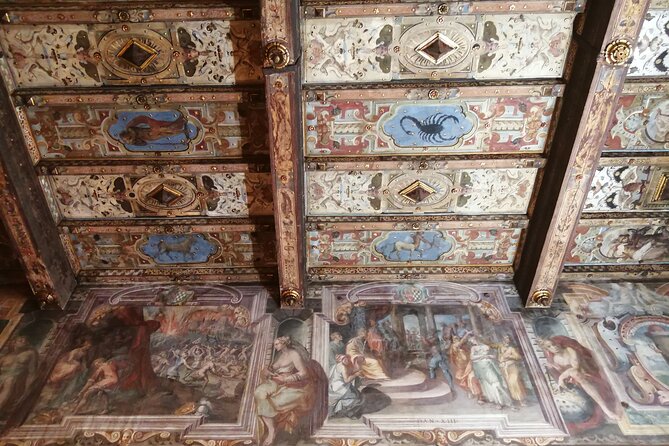
The tour closes at Palazzo Comunale, another civic-art setting. Here you’ll get renaissance and baroque ceilings, plus frescoes and sculptures that show how the city kept upgrading its visual message.
A highlight is the Bramante staircases for horsemen. It’s the same Bramante theme as earlier, but it hits differently here because it is tied to ceremonial movement and power display. The ceilings and decorations reinforce that Bologna treated civic buildings like stages for identity.
This finish works well because it ties your earlier stops together. You leave with a clearer sense of how Bologna used art to say something about who ran the show.
What the tastings add, and what you might actually taste
This tour is listed as an experience with tastings, and the tastings have real “Bologna, not tourist Bologna” energy. One memorable example is sampling rice cake made from a medieval recipe, plus local wine.
The tastings are not just a side snack. They connect the earlier food heritage angle in the market area to something you can taste, then carry forward into the rest of your trip. If you like the idea of art and history paired with what people ate and drank, this part is worth paying attention to.
Tip: if you’re sensitive to alcohol or prefer to skip wine, it’s worth letting the guide know. Since it’s part of the flow, you want to feel comfortable without rushing your pace.
Price, pace, and who this tour fits best
At $175.36 per person for a 3 to 4 hour walk, you should judge value by how many meaningful stops you get and how much entry is covered. Several major sites are free to enter on your own, but the tour includes admission at key points like San Petronio, Archiginnasio di Bologna, and Santa Maria della Vita.
That admission mix matters. It turns the tour into more than a street walkthrough, and it puts you inside places where art and history are the main event. With group size capped at 25 and the tour running in English, it also feels structured, not chaotic.
The pace is the main tradeoff. You cover a lot of sites, so it’s best for people who like learning fast and walking steadily. If your ideal day includes long sits in cafes and slow browsing, you might choose a lighter plan for the rest of your itinerary.
Who I think should book:
- You want a city overview with strong art-and-architecture focus
- You love churches, universities, and the civic story behind them
- You enjoy tastings and want Bologna’s food culture tied to history
- You plan to spend extra time afterward, because this gives you great targets to revisit on your own
Should you book this Bologna art walking tour?
Yes, if you want a guided route that makes Bologna’s art, civic design, and schooling history feel connected. The biggest selling points are the way the tour turns landmarks into stories, plus the chance to taste something tied to medieval tradition, like the rice cake, alongside local wine sampling.
I would skip it only if you prefer slow, unstructured wandering, or if you feel church interiors and palace rooms will wear you out quickly. Otherwise, this is one of the more efficient ways to get a serious view of Bologna in just a half day.
If you want the best chance of getting your spot, plan ahead. The booking pattern shows it tends to be reserved well in advance, and a small group size means dates can fill up.
FAQ
How long is the Bologna historical art walking tour?
The tour runs about 3 to 4 hours.
What language is the tour offered in?
It is offered in English.
How much does the tour cost?
The price is $175.36 per person.
Where does the tour start?
The meeting point is Bar Vittorio Emanuele, Piazza Maggiore 1, 40124 Bologna, Italy.
Does the tour include admission tickets?
Admission is included for Basilica Di San Petronio, Archiginnasio Di Bologna, and Chiesa di Santa Maria della Vita. Other listed stops have free admission tickets.
Is there a mobile ticket?
Yes, the tour includes a mobile ticket.
Is the group size limited?
Yes. The maximum group size is 25 travelers.
What tastings are included?
The tastings can include medieval-style rice cake and local wine sampling.
What is the cancellation policy?
Free cancellation is available up to 24 hours in advance for a full refund. If you cancel less than 24 hours before the start time, the amount paid is not refunded.
More Historical Tours in Bologna
- Venice: St. Mark Basilica Ticket, Audioguide+History Gallery
★ 3.9 · 4,780 reviews - Venice’s Best: Basilica, Doge’s Palace, Gondola & History Gallery
★ 4.5 · 2,478 reviews - Historic Milan Tour with Skip-the-Line Last Supper Ticket
★ 4.5 · 1,976 reviews - Venice: City Center Historical Guided Walking Tour
★ 4.2 · 1,873 reviews
Latest reviews around Bologna
- Cesarine: Small group Pasta and Tiramisu class in Bologna★ 5.0 · 172 reviews
- Stay Hungry Stay Bologna★ 4.0 · 170 reviews
- Bologna Private Highlights & Hidden Gems Tour with a Local★ 5.0 · 359 reviews
- Bologna on the plate, Cooking Class with Alessia★ 5.0 · 260 reviews
- Private Emilia Romagna Food Tour Full Day★ 5.0 · 129 reviews
- Cesarine: Private Pasta Class & Meal at Local’s Home in Bologna★ 5.0 · 111 reviews
- Bologna gastronomic experience with a local★ 5.0 · 626 reviews
- Ferrari Lamborghini Pagani Factories and Museums – Tour from Bologna★ 5.0 · 171 reviews
Historical Tours, compared.
St. Mark Basilica Ticket, Audioguide+History Gallery
Read our review →
Venice’s Best: Basilica, Doge’s Palace, Gondola & History Gallery
Read our review →
Historic Milan Tour with Skip-the-Line Last Supper Ticket
Read our review →
Rome in a Day Tour with Vatican, Colosseum and Historic Center
Read our review →
Rome Food Tour in the Historic Centre with 8+ Food Tastings
Read our review →Browse the lists this tour appears in