
Reviewed · WALKING TOURS
The Best of Florence Walking Tour in a Small Group
Florence works best when you slow down. This small-group walk strings together the city’s biggest Medici and Duomo storylines in a way that feels clear fast, with a cap of 15 people and live guide explanations. I like that you get a guided sense of direction through the historic center, not just a checklist of stops.
My favorite part is the practical pacing, with quick exterior views of major landmarks plus context you can actually use later in your trip. The one possible drawback is that most of the sights you pass are described as quick stops, and admission tickets are usually not included, so you may want to plan on separate tickets if you want deeper entry time.
If it’s your first time in Florence, this is an efficient way to understand how the city fits together, from Medici power to Renaissance art. And if you return later, you’ll recognize what you see because the route gives you a framework.
In This Review
- Key points to know before you go
- Why a small-group Florence walk is smart on day one
- The group size cap, and why it changes what you remember
- The Medici storyline built into the route
- San Lorenzo, then the Laurentian Library’s Michelangelo connection
- Medici Chapels and Palazzo Medici Riccardi: power in stone and design
- Duomo time: cathedral, baptistery, campanile, and the dome story
- Piazza della Signoria and Palazzo Vecchio: where Florence meets itself
- Ponte Vecchio and Palazzo Pitti: the walk ends where the wandering begins
- Pace, tickets, and what you need to plan for
- Value: what $59.26 buys you in the real world
- Who this tour fits best, and who might want something else
- Should you book this Best of Florence walking tour?
- FAQ
- What is the duration of the tour?
- How big is the group?
- Is admission included for the sights on the route?
- What language is the tour offered in?
- Where do I meet the group, and where does it end?
- Are tips included in the price?
Key points to know before you go
- Maximum 15-person group for a genuinely intimate walk, with room for questions
- Whisper system included, so you can hear the guide even in crowded streets
- Medici-focused route, starting at San Lorenzo and working through palaces and chapels tied to the family
- Duomo complex highlights outside the ticket line for the biggest visual payoffs
- Ends near Ponte Vecchio, a great springboard for wandering afterward on your own
Why a small-group Florence walk is smart on day one
If you want Florence to feel intuitive, start with a route like this. The walk links the Medici story to the buildings you keep seeing on maps and in photos, so the city stops looking random.
I also like the way the experience is structured: you’re on your feet for about 1 hour 45 minutes, with a local guide leading the narrative and helping you notice what matters. Stops are short, around 5 minutes most places, with the long look saved for the dome area, so you never feel stuck in one spot.
The vibe is casual and human, the kind of tour where your guide can answer real questions as you walk. In past groups, I’ve seen guides like Manuel Messina and Camilla tailor the route to the mood, including keeping kids engaged when families are along for the ride. Even without that special tailoring, the pacing and explanations usually land well because the group stays small.
More Walking Tours in Florence
- Florence: Guided Walking Tour
★ 4.5 · 3,334 reviews - Skip the line: Uffizi and Accademia Small Group Walking Tour
★ 4.5 · 3,135 reviews - Florence: Guided Walking Tour
★ 4.6 · 1,602 reviews
The group size cap, and why it changes what you remember
This is a maximum of 15 travelers, and that matters more than you’d think. In a bigger group, you hear less and you stop asking questions. Here, the guide can keep track of everyone, and the “what am I looking at” moments stick.
A nice detail is the whisper system. Florence streets can be noisy, especially near the major piazzas and the Duomo complex, so having the audio means you spend more time listening and less time leaning forward and craning your neck.
The small size also makes the walk feel flexible. If your attention goes to architecture, sculpture details, or local habits like what to look for when you pass shops, the guide can respond because you’re not just one face in a crowd.
The Medici storyline built into the route
Florence in the Renaissance era is basically a story of patrons, power, and money. This tour keeps that storyline front and center by threading together landmarks tied to the Medici family.
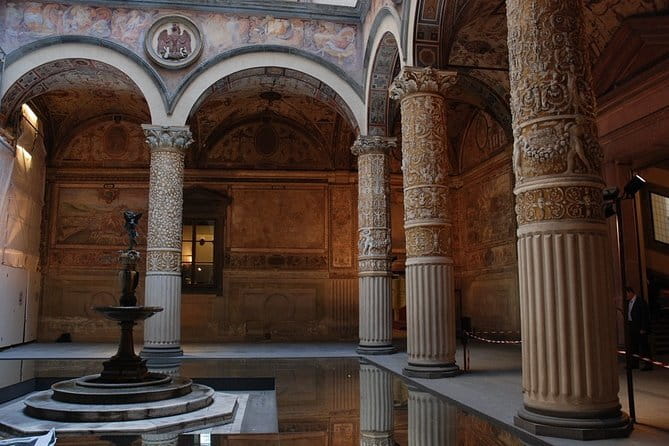
You start at Basilica di San Lorenzo, in the city’s main market district. From there the walk continues through Medici-linked sites like the Laurentian Library, the Medici Chapels, and the Palazzo Medici Riccardi. Even when stops are short, they’re not random. The guide’s job is to show you why these places mattered, not just what they look like.
This is a good format if you want to understand what you’re seeing in Florence. You walk away with a mental map: the church where key Medici members are connected, the intellectual and artistic message in the library, and the power theater of chapels and palaces.
San Lorenzo, then the Laurentian Library’s Michelangelo connection
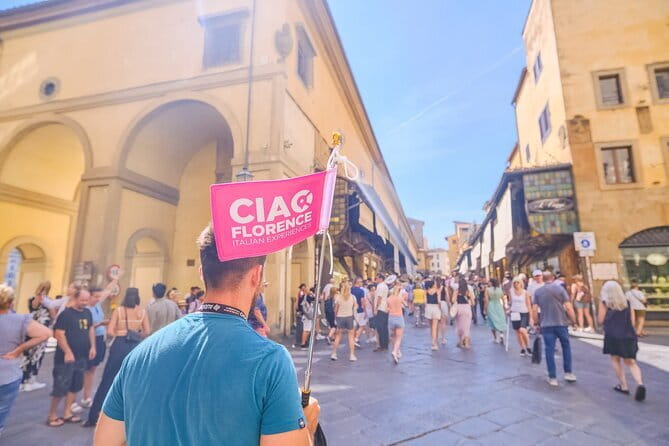
Your first stop, Basilica di San Lorenzo, is hard to miss once you’re there. It’s one of the large churches in Florence and sits at the heart of the main market district. What makes it more than a stop for architecture fans is the burial connection, since it served as the burial place for major Medici figures from Cosimo il Vecchio through Cosimo III.
Next comes Biblioteca Medicea Laurenziana. This is where the tour’s “why this matters” approach shines. The library was built through patronage tied to Medici pope Clement VII, and it was meant to signal that the Medici had moved beyond merchants into a higher standing in intellectual and ecclesiastical circles.
The library is also famous for its architecture designed by Michelangelo, and it’s an example of Mannerism. If you’ve seen Michelangelo’s work in other contexts, this is a chance to connect the dots to how Renaissance patrons used art and design as messaging.
A few more Florence options to weigh
- Florence: Renaissance and Medici Tales Guided Walking Tour
★ 4.8 · 1,549 reviews - Florence: Uffizi & Accademia Small Group Walking Tour
★ 4.7 · 1,380 reviews - Skip-the-Line Florence Highlights and David Walking Tour
★ 5.0 · 1,127 reviews - Florence: Dark Mysteries and Legends Guided Walking Tour
★ 4.6 · 1,081 reviews
Medici Chapels and Palazzo Medici Riccardi: power in stone and design
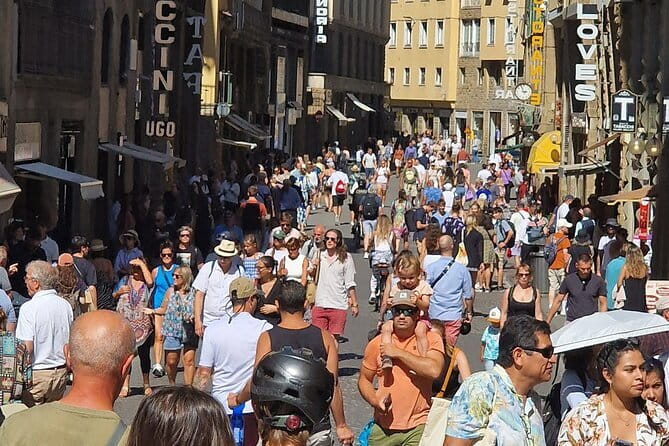
At Cappelle Medicee, you see how the Medici used religious space to celebrate their own role as patrons and grand dukes. The chapels were built between the 16th and 17th centuries as additions that extend the older structure of Brunelleschi’s 15th-century church.
A key detail here is the Sagrestia Nuova, the New Sacristy, which was designed by Michelangelo. Even if you only get a brief look, it helps you understand why this area is a magnet for art and architecture lovers.
Then the tour shifts to Palazzo Medici Riccardi, designed for Cosimo de’ Medici, head of the Medici banking family. Construction ran from 1444 to 1484, which gives you a timeline anchor. The guide’s explanation ties the palace to the family’s financial power, and that’s what makes the stop feel more meaningful than a quick glance at a facade.
Duomo time: cathedral, baptistery, campanile, and the dome story
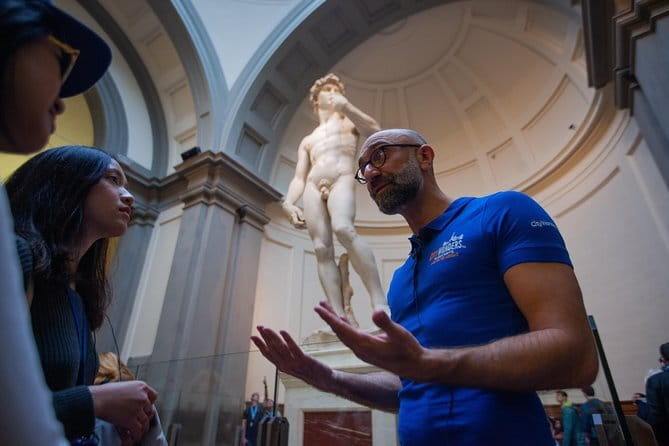
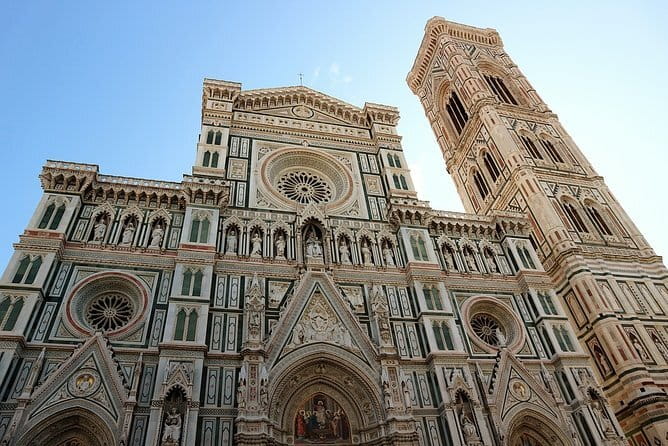
The biggest visual payoff happens around Piazza del Duomo. This complex includes the cathedral, the baptistery, and Giotto’s Campanile, all part of the UNESCO World Heritage Site covering Florence’s historic center. If you’re wondering why people plan whole days around this zone, it’s because the buildings form a kind of architectural conversation.
You get an up-close view of Santa Maria del Fiore, Florence Cathedral. It was begun in 1296 in the Gothic style, and the cathedral complex is described as part of the major attraction zone. The specific stop listing notes admission as free at this point, but most other monument access may still require tickets, so it’s smart to decide what you want to enter versus what you only want to see from the outside.
Next is the Battistero di San Giovanni, standing across from the cathedral and campanile. It’s one of the oldest buildings in Florence, built between 1059 and 1128 in the Florentine Romanesque style. The age alone helps you feel the layering of the city: medieval roots under Renaissance prestige.
Then you’ll see Giotto’s Campanile, famous for Florentine Gothic style and polychrome marble decoration. The tour also includes the Cupola del Brunelleschi area, where the key fact is that it’s the largest brick dome ever constructed and was once the largest in the world.
Piazza della Signoria and Palazzo Vecchio: where Florence meets itself
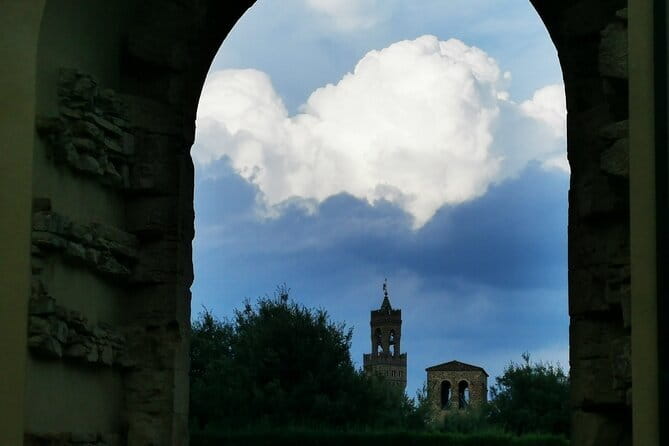
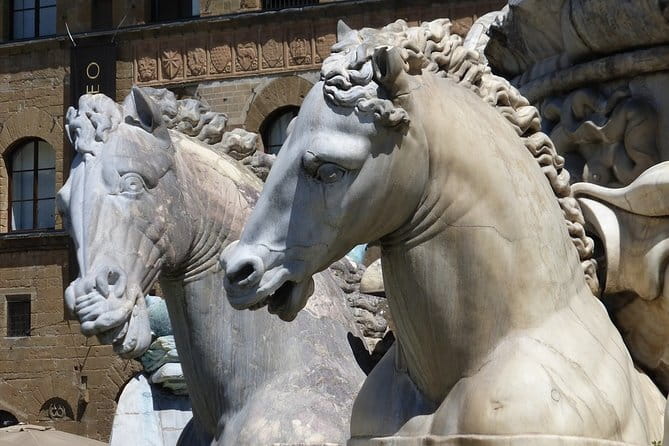
After the Duomo zone, you head to Piazza della Signoria, an L-shaped square in front of Palazzo Vecchio. The square works as Florence’s meeting point, and it’s right where you can sense the city’s energy: people gather, take photos, and then branch out to nearby major sights.
The stop at Palazzo Vecchio matters because it’s Florence’s town hall, described as a massive fortress-palace. You’ll also hear about how the square connects to art highlights, like the copy of Michelangelo’s David statue facing the area, plus the sculptures in the adjacent Loggia dei Lanzi.
This is also close to the Uffizi area. You pass Gallerie degli Uffizi, one of Italy’s most important museums, with a Renaissance collection. The Uffizi complex was begun by Giorgio Vasari in 1560 for the offices of Florentine magistrates, and the name “uffizi” ties to those offices. Even without museum time, this context helps you understand why the area has such gravitational pull.
Ponte Vecchio and Palazzo Pitti: the walk ends where the wandering begins
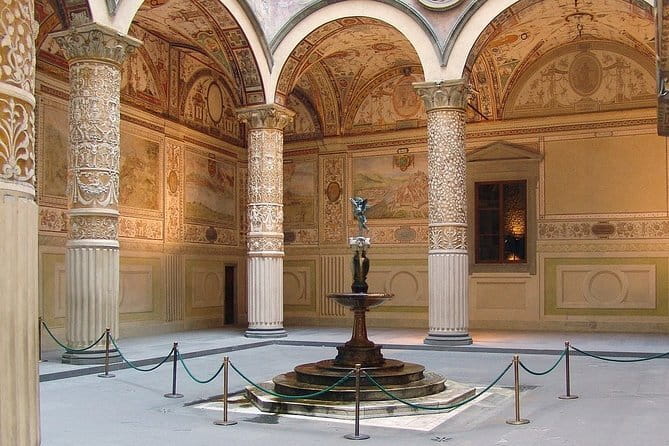
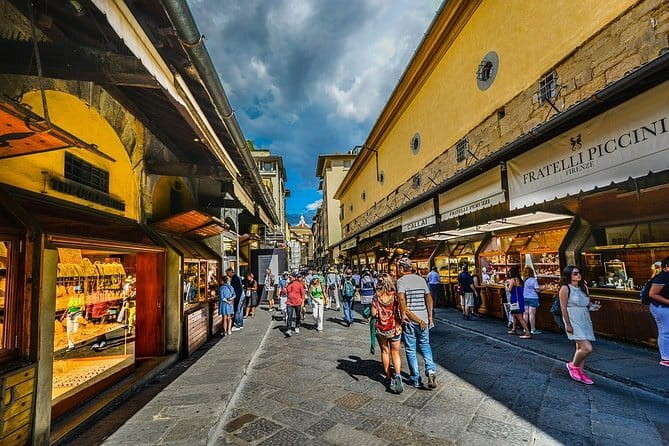
Your final stretch brings you to Ponte Vecchio, the Old Bridge over the Arno. It’s noted as the oldest bridge over the Arno in Florence, and it’s famous for shops lined along it. The shop history shifts over time, from butchers, tanners, and farmers to today’s tenants like jewelers and art dealers.
Then the route continues to Palazzo Pitti, which connects you to the Medici as lifestyle and ruling family power. The palace was bought by the Medici in 1549 and became the chief residence of the ruling families of the Grand Duchy of Tuscany. Over time, it grew into a treasure house as later generations added paintings, plates, jewelry, and other luxury possessions.
Ending near Ponte Vecchio is a smart move. Once you finish, you can keep walking at your own pace along the Arno area, stop for a coffee, and loop back through side streets with a clearer sense of where you are.
Pace, tickets, and what you need to plan for
The tour runs about 1 hour 45 minutes and is timed as a series of short landmark stops, usually around 5 minutes each, with extra time at the dome area. That makes it a great fit if you have limited time in Florence, but it also means you should not expect a deep museum-style experience at every site.
Admission details vary by stop. The cathedral complex stop is noted as free, while other listed stops are marked as admission not included. If you want interior time at the library, chapels, or galleries, you’ll likely need separate tickets on your own schedule.
This experience includes a licensed local guide, a small group, and a whisper system. It’s offered in English. The meeting point is Caffè Scudieri Firenze, Piazza di San Giovanni 19R, 50123 Firenze, and the walk ends near Ponte Vecchio.
A few practical notes: good weather is required, and the tour may be canceled due to poor weather. Service animals are allowed, and it says most people can participate. The tour is also near public transportation, which helps if you’re linking it to another stop.
Value: what $59.26 buys you in the real world
At $59.26 per person, this isn’t a bargain tour where you just follow along. It’s paying for a local guide, the curated route, and the small-group setup that keeps the experience from feeling like a hurried herd.
The value shows up in how many high-impact places you cover in a short time window. You touch Medici landmarks, the Duomo complex, major civic spaces like Piazza della Signoria and Palazzo Vecchio, and then end at Ponte Vecchio. That’s a lot of Florence packed into roughly two hours, without you needing to stitch the itinerary together yourself.
Also, the tour includes a mobile ticket, and you’ll see plenty of practical recommendations from the guide, including where to eat and what to look for as you keep exploring. In guides like Manuel Messina and Camilla’s groups, that kind of street-level advice tends to be the difference between seeing the big sights and understanding how to enjoy the city day to day.
Who this tour fits best, and who might want something else
I’d book this if you fall into any of these buckets:
- You’re in Florence for a short time and want the main storylines fast
- You want a first-day orientation, especially around the Medici era and the Duomo complex
- You like walking, and you prefer context over random photo stops
It may be less ideal if you want lots of time inside museums or you’re chasing long interior viewing. Since most stops are brief and many admissions are not included, you may still need separate visits to fully experience places like libraries, chapels, and galleries at your own pace.
Families can work well too. One example from the tour experience is that Manuel catered to kids when a family group was present, which points to a guide who can adjust tone and keep attention on track.
Should you book this Best of Florence walking tour?
If you want a smart introduction to Florence that helps you navigate later, I think this is a strong choice. The combination of small group size, English-speaking licensed guide, whisper system, and a route built around Medici and Duomo landmarks makes the time feel well spent.
Book it if you’re planning a day (or two) and want the guide’s recommendations to shape your next moves. Consider skipping or pairing it with other ticketed visits if you only want full interior time, since the tour is designed for quick, high-impact views on foot rather than long museum sessions.
FAQ
What is the duration of the tour?
The tour is approximately 1 hour 45 minutes.
How big is the group?
The tour has a maximum group size of 15 travelers.
Is admission included for the sights on the route?
Admission is not included for most stops listed. The cathedral complex stop is noted as free at that point, while other stops are marked as not included.
What language is the tour offered in?
The tour is offered in English.
Where do I meet the group, and where does it end?
You start at Caffè Scudieri Firenze, Piazza di San Giovanni 19R, 50123 Firenze. The tour ends near Ponte Vecchio, and the exact endpoint may vary slightly within the indicated area.
Are tips included in the price?
No. Tips and gratuities are optional.
Latest reviews around Florence
- Florence Sunset Food Tour with Wine & Dine at a Tuscan farmhouse★ 5.0 · 194 reviews
- Wine Tasting Experience in Ponte Vecchio: Best Tuscany selection!★ 5.0 · 197 reviews
- Val d’Orcia Brunello Wine Tour with Montalcino and Montepulciano★ 4.5 · 359 reviews
- Wine Experience In Chianti Hills from Florence★ 4.5 · 195 reviews
- Walking Food Tour of Florence with Tastings and Wine★ 5.0 · 518 reviews
- Uffizi Gallery Small Group Tour with Guide★ 4.5 · 879 reviews
- Florence Accademia Guided Tour – Shared, Private & Combo Options★ 4.5 · 370 reviews
- Florence: Tuscany Grand Tour-Siena, San Gimignano, Chianti & Pisa★ 5.0 · 149 reviews
Walking Tours, compared.
Guided Walking Tour & Last Supper Visit with Ticket
Read our review →
Rialto Bridge & Offbeat Unusual Venice Walking Tour
Read our review →
Private 3 hrs Venice Tour: St Mark’s, Walking tour & Boat tour
Read our review →
Skip the line: Uffizi and Accademia Small Group Walking Tour
Read our review →Browse the lists this tour appears in