
Reviewed · ITALY
Rome: Welcome To Rome Immersive Multimedia Show
Rome is easier to understand after this.
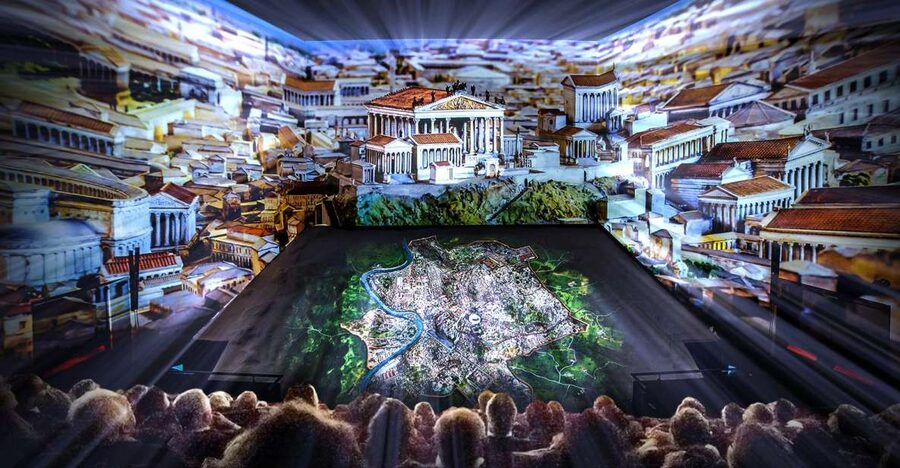
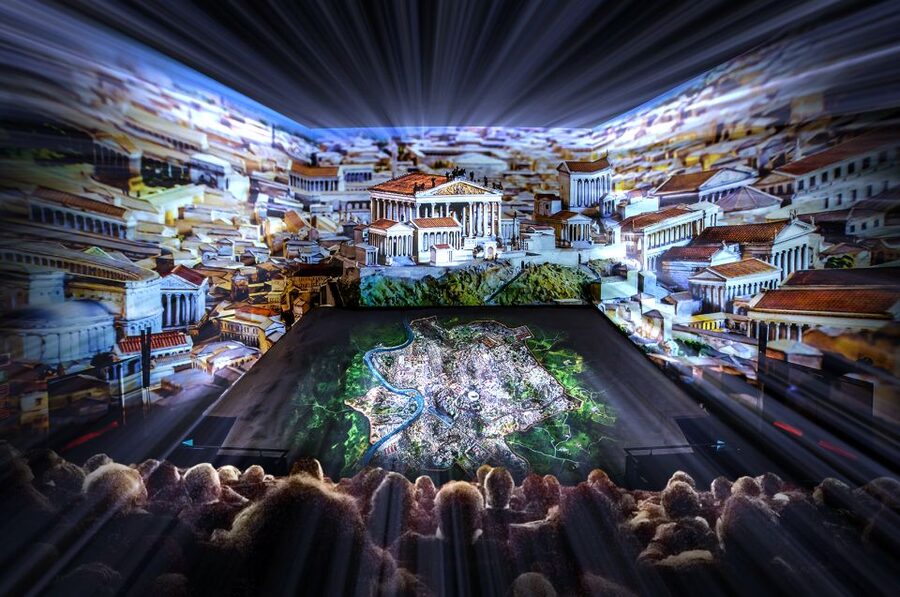
Welcome To Rome is a 27-minute, projection-heavy history lesson that maps how the city grew over 2700 years, with walls and ceilings turning into scenes while a city model lights up below. I especially like how it translates messy layers of ruins, churches, and street layouts into something you can actually picture in your head.
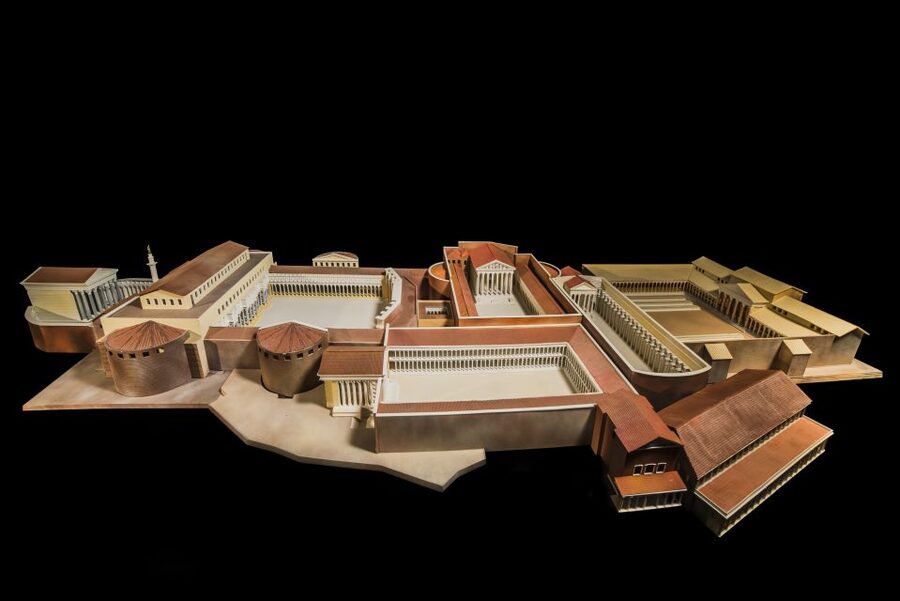
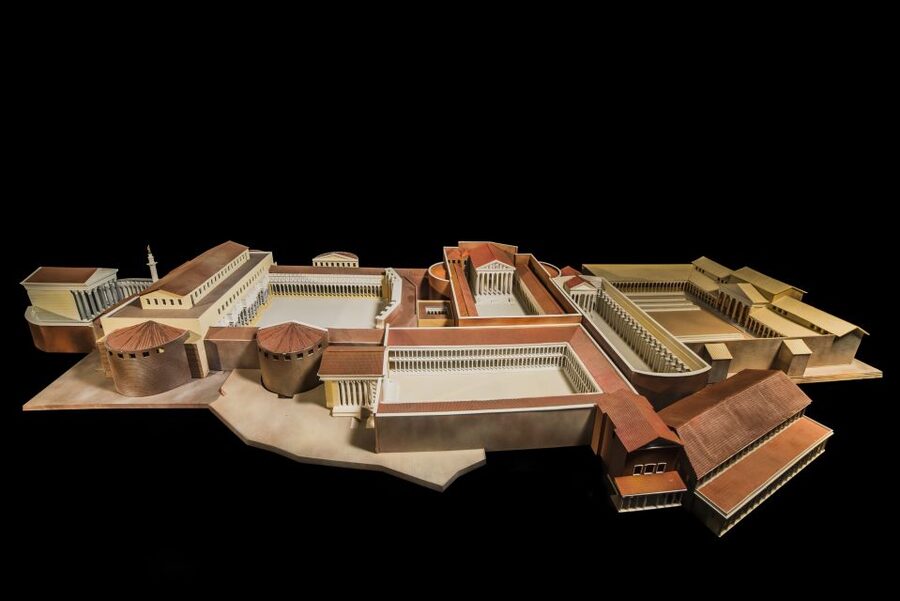
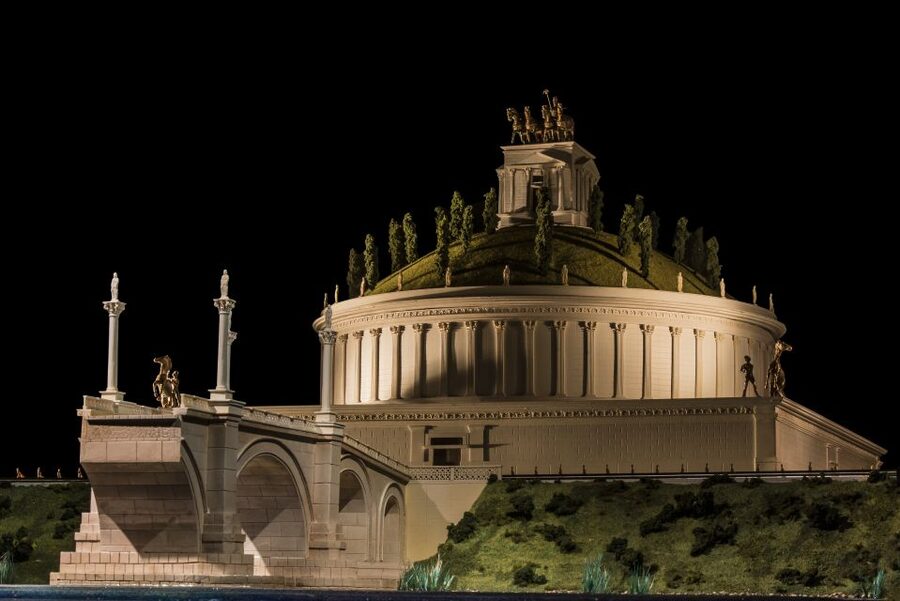
The second big win is the hands-on part. You get time with four large interactive models that spotlight the Imperial Forum, the Augustus Forum, the Mausoleum of Hadrian, and San Peter Basilica, so later visits to those areas make more sense.
One drawback to keep in mind: it is a $21 ticket for a mostly seated show plus model viewing, so if you want tons of physical wandering or you are bringing very small kids, you may wish you had chosen a more flexible, stop-and-go activity.
In This Review
- Key things to know before you go
- Inside Ex-Cinema Augustus, and Why the Location Helps
- The Main Show: A 2700-Year Timeline That You Can Actually See
- The Four Interactive Models: Where Rome Becomes Concrete
- Why This Makes Your Real Rome Trips Click (Especially Forums)
- Timing It Right: Start Anytime, But Watch the Last Show
- Price and Value: Is $21 Worth It?
- Practical Notes: Standing, Seating, and the Best Way to Watch
- Who Should Book This Show?
- Should You Book Welcome To Rome?
- FAQ
- Is the Welcome To Rome show about 27 minutes long?
- Where is the meeting point?
- Do I get an audio guide?
- Can I start the show at any time during opening hours?
- Is the ticket price $21 per person?
- Is skip the ticket line included?
- Is it wheelchair accessible?
Key things to know before you go
- 27 minutes of Rome, year by year as the city transforms around you
- Multi-projection scenes that include an illusion of flying over the city through time
- Four interactive models that connect your map to what you are seeing on the ground
- Audio guides in 9 languages so you can follow at your own pace
- Start anytime during opening hours, since the show runs continuously
- Wheelchair accessible, and the exhibit setup is designed to be usable for different visitors
Inside Ex-Cinema Augustus, and Why the Location Helps
Welcome To Rome happens in the ex-Cinema Augustus on Corso Vittorio Emanuele II, 203. The practical upside of this location is that you can tack it onto a day already centered around Piazza Navona, since it is only a short walk away.
Also, the setting matters. This is a theater-style stop, so you get a real break from the hard walking and (often) the heat. Several visitors describe it as a good reset point in the middle of a busy Rome day, the kind of place where you sit down, cool off, and get your bearings fast.
One more small but useful detail: the show is designed to run continuously, which means you do not have to treat it like a strict one-time performance. You can begin at different times during opening hours, as long as you are there before the final slot.
If you like planning a day around a theme, this is a strong foundation. You will walk into the rest of Rome with a mental “timeline” instead of just a list of monuments.
Other Italy tours travellers rate well:
- Vatican: Museums & Sistine Chapel Entrance Ticket
★ 4.5 · 144,003 reviews - Vatican Museums & Sistine Chapel Tour with Optional Basilica
★ 4.3 · 67,413 reviews - Colosseum, Roman Forum & Palatine Guided Tour
★ 4.7 · 63,148 reviews
The Main Show: A 2700-Year Timeline That You Can Actually See
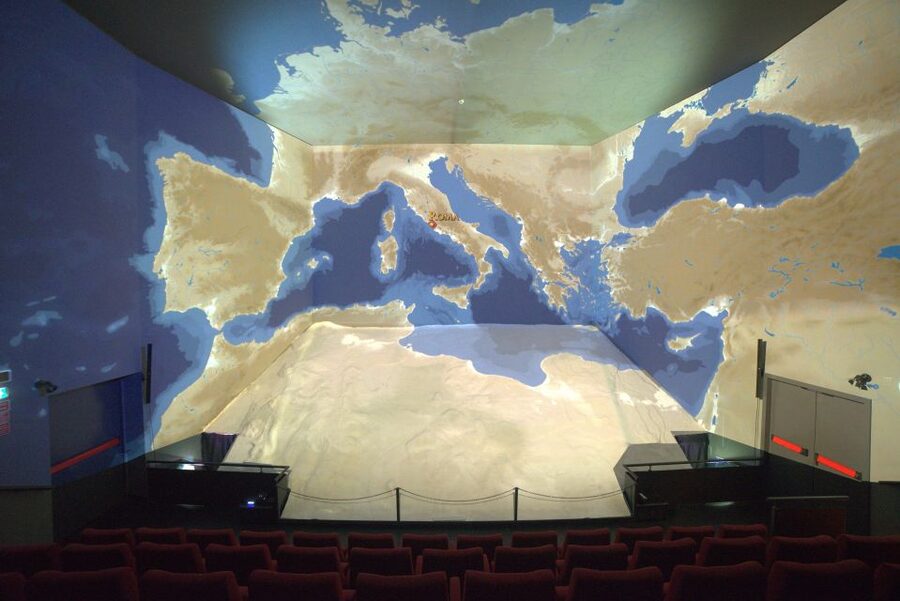
The heart of the experience is the multi-projection presentation. In simple terms, you sit inside a theater space while the walls and ceilings come alive with visuals, and the floor features a large illuminated city model that shows Rome’s evolution over the centuries.
The narration runs for about 27 minutes, covering 2700 years of the city’s development through different ages. The show also creates an illusion of movement, like you are flying over the city and drifting within key spaces such as monuments, palaces, churches, and squares. That “space + time” mix is why this show works so well. It helps you understand not only what existed, but how the city’s layers overlap in the real places you will later stand in.
I also like that the show is not trying to be a museum lecture. It is structured like a visual story. You are not handed a thick textbook. You are shown transformations, then prompted to connect them to what you will see outside.
Practical note: you receive an audio guide during the show, available in 9 languages including English, Spanish, French, German, Italian, Russian, Chinese, Croatian, and Japanese. That variety is a big deal if you are traveling with mixed-language groups or if you want to avoid awkward translation gaps.
The Four Interactive Models: Where Rome Becomes Concrete
After the projection story, you move into the interactive area with four large interactive models. This is where the experience becomes more than entertainment. You get a chance to study Rome as a built environment, not just as a set of camera-friendly ruins.
The models cover:
- Imperial Forum
- Augustus Forum
- Mausoleum of Adrian
- San Peter Basilica
Each one is meant to help you discover the history of those major landmarks and, just as importantly, understand their place within the city. When you are later walking among remnants, you start noticing how areas connect, which buildings belong to which era, and why certain spaces feel the way they do.
One useful viewing tip from the practical-minded side: follow the on-site wayfinding cues. Some visitors mention that there are signs that help you know where to stand or look, so you do not waste time wandering around for the best angle. If you do the models without checking your position, you can miss the effect that makes them work.
This part is also great for mixed interests. If you are traveling with kids, models and visual reconstruction tend to land better than another lecture. If you are a history fan, the value is in having a clear physical reference point while you compare what you see outside.
Why This Makes Your Real Rome Trips Click (Especially Forums)
Rome can be confusing in the best way. You see columns, arches, fragments of walls, then a church sits nearby, then modern streets slice through everything. If you do that with zero context, it can feel like random pieces from different time periods glued together.
That is where Welcome To Rome earns its keep. The show gives you a timeline, and the models give you anchors. Put those together and you start reading the city like a set of overlapping editions.
This is particularly helpful for areas tied to the forums and great monuments. Even if you are not doing a full day of guided tours, the projection’s “Rome over time” sequence can clarify why certain ruins feel positioned for big public life, why streets seem to “bend,” and how later buildings reused or replaced earlier ones.
A lot of visitors also recommend doing it early in the trip for exactly this reason. If you start with it, you spend the rest of your Rome time spotting details instead of asking what era you are looking at.
That said, it is not only for first-timers. If you already visited one major site and felt a little lost, this can still help. Think of it as a mid-trip mental tidy-up.
Nearby, and just as well reviewed:
- Milan: Cathedral and Duomo’s Terraces Entrance Ticket
★ 4.6 · 61,054 reviews - Venice: Doge’s Palace Reserved Entry Ticket
★ 4.6 · 42,716 reviews - Vatican Museums, Sistine Chapel & St Peter’s Basilica Guided Tour
★ 4.5 · 39,149 reviews - Rome: Colosseum, Palatine Hill and Roman Forum Guided Tour
★ 4.8 · 32,814 reviews
Timing It Right: Start Anytime, But Watch the Last Show
The show runs continuously during opening hours, and you can start at different times. So if your morning plan runs late, you are not doomed.
There is one timing constraint that matters: the last show starts 1 hour before closing time. So if you are doing this as a late-day wind-down, make sure you arrive early enough to catch the final slot.
A smart strategy: schedule it before you commit to long forum-heavy walking. If you walk out with a timeline in your head, the next monuments you see tend to make more sense immediately.
If you are in Rome during a hotter month, consider using it as your “cool down and reset” break. Because it is theater-based, it is a nice way to avoid burning an entire afternoon outdoors while still feeling like you accomplished something meaningful.
Price and Value: Is $21 Worth It?
At $21 per person, Welcome To Rome sits in the “not cheap, but not crazy” category for Rome. The key question is what you get for that money.
Here is the value math in plain terms:
- The core presentation runs about 27 minutes
- You then have time for the four interactive models
- You get skip the ticket line and an audio guide in multiple languages
So you are paying for production quality plus the interpretive experience, not for hours of wandering through dozens of rooms. Several visitors describe it as a compact introduction that works well when time is tight, especially on first visits or short trips.
Is it high for what it lasts? Some people do mention that the price feels a bit above what they expected. But if you compare it to the cost of adding a guided orientation elsewhere, the show can still feel reasonable, since it gives you a city-wide framework quickly.
If you are the type who hates standing in crowds waiting for tickets, the skip-the-line benefit matters. If you are the type who wants instant context before you spend money on bigger sites, this experience can save you confusion later, which is a real form of value.
Practical Notes: Standing, Seating, and the Best Way to Watch
You are going to be seated for the show, which is a plus if you want a break. Afterward, the interactive models require you to move around a bit and look at things from the best viewing spots.
A couple of reviews mention that there could be more seating in some areas, particularly for older visitors who cannot stand for long. That is not a dealbreaker, but it is a consideration. If you know you need frequent places to rest, plan for it and pace your time in the model area.
Also, keep an eye on viewing flow. One visitor recommends paying attention to the signposting for where to position your body so you do not walk around aimlessly. That kind of guidance usually exists for a reason, and following it makes the models more satisfying.
For language, you can choose from the available audio guide options. If your group includes non-English speakers, this is a real advantage. You can all experience the same story without relying on guesswork.
Who Should Book This Show?
Welcome To Rome works best for people who want structure. If you prefer a clear narrative and a fast mental framework before you start chasing monuments, this fits.
It also tends to do well for families, especially with kids who are old enough to enjoy visuals and stories. Reviews include families with children around ages 8 to 12 who liked it, and even multi-generation groups where older relatives were just as engaged.
You might skip it if:
- You only want outdoor sightseeing with no seated break
- Your kids are very young and have short attention spans
- You already know Rome’s chronology extremely well and feel you will not gain much from an intro overview
But if you are arriving in Rome with limited time, or you want to stop feeling lost when you walk from ruin to church to piazza, this is a practical way to get your head around what you are seeing.
Should You Book Welcome To Rome?
If you are doing Rome for the first time, or you want a fast orientation before forums and major landmarks, I think this is an easy yes. The show gives you a clear 2700-year timeline, and the four models help you connect that story to real locations you will visit.
I would book it early if you can, especially on a day when you are planning to explore the city on foot. It is also a good choice when you need a break from heat or long lines.
If the price feels steep and you only have a small window for activities, decide based on your style. If you like learning through visuals and you want context that carries you through the rest of your trip, the time and money are usually well spent. If you are strictly into hands-on site tours or you dislike anything theater-like, you may prefer a different kind of Rome outing.
FAQ
Is the Welcome To Rome show about 27 minutes long?
Yes. The main multimedia presentation covers 2700 years in about 27 minutes.
Where is the meeting point?
The entrance is at Corso Vittorio Emanuele II, 203, Rome. It is a few hundred meters from Piazza Navona.
Do I get an audio guide?
Yes. An audio guide is included, with options in Spanish, Chinese, English, French, German, Italian, Japanese, Russian, and Croatian.
Can I start the show at any time during opening hours?
You can start at any time during opening hours because the show runs continuously. The last show starts 1 hour before closing time.
Is the ticket price $21 per person?
The price listed is $21 per person.
Is skip the ticket line included?
Yes. Skip the ticket line is included.
Is it wheelchair accessible?
Yes. The venue and experience are described as wheelchair accessible.
Latest reviews around Italy
- Total Immersion Wine Tour in Chianti★ 4.9 · 430 reviews
- From Rome: Villa D’Este & Villa Adriana Day Trip with Lunch★ 4.4 · 289 reviews
- Tivoli: Villa Gregoriana Entrance Ticket★ 4.7 · 150 reviews
- From Rome: Hadrian’s Villa & Villa d’Este Day Trip & Lunch★ 4.5 · 157 reviews
- Rome: Painting Class with Unlimited Wine★ 4.8 · 109 reviews
- Tivoli: Villa D’Este Entry Ticket and App Audio Guide★ 4.3 · 191 reviews
- Ravenna: UNESCO Mosaics Entry Tickets★ 4.7 · 255 reviews
- Timed Entrance to Leaning Tower Pisa & Cathedral with Audio★ 4.1 · 385 reviews