Reviewed · SICILY TOURS
Palermo, a tour of unique monuments and colorful markets
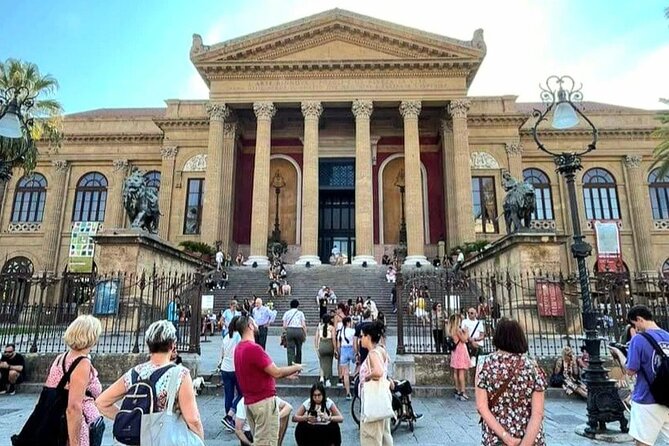
Palermo tells its story in three intense hours. You start near Teatro Massimo, learn why the Florio era still echoes here, and even hear a legend tied to the opera house. Then you head into the Capo market, where the sights, smells, and street-food culture are the real show, not just a side quest.
What I especially liked is how this walk mixes big monuments with everyday Palermo. You get inside the Palermo Cathedral (when open), plus quick stops that explain the city walls, secret-society legends, and the symbolic center at Quattro Canti. The main drawback to consider is the pace: it is a lot of ground in about three hours, so you will want comfy shoes and patience in tight market streets.
In This Review
- Key Highlights You Should Know
- Meeting Near Teatro Massimo, Then Learning Palermo’s Main Theme
- Piazza Olivella and the Puppet Opera: Baroque Squares and UNESCO Culture
- City Walls to Porta Carini, Then Into the Capo Market
- Fontana della Vergogna and the Ballarò and Vucciria Market Scene
- Grotta dei Beati Paoli: When Palermo’s Legends Get a Location
- Entering the UNESCO Palermo Cathedral (Norman-Arab, 1185)
- Via Vittorio Emanuele and Quattro Canti: Palermo’s Central Stage
- Piazza Pretoria and Santa Caterina: Renaissance Art and Dessert Origins
- Price and Value: What $34.83 Buys You in Real Time
- Practical Tips Before You Go
- Who Should Book This Palermo Walk?
- Should You Book This Palermo Monuments and Markets Tour?
- FAQ
- How long is the Palermo monuments and markets tour?
- How much does the tour cost?
- Where does the tour start and where does it end?
- What time does the tour begin?
- What is included in the ticket price?
- Does the tour use a mobile ticket?
- What happens if the weather is poor?
Key Highlights You Should Know
- Teatro Massimo area orientation: You begin by the city’s grandest opera landmark and connect it to Palermo’s Belle Epoque.
- UNESCO stops worked into a walk: The cathedral and the puppet opera theater show Palermo’s Norman-Arab and cultural layers.
- Capo street food, on your time: You get a free window to taste local bites without feeling rushed.
- Legends tied to real places: Beati Paoli and the ghost stories are woven into stops you can actually point at.
- Mercati near multiple neighborhoods: You see where Ballarò and Vucciria fit into the wider market world.
- Ends at the photo-friendly core: Piazza dei Quattro Canti closes the loop at Palermo’s symbolic crossroads.
Meeting Near Teatro Massimo, Then Learning Palermo’s Main Theme
I like tours that help you get your bearings fast. Starting at Piazza Giuseppe Verdi means you immediately face Palermo’s grand stage, the Teatro Massimo. Your guide sets the context for what you are looking at, including the Florio family’s influence and how Palermo’s dramatic opera culture ties into status, money, and public life.
There is also a fun, eerie thread here: you will hear a mysterious ghost legend linked to the theater. Even if you are not hunting spooky stories, it adds personality to the building, so it feels like part of the city’s living memory instead of a stop on a checklist.
A few more Sicily options to weigh
- Catania: Mount Etna Morning or Sunset Day Trip with Tasting
★ 4.8 · 4,028 reviews - Palermo: NO Mafia Walking Tour
★ 4.8 · 2,431 reviews - Palermo: Hop-on Hop-off Bus Tour 24-hour Ticket
★ 3.9 · 2,410 reviews
Piazza Olivella and the Puppet Opera: Baroque Squares and UNESCO Culture
From the Massimo area, you move into Piazza Olivella, a scenic baroque square where the church of Sant’Ignazio and the National Archaeological Museum shape the feel of the place. This is one of those “small time, big payoff” moments where your guide helps you notice what you would otherwise skim right past.
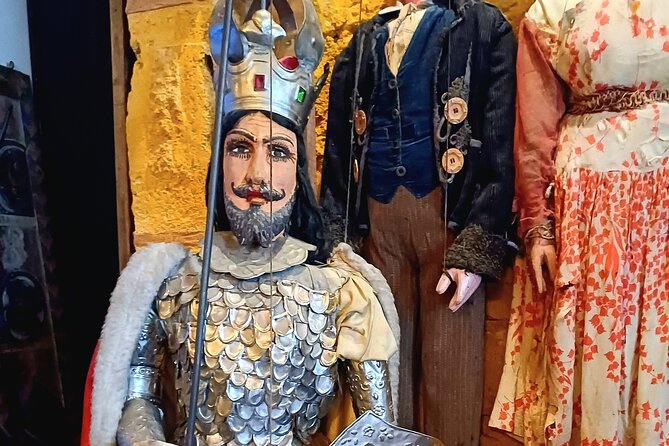
Next is the Teatro dell’Opera dei Pupi, famous for puppet opera. It is listed as a UNESCO heritage site, and even if you never watched a puppet show, you learn how this tradition became one of Palermo’s signature art forms. The key value of this stop is the framing: it explains why local traditions can be as culturally important as grand churches.
City Walls to Porta Carini, Then Into the Capo Market
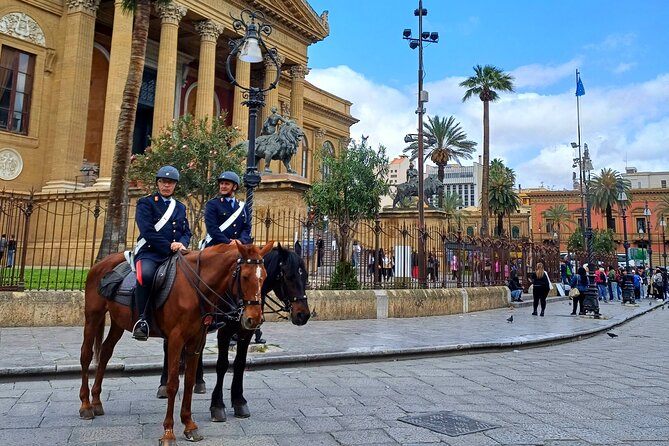
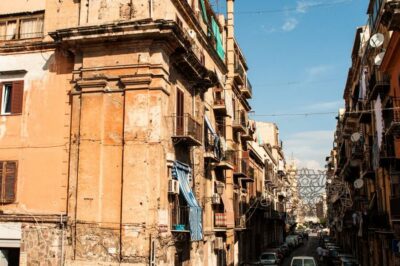
One of the smartest parts of this walk is the transition from old defenses to modern street life. You pause to see a glimpse of the ancient walls built in Palermo in the 1500s and the Porta Carini gate that leads into the Capo area. This turns “walking through neighborhoods” into something more meaningful because you understand what controlled movement before the city became the city.
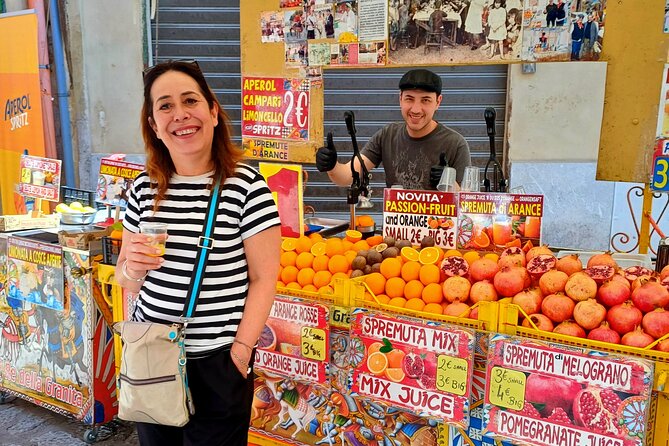
Then comes the highlight for many people: the Capo Street Market, described as an ancient Arab market. Your guide frames it as a living mix of history and daily routine, which is exactly what you want when you come to Palermo for more than just photos. You also get a free stop to taste street food, so you can choose your pace and preferences rather than following a rigid tasting list.
A practical tip here: the best market moments happen when you slow down for five minutes. Look at what is being served, check how locals are ordering, then pick something that looks fresh and simple. Street food is part of Palermo’s identity, and this stop gives you the time to experience it like a local, not like a sprint.
Fontana della Vergogna and the Ballarò and Vucciria Market Scene
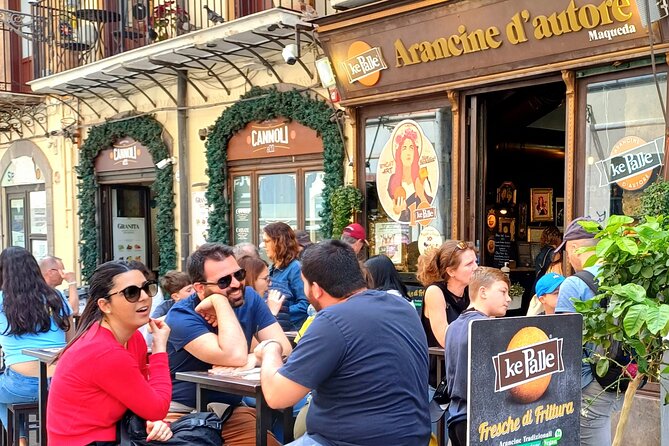
As you keep moving through the market zone, you stop in front of the Fontana della Vergogna. You will be near Ballarò and Vucciria markets, two areas known for the same kind of energetic street culture as Capo.
This is where the tour’s timing helps you. Instead of dumping you in one market and hoping you figure it out, the guide places you at a recognizable landmark and then connects it to the broader market landscape. It is also a great moment to reset your brain after the sensory overload of the stalls.
Nearby, and just as well reviewed:
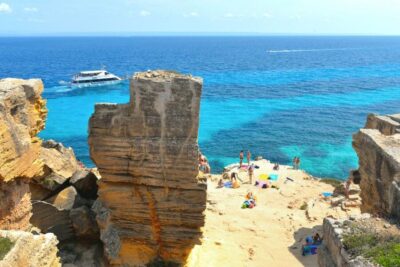
- From Trapani: Cruise to Favignana and Levanzo with lunch
★ 4.2 · 2,286 reviews - Catania: Sunset Jeep Tour of Mount Etna and Lava Flow Caves
★ 4.8 · 2,113 reviews - Palermo Original Street Food Walking Tour by Streaty
★ 5.0 · 2,105 reviews - Mount Etna: Trek to 3000m with cable car and jeep
★ 4.7 · 1,978 reviews
Grotta dei Beati Paoli: When Palermo’s Legends Get a Location
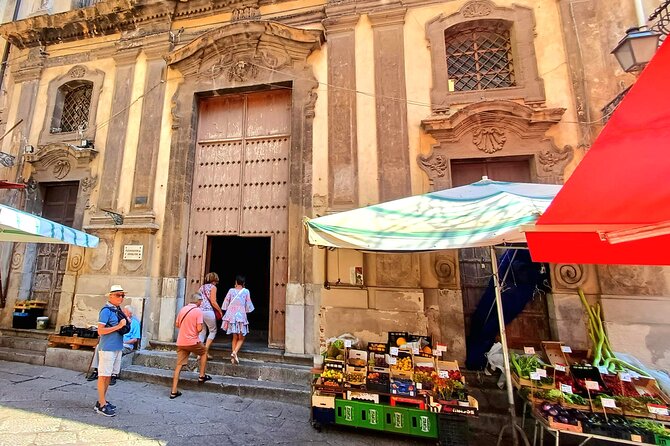
If you like cities where stories feel tied to geography, this stop works well. The tour includes a visit to the Grotta dei Beati Paoli, connected to an ancient secret sect said to have avenged wrongs suffered by poor people in past centuries.
Even if you treat legends as legends, the value here is the way your guide uses the story to explain the social atmosphere of earlier Palermo. You start thinking beyond architecture and dates, and you begin noticing how people’s fears, hopes, and survival strategies shaped the city’s reputation. It is a short stop, but it changes how you read the next monuments.
Entering the UNESCO Palermo Cathedral (Norman-Arab, 1185)
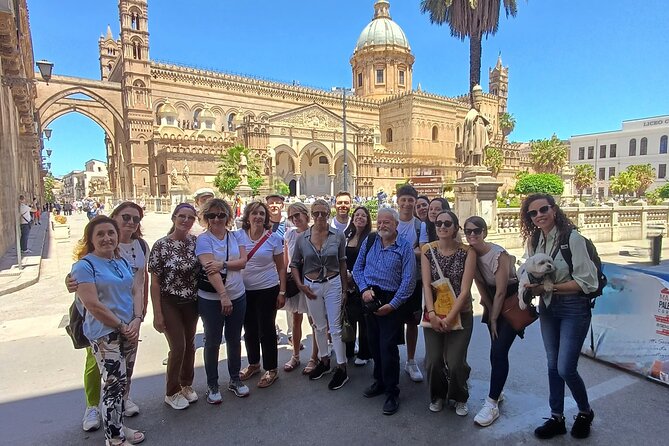
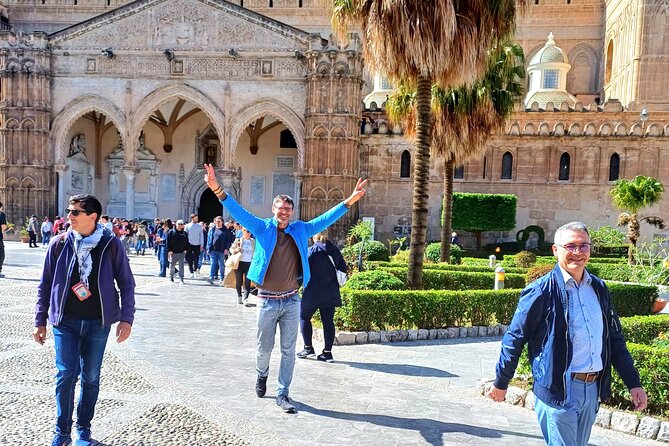
Now for the big one: Cattedrale di Palermo, a UNESCO world heritage site. This cathedral is built in Norman Arab style, and the tour notes it dates to 1185, including the idea that it was a foundation place for the kingdom of Sicily. You also hear about the tombs of the first kings of Sicily.
The practical part matters too. The tour includes free entry to the cathedral if there are no religious services. In other words, you should not expect to treat this as a guaranteed private visit every time, but you do get a real chance to go in when conditions allow.
Inside, the experience is more than “see the building.” Your guide’s context helps you understand the architecture as a mix of influences rather than one single style. That is why it feels distinctively Palermo, not just another Italian church.
Via Vittorio Emanuele and Quattro Canti: Palermo’s Central Stage
After the cathedral, you walk along Via Vittorio Emanuele, described as Palermo’s oldest street and rich in monuments, art, and history. This section is less about one single “wow” object and more about atmosphere. You are learning how the city’s center operates, how the streets connect, and where the major visual anchors show up.
Then you reach Piazza dei Quattro Canti, the tour’s ending point and the center of the ancient city. This square is known for being bright and scenic, packed with symbols, and it is a perfect “wrap it up” location. Ending here also helps you plan the rest of your day, because you are right where many sightseeing routes naturally converge.
Piazza Pretoria and Santa Caterina: Renaissance Art and Dessert Origins
Your last major monumental stop is Piazza Pretoria, set around the famous Renaissance fountain. The tour notes that the square is surrounded by historic buildings, including the convent of Santa Caterina, where many well-known Sicilian desserts were born.
I like ending on food-related context because it gives you a takeaway you can actually use. Even if you do not head to a bakery immediately, you will remember that Palermo’s culture is not split into separate boxes like “history” and “dessert.” The convent story is a reminder that daily life and big art often connect in Sicily.
Price and Value: What $34.83 Buys You in Real Time
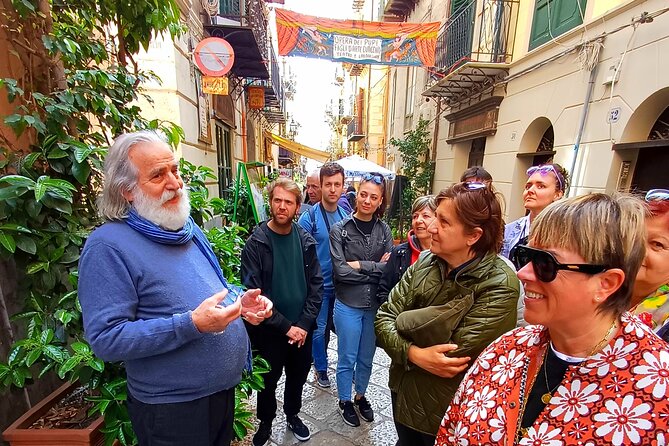
At $34.83 per person for about three hours, the value mainly comes from two things: expert guidance and focused access. You get a professional, authorized, certified guide, plus assistance with information for further visits, transport, and gastronomy. That guidance matters because Palermo can feel layered and confusing if you try to stitch it together on your own.
Also, this tour includes free cathedral entry if there are no religious services, which is one of the few “scheduled” access items listed. The rest is time and interpretation, and that is where the money goes. A maximum of 20 travelers helps keep the experience more workable, especially when you are moving between narrow streets and busy market edges.
On timing, the tour starts at 10:30 am and lasts roughly three hours. That is a sweet spot. Morning is often easier for walking and sightseeing, and it leaves you time to eat and wander after you finish at Quattro Canti.
Practical Tips Before You Go
This is a walking tour with several short stops, so treat it like an active half-day plan. Wear shoes you can trust on uneven sidewalks and market-adjacent streets.
Because the tour requires good weather, have a backup plan in your mind. If rain hits, this experience may be rescheduled or refunded depending on the provider’s decision, so it helps to avoid locking your whole day into a single tight schedule.
And since you are in markets, you might want to carry a small bag for items you buy and keep your valuables secure. The streets around Capo, and especially nearby areas like Ballarò and Vucciria, can get busy.
Who Should Book This Palermo Walk?
This tour is a good fit if you want a balanced “monuments plus local life” experience. You should book it if you like your sightseeing with context, especially when the story connects to real places like Teatro Massimo, the Cathedral, and the market network around Capo.
It is also a solid choice for first-timers. You are shown how the center pieces fit together, from old gates and walls to symbolic squares. If you already know Palermo well, you might find the tour a touch structured, but the legends and the market-time factor still make it worth a look.
Should You Book This Palermo Monuments and Markets Tour?
Yes, if your goal is to understand Palermo quickly and taste the local street-food culture in the process. The best reason to book is the way the tour strings together major landmarks with everyday market life, so you walk away with both photos and context.
Skip it only if you hate walking, dislike crowds in market areas, or you need a fully flexible itinerary with long indoor stays. At its best, this tour feels like a guided route through Palermo’s identity, with just enough time at each stop to make it meaningful without turning it into a slow museum day.
FAQ
How long is the Palermo monuments and markets tour?
The tour is approximately 3 hours.
How much does the tour cost?
The price is $34.83 per person.
Where does the tour start and where does it end?
It starts at Piazza Giuseppe Verdi in Palermo and ends at Piazza dei Quattro Canti.
What time does the tour begin?
The start time is 10:30 am.
What is included in the ticket price?
Included are a professional authorized certified guide, free entry to the Cathedral of Palermo if there are no religious services, and assistance and information for further visits, transport, and gastronomy.
Does the tour use a mobile ticket?
Yes, the tour includes a mobile ticket.
What happens if the weather is poor?
The tour requires good weather. If it is canceled due to poor weather, you will be offered a different date or a full refund.
Latest reviews around Sicily
- The Pearl of Sicily: Private Taormina Walking Tour★ 5.0 · 179 reviews
- Half-Day Pizza Making Class in Taormina★ 5.0 · 192 reviews
- The Godfather tour Sicily★ 4.5 · 215 reviews
- Private tour of Etna and Winery Visit with Food and Wine Tasting from Taormina★ 5.0 · 188 reviews
- Taormina Food and Wine Walking Tour (Small Group or Private)★ 4.5 · 180 reviews
- Taormina and Isola Bella Day Tour with Boat Trip from Messina★ 4.5 · 146 reviews
- Pizza Cooking Class★ 5.0 · 225 reviews
- Pizza & Cannolo Making in Taormina by the Sea★ 5.0 · 144 reviews
Sicily Tours, compared.
Mount Etna Morning or Sunset Day Trip with Tasting
Read our review →
From Trapani: Cruise to Favignana and Levanzo with lunch
Read our review →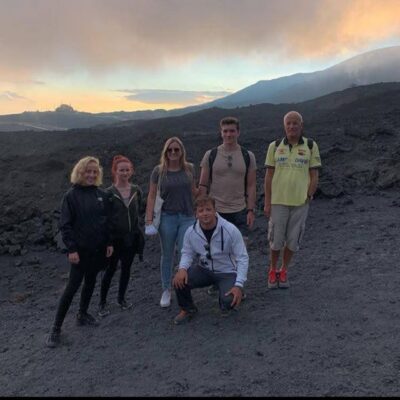
Sunset Jeep Tour of Mount Etna and Lava Flow Caves
Read our review →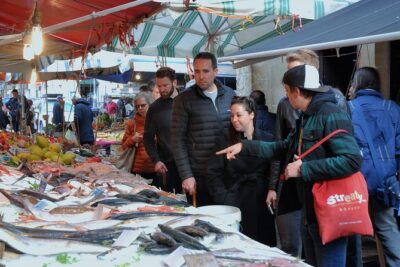
Palermo Original Street Food Walking Tour by Streaty
Read our review →
Mount Etna: Trek to 3000m with cable car and jeep
Read our review →