
Reviewed · ITALY
Mostra Leonardo Da Vinci: Rome Treasure Hunt Game
Da Vinci turns Rome into a puzzle you can walk. I love the way a tablet treasure hunt keeps the day light and goal-driven, and I love that it loops you back into the Mostra Leonardo da Vinci exhibition for a hands-on finish. The only real catch is that it takes a lot of walking, so build in comfortable shoe time.
In This Review
- Why This Treasure Hunt Works in Rome
- Key Things to Know Before You Go
- Starting at Mostra Leonardo da Vinci (Piazza della Cancelleria 1)
- The Tablet Hunt: How the Game Turns Sightseeing Into a Mission
- The Best Part of Rome: Stop, Look, Photograph, Repeat
- Choose Your Route: Landmarks You May Hit (and How)
- The Final Riddle Back Inside the Museum
- What You Actually Get for $53 Per Person
- Staff Help, Language Options, and the Human Factor
- Timing: 3 Hours vs 3.5 Hours, and Why It Matters
- Walking Reality Check: Comfort Beats Speed
- Photo Tasks and Tablet Map: A Helpful Note
- Who This Treasure Hunt Is Best For
- A Practical Day Plan (So You Feel Organized)
- Should You Book the Mostra Leonardo da Vinci Rome Treasure Hunt?
Why This Treasure Hunt Works in Rome
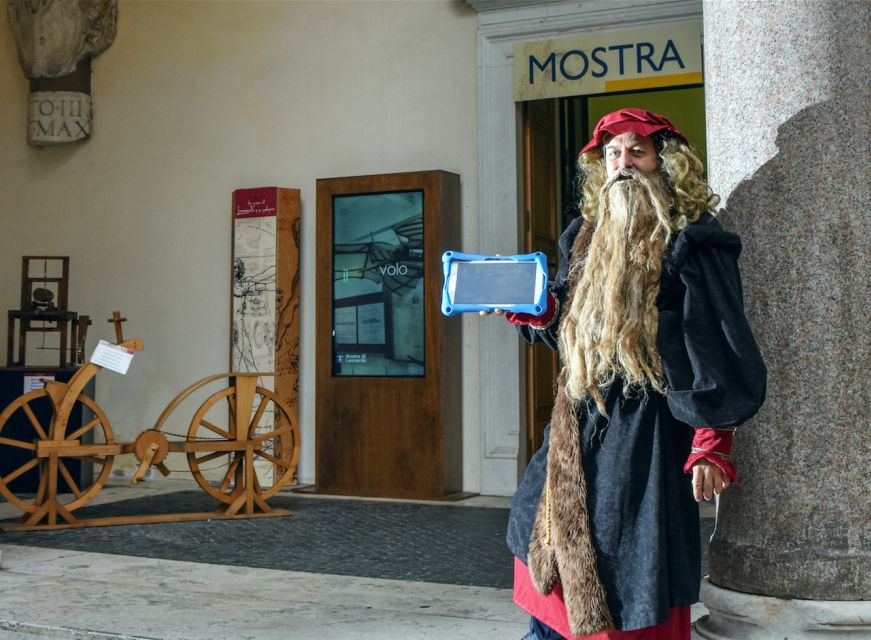
This experience is built for variety. You start at the Leonardo da Vinci museum, then the app guides you through the ancient center in a choose-your-own way. Instead of trudging from one “must-see” to the next, you move between sights because you’re hunting clues, earning points, taking photos, and answering questions along the way.
You also get a built-in rhythm: go out, stop often, read and look closely, then return for the final riddle inside the exhibition. That structure matters in Rome, where it’s easy to lose the thread after a few hours of sightseeing.
And since it’s designed to be entertaining for kids while still being interesting for adults, it’s a rare family activity that doesn’t feel like babysitting.
Key Things to Know Before You Go
- Tablet-led route means you do not have to figure out where to go next
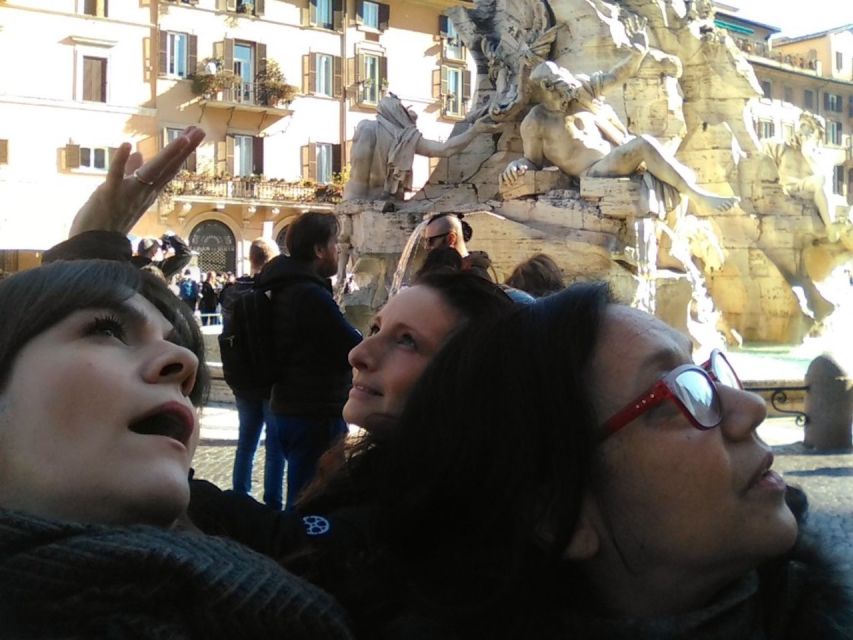
- Choose-your-own stops can include places like the Colosseum, Spanish Steps, Piazza Navona, Campo dei Fiori, the Pantheon, and the Forum area
- Point system feeds more clues, so paying attention actually changes what you experience
- Museum finale is part of the game, with a final riddle at Mostra Leonardo da Vinci
- Photo-based tasks include photographing your own living sculptures near original sculptures
- Skip-the-line entry to the museum helps you start the hunt without stalling
Other Italy tours travellers rate well:
- Vatican: Museums & Sistine Chapel Entrance Ticket
★ 4.5 · 144,003 reviews - Vatican Museums & Sistine Chapel Tour with Optional Basilica
★ 4.3 · 67,413 reviews - Colosseum, Roman Forum & Palatine Guided Tour
★ 4.7 · 63,148 reviews
Starting at Mostra Leonardo da Vinci (Piazza della Cancelleria 1)
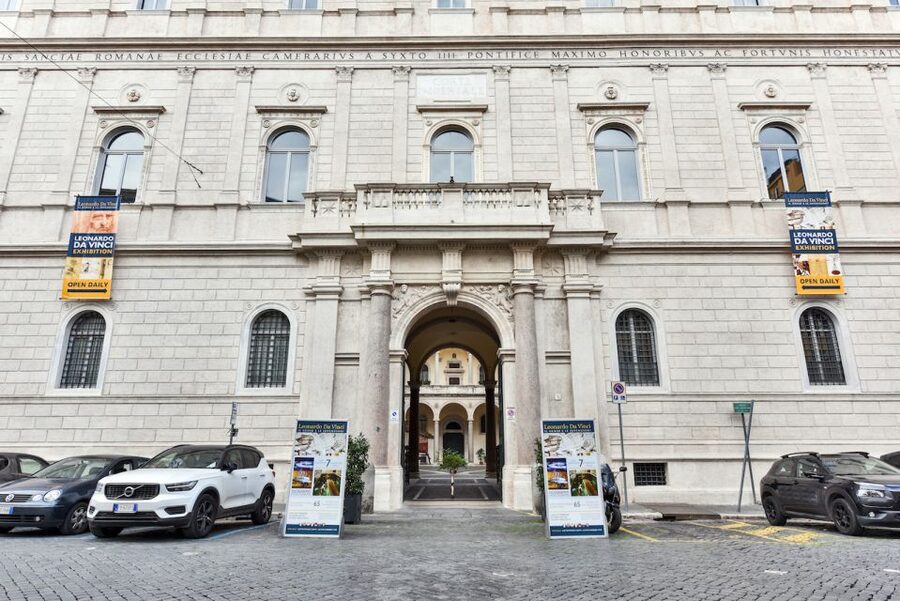
The action begins at Mostra Leonardo da Vinci, at Piazza della Cancelleria 1, near Campo dei Fiori and Piazza Navona. This matters because you’re starting in the thick of central Rome, so your first steps already feel like sightseeing, not a commute.
Once you check in at the ticket counter with your voucher, you’ll pick up what you need to play. The included kit centers on a tablet rental and an interactive city map, and it’s designed so you can get going without a complicated briefing.
A practical tip: plan to arrive a few minutes early. Tablet games move fastest when everyone is ready to scan, tap, and start reading immediately.
The Tablet Hunt: How the Game Turns Sightseeing Into a Mission
After you receive the tablet in the museum, you start your self-guided treasure hunt around Rome. The route is not locked in a single file line. The app leads you through “best sights,” but you still have choices based on what looks most stimulating to you.
What that means for you: instead of ticking boxes, you’ll be making decisions based on clue prompts and your own energy level. Want more of the classic landmarks? You can aim toward areas such as the Colosseum or the Spanish Steps. Want to stay in the thick of the compact old center? The game can keep you near places like Piazza Navona and Campo dei Fiori.
The structure is simple and effective:
- You answer questions and follow clue stages across the city.
- You earn points at stages.
- More points mean you receive more clues.
- You keep your clues in mind for the final riddle back at the exhibition.
This “pay attention now, use it later” approach is why the hunt feels more engaging than a typical audio guide. It also explains why families keep doing stops they would usually skip. The game gives the next reason to look.
The Best Part of Rome: Stop, Look, Photograph, Repeat
One of the standout highlights is photo-based play tied to da Vinci’s ideas. There’s a segment where you photograph your own living sculptures next to the original sculptures. It sounds playful because it is playful, but it also trains your eye.
Rome is full of details you can walk past without noticing. The living-sculpture photo task pushes you to slow down and line up a shot. It also gives you a fun “evidence” moment, like you did something real, not just read about it.
So for your planning: bring a charged phone or camera even though the tablet is part of the game. If you want photos to actually come out well, you’ll want your own control over timing and framing.
Nearby, and just as well reviewed:
- Milan: Cathedral and Duomo’s Terraces Entrance Ticket
★ 4.6 · 61,054 reviews - Venice: Doge’s Palace Reserved Entry Ticket
★ 4.6 · 42,716 reviews - Vatican Museums, Sistine Chapel & St Peter’s Basilica Guided Tour
★ 4.5 · 39,149 reviews - Rome: Colosseum, Palatine Hill and Roman Forum Guided Tour
★ 4.8 · 32,814 reviews
Choose Your Route: Landmarks You May Hit (and How)
You can potentially visit big hitters like the Colosseum, Spanish Steps, Piazza Navona, Campo dei Fiori, the Pantheon, and the Forum Romanum area. You may even cover several, depending on how you choose to follow the game and how much you want to answer along the way.
Here’s what I like about this format:
- You can scale it. If you only have 3 hours of energy, you can do the essentials.
- You can tailor it. If your group has a favorite area, the hunt format lets you drift toward it.
- You’re less likely to get stuck with a rigid schedule.
A fair consideration: if you want to answer everything and chase all possible points, you’ll walk more. The hunt is designed for “stroll with purpose,” but it is still a city-walking activity.
If your group includes someone who gets tired easily, treat it like a menu. Pick the questions and stops that matter most to your pace.
The Final Riddle Back Inside the Museum
Your outdoor game loops back to Mostra Leonardo da Vinci. That’s not just a return trip. The clues you collected outdoors become part of what you solve at the exhibition.
This is where the day clicks for a lot of families. It’s one thing to see Roman sights, but it’s another to connect those sights and observations to da Vinci’s themes once you’re back inside.
In the museum portion, many people find it especially good for kids because it’s interactive and hands-on. One family-friendly appeal is the museum staff handing over a prize for children who complete the hunt, so it ends on a fun note rather than a stop-it-here checklist.
What You Actually Get for $53 Per Person
At $53 per person for a 3.5-hour experience, value comes from the package, not from one single “thing.” You’re paying for:
- Entry to Mostra Leonardo da Vinci
- A treasure hunt kit with tablet rental and an interactive city map (one tablet per family)
- A guided-feeling city experience powered by the app, including the museum finale
What’s not included:
- Hotel pickup and drop-off
- Food and drinks
- Entry to any other attractions beyond the Leonardo da Vinci exhibition
That’s important. In Rome, many of the famous stops (Colosseum, Pantheon, Forum sites) can require their own tickets. The treasure hunt format can guide you past or toward these famous areas, but you should plan separate admission if you want to go inside.
My take on value: if you want a family-friendly way to cover central Rome without getting bored, the included museum entry plus the tablet-led walking can feel like a smart use of half a day. If you already planned to spend most of your day deep in museums, it may overlap a bit. Still, the hunt structure can make museum time feel less passive.
Staff Help, Language Options, and the Human Factor
A major plus is the museum staff. People consistently describe the staff as kind and helpful, including assistance with understanding how to use the tablet. That’s not a small deal, because tablet games only work smoothly if you can navigate the map, save or confirm photos, and move through stages confidently.
Language coverage is solid: Italian, English, German, French, Spanish, Russian. That matters for families. If your group includes non-English speakers, this kind of multi-language option reduces stress.
One more detail that’s worth knowing: the experience is described as a private group format, with wheelchair accessible support. It’s also rain or shine, so plan for weather.
Timing: 3 Hours vs 3.5 Hours, and Why It Matters
The listed duration is 3.5 hours, and the flow is designed to start at the museum, walk around the center, then finish back inside.
In practice, you might choose shorter or longer depending on your group. Some visitors specifically mention they spent less time outdoors because their kids wanted extra museum time, and they were offered more time when they asked. So think of this as a half-day block with flexibility, not a rigid clock.
If you’re trying to fit this into a packed Rome schedule, I’d treat it as a priority activity for the afternoon or morning. After this, you’ll likely be oriented to the neighborhood and the big landmarks. That makes it easier to decide where to return later, on your own.
Walking Reality Check: Comfort Beats Speed
This is a city-walking experience, and it can involve plenty of walking if you want to answer more questions and hit several stages. The good news is that you’re always moving for a reason.
The practical consideration is simple: wear comfortable shoes and expect you’ll stop often. If you go in thinking it’s a quick museum visit plus a short stroll, you may feel rushed. If you go in expecting an active half-day with frequent breaks, it feels right.
Also, because it runs rain or shine, bring a light rain layer. Rome weather can change fast, and the game does not pause for clouds.
Photo Tasks and Tablet Map: A Helpful Note
Most people enjoy the tablet game flow, but it’s worth flagging a few practical issues that can affect your day:
- You may need a minute to figure out how to use the tablet’s map to see where you are.
- Photo handling can be slightly finicky on the tablet, including how images are saved or carried forward in the game.
- The tablet case can sometimes block part of photos depending on how it’s held.
None of that ruins the experience, but it can affect timing. My advice: before you start outside, spend a few extra minutes getting comfortable with the map view and photo steps. It makes the game smoother later.
If your group includes a tech-savvy teen or adult, put them in charge of the tablet navigation. It saves you from a mini tech support session mid-walk.
Who This Treasure Hunt Is Best For
This is particularly strong for:
- Families with kids, especially if you want to keep attention high while walking between sights
- Teens, since they often enjoy the “mission” feel and the learning through clues
- Adults who like sightseeing but don’t want to spend the day staring at a route on a phone
- Groups who enjoy photos and interactive elements
It’s less ideal if your group hates walking, or if you want a fully guided, spoken commentary all the way through. This is more “game guided” than “talking guide guided.”
A Practical Day Plan (So You Feel Organized)
If you want the smoothest experience, I’d plan like this:
- Arrive at the Leonardo da Vinci museum, get checked in, and start the tablet setup without rushing.
- Take your first outdoor stops at an easy pace. Get the game rhythm early.
- Choose a few landmark clusters rather than trying to do everything.
- Leave enough time to return to the museum and solve the final riddle without feeling squeezed.
- Build in a slow museum finish if your group gets hooked.
That approach keeps the treasure hunt fun rather than frantic.
Should You Book the Mostra Leonardo da Vinci Rome Treasure Hunt?
I’d book it if you want a half-day that mixes Rome landmark areas with a museum payoff, and you like the idea of learning through clues rather than lectures. The included museum entry plus the tablet-led walk is good value for families, and the interactive museum finish gives the whole day a satisfying ending.
I would think twice if:
- You plan to spend all your time inside major attractions with tickets of your own and already have a museum-heavy schedule.
- Your group is very sensitive to walking distance, because the hunt can mean substantial walking.
- You dislike tablet-based activities, since you do need to use the map and follow prompts.
If you want a fun, structured way to see central Rome while discovering Leonardo da Vinci’s “mysterious mind,” this treasure hunt is a smart match.
Latest reviews around Italy
- Total Immersion Wine Tour in Chianti★ 4.9 · 430 reviews
- From Rome: Villa D’Este & Villa Adriana Day Trip with Lunch★ 4.4 · 289 reviews
- Tivoli: Villa Gregoriana Entrance Ticket★ 4.7 · 150 reviews
- From Rome: Hadrian’s Villa & Villa d’Este Day Trip & Lunch★ 4.5 · 157 reviews
- Rome: Painting Class with Unlimited Wine★ 4.8 · 109 reviews
- Tivoli: Villa D’Este Entry Ticket and App Audio Guide★ 4.3 · 191 reviews
- Ravenna: UNESCO Mosaics Entry Tickets★ 4.7 · 255 reviews
- Timed Entrance to Leaning Tower Pisa & Cathedral with Audio★ 4.1 · 385 reviews