
Reviewed · COOKING CLASSES
Hands on Italian Cooking Classes
Cooking in an Italian farmhouse kitchen feels like you belong there. I love how hands-on the class is, from rolling dough to building a full meal from scratch, and I love that the English-speaking teacher walks you through both technique and the story behind the recipes.
One thing to plan for: there is no hotel pickup, and the class meets at Farmhouse La Volpe E L’uva on Strada Comunale S. Marino, so you’ll want your own way there. The setting also matters, you’re working in a real agricultural home where ingredients come from the estate, not a demo kitchen.
In This Review
- Key highlights at a glance
- A practical, real-world look at the farmhouse kitchen near Perugia
- What you cook: four courses built from Umbrian classics
- The farmhouse setting and the estate ingredients that change the whole vibe
- How the class actually runs from 10:00 a.m.
- Techniques and recipe stories you can use later
- The menu moment: eating your work with estate wine
- Price and value: what you’re paying for at $169.38
- Where to meet and how to get there without stress
- Dietary needs: how to handle them the right way
- Certificates and take-home materials that make it feel complete
- Who should book this class (and who might not love it)
- Should you book Let’s Cook in Umbria? My decision guide
- FAQ
- What time does the cooking class start?
- How long is the class?
- How many people are in the class?
- Is the class taught in English?
- What is included in the price?
- Is hotel pickup or drop-off included?
- Where do I meet for the class?
- Are there dietary accommodations?
- When will I receive confirmation after booking?
- Can I get a refund if I cancel?
Key highlights at a glance
- Totally hands-on, multi-course cooking with a 4-course meal you prepare and eat
- English instruction with recipe history and traditional techniques
- Farm-first ingredients, including produce from an organic garden and estate-produced olive oil and organic red wine
- Small group size (max 8), which keeps the class personal and manageable
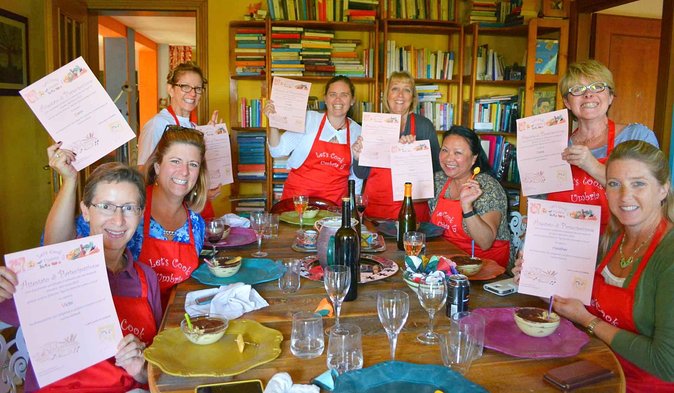
- You take home more than leftovers, a recipe folder, apron, and a participation certificate
A practical, real-world look at the farmhouse kitchen near Perugia
This is the kind of cooking class you choose when you want more than watching. The whole point is your hands on the food, learning the steps that turn a dish from okay to properly Italian. You’ll work on a full meal, then sit down together to eat it with Umbrian wine from the estate.
What also helps is the teacher experience. In the comments I saw repeated patterns: patient instruction, clear tips even when you have no cooking background, and a sense of humor that makes you less scared of the dough. The class is led by an English-speaking teacher, often referenced as Raffaella in participant notes, and that matters if your goal is to actually understand what you’re doing, not just follow motions.
Value-wise, the price looks very reasonable when you remember what’s included: a half-day class, your four-course lunch, estate wine during the meal, coffee after lunch, plus a recipe folder and an apron.
A few more Italy options to weigh
- Florence: Pasta Cooking Class with Unlimited Wine
★ 4.9 · 10,285 reviews - 3 in 1 Cooking Class near Navona: Fettuccine, Ravioli & Tiramisu
★ 5.0 · 7,376 reviews - Florence: Pasta & Tiramisu Cooking Class with Unlimited Wine
★ 4.9 · 6,708 reviews
What you cook: four courses built from Umbrian classics
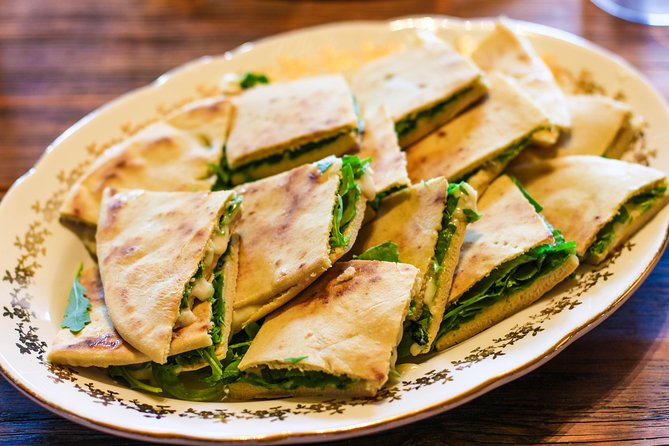
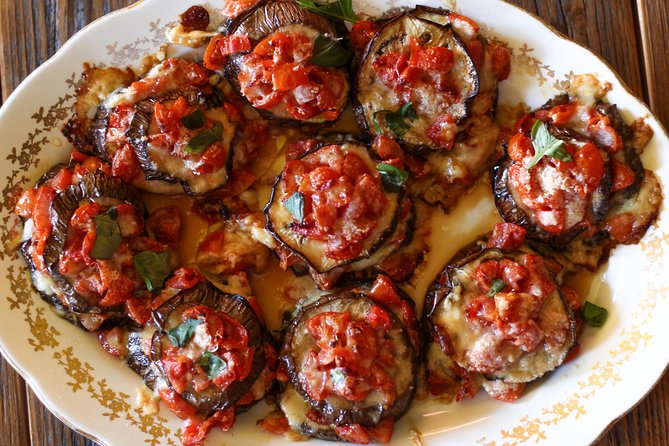
The format is designed so you cook a complete meal instead of one or two isolated dishes. You prepare from scratch a four-course lineup, typically including an appetizer, a first course, a main course with side dish, and a dessert. The menu rotates, but the kind of food you can expect is very Umbrian and very centered on comfort Italian cooking.
Here are examples of the dishes that can show up in your class menu, so you know the flavor direction:
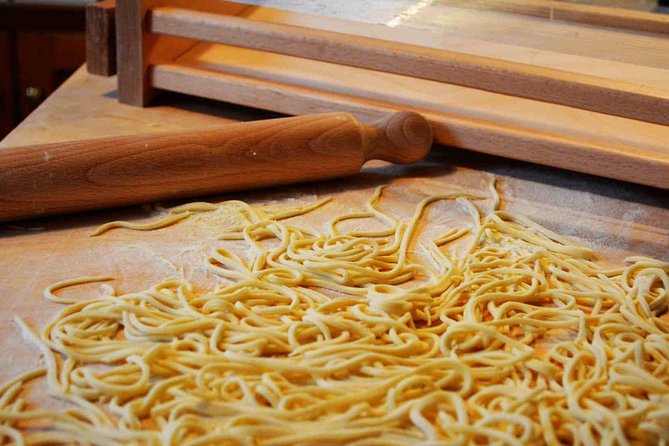
- Homemade tagliatelle with sausage ragu
- Potato gnocchi
- Ravioli with spinach and fresh ricotta
- Strangozzi with truffle
- Pork tenderloin with dry plums
- Chicken alla cacciatora
- Veal alla Perugina
- Homemade tiramisu
- Chocolate and pears cake with cream
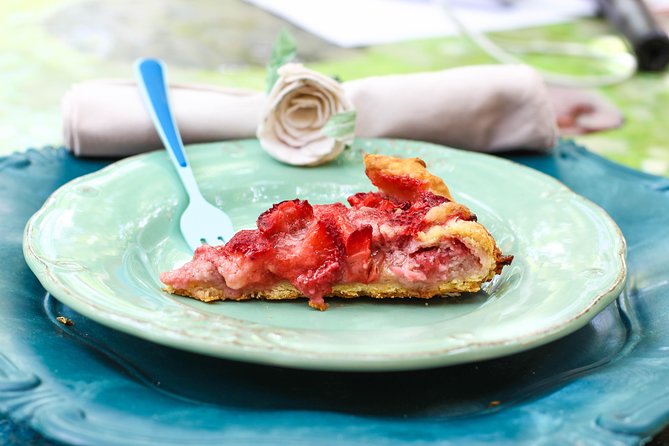
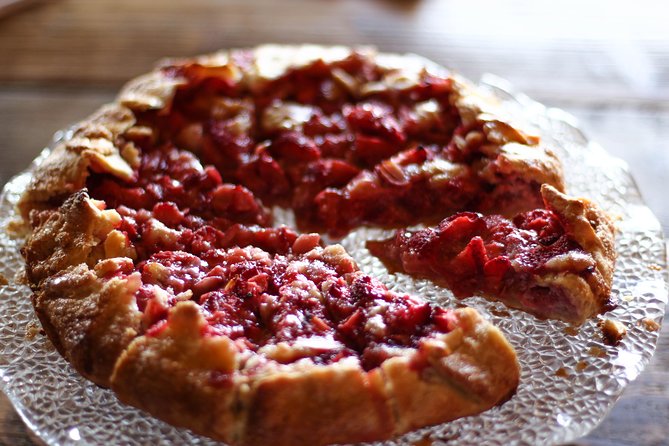
- Crostata
Even if you do not make every single item listed above, these examples give you the right idea: pasta-making skills, slow-simmered sauces, and desserts that are built for a table, not a photo.
Also, the course structure helps you taste the logic of Italian meals. You learn how a starter sets the tone, how the first course manages starch and sauce, and how the main course shifts from saucy to more roast or braised flavors, then you land on dessert to finish the arc. That sequencing is part of why it feels like a real meal, not a food activity.
The farmhouse setting and the estate ingredients that change the whole vibe
The class takes place at Agriturismo La Volpe e L’uva, a working farmhouse setting rather than a staged cooking school. That matters for two reasons.
First, you’re cooking in a space that matches the food. In participant notes, people repeatedly highlight the family-home feel, which keeps the mood relaxed and friendly. Second, you benefit from the ingredient story. The estate grows vegetables in an organic garden, and the farm produces extra virgin olive oil plus organic red wine. Other ingredients come from local markets.
So you’re not just learning recipes, you’re learning how ingredients behave when they come from the same region that shaped the dish. You taste the difference between generic supermarket pantry items and olive oil and wine with a real local origin.
And yes, the wine is part of the lunch. You’ll have Umbrian wines during the meal, plus coffee after. That pairing makes the whole experience feel like a shared meal, which is usually the best part of a class like this.
How the class actually runs from 10:00 a.m.
The timing is straightforward. Classes begin at 10:00 a.m. and are generally about 3 to 4 hours long, depending on the pace of the group and how the meal comes together.
You’ll follow the day’s rhythm:
- You arrive and get oriented to the kitchen and the plan for the meal.
- You cook hands-on, building multiple components rather than just one dish.
- When your food is ready, you all sit down to eat what you made.
- You finish with coffee, and you leave with your recipe materials.
Because the group is capped at 8 travelers, you’re less likely to feel like you’re in a conveyor belt class. You can ask questions and get practical help, especially on technique points like pasta handling, dough texture, and how to shape fillings.
If you care about learning how to cook, not just what to cook, this structure is a strong fit. You get repetition and feedback while the ingredients are still in your hands.
Nearby, and just as well reviewed:
- Vatican: Museums & Sistine Chapel Entrance Ticket
★ 4.5 · 144,003 reviews - Vatican Museums & Sistine Chapel Tour with Optional Basilica
★ 4.3 · 67,413 reviews - Colosseum, Roman Forum & Palatine Guided Tour
★ 4.7 · 63,148 reviews - Milan: Cathedral and Duomo’s Terraces Entrance Ticket
★ 4.6 · 61,054 reviews
Techniques and recipe stories you can use later
A good cooking class teaches ingredients and also teaches decisions. This one aims to do both. The English-speaking teacher covers traditional Italian techniques and shares the history of each recipe, which turns the class from a list of steps into something you can remember and repeat.
That history angle matters in small ways. When you understand where a dish came from, you tend to cook more with intention. You also start to recognize common patterns across Italian cooking: how sauces cling to pasta, how stuffing ratios work in ravioli, and how desserts rely on texture balance rather than only sweetness.
From what’s reflected in participant experiences, pasta-making tends to be a highlight. People specifically call out learning useful tips and techniques they had never heard before. If you’ve only seen pasta recipes online, this kind of in-person guidance helps you fix the usual trouble spots quickly, like dough too dry or fillings too loose.
You’ll also learn that Umbria cooking often leans on simple, honest ingredients. For many people, the “aha” is realizing how flavors like sausage ragu, truffle pasta styles, and fruit-forward pairings like dry plums can feel both hearty and elegant.
The menu moment: eating your work with estate wine
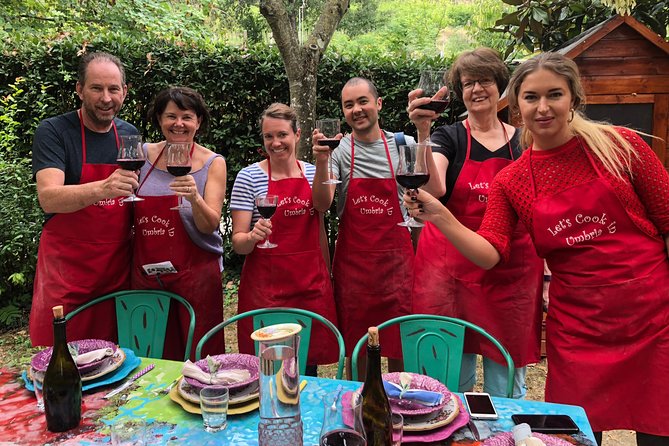
Cooking is only half the experience. The other half is the meal itself, and this class builds that in on purpose. After the prep, you enjoy the meal together with Umbrian wines during meals and coffee after lunch.
That setup changes the tone. Instead of rushing to finish so you can go, you pace toward eating. And because you cooked the food, the dining part becomes a lesson in flavor and technique you can actually taste.
You’ll also get to see how the different courses fit together on a real table. It’s one thing to taste a tiramisu at a restaurant. It’s another to assemble it after practicing the fundamentals in class, then eat it with the rest of the meal you built.
Price and value: what you’re paying for at $169.38
At $169.38 per person, this class is not the cheapest cooking option in Italy. But it also isn’t overpriced for what’s included.
Here’s why the value holds up:
- You’re paying for a half-day, not a quick demo.
- The class includes hands-on prep of a full four-course lunch.
- You get wine from the estate during the meal and coffee after.
- You take home a folder of recipes, plus an apron and a certificate of participation.
The big value driver is that you don’t just eat the result, you learn how to make it. If you’ve ever paid for a food tour that left you hungry for actual cooking skills, this is the opposite. It’s time, instruction, ingredients, and the meal all bundled into one practical experience.
One more detail: it’s run by a small group max of 8, which often means the teacher can correct mistakes and guide the room without feeling rushed. That matters when you’re learning pasta or more delicate assembly.
Where to meet and how to get there without stress
You meet at Farmhouse La Volpe E L’uva, Strada Comunale S. Marino, 25, 06125 Perugia PG, Italy. The activity ends back at the meeting point, so there’s no complicated detour into town at the end.
Two practical notes:
- No hotel pickup and drop-off is provided.
- It is marked as near public transportation, so you can plan a simple route if you don’t want to arrange a private car.
Since the class starts at 10:00 a.m., aim to arrive with buffer time so you can settle in and start on schedule.
Dietary needs: how to handle them the right way
If you have dietary requirements, you should mention them at booking. The class notes specifically ask you to advise any dietary needs when you reserve.
In the experience notes I read, there’s at least one clear positive signal that the teacher can work with dietary requests. That doesn’t mean every special need is automatically covered, but it does mean your best move is to communicate early so they have time to plan.
If you’re vegetarian, gluten-free, or avoiding certain ingredients, send the details up front rather than hoping on the day. This class is hands-on, and substitutions work best when the kitchen has a plan.
Certificates and take-home materials that make it feel complete
You do receive a certificate of participation, and you also leave with:
- a folder with all the recipes
- an apron of Let’s Cook in Umbria
One small caution to keep in mind: there’s an example of a participant who did not receive their certificate as expected. The correct response if anything seems off is simple, follow up so it can be resolved. In general, though, the certificate and recipe folder are part of what you’re paying for.
The recipe folder is the practical part you’ll thank yourself for later. After you’re home, it helps you recreate your favorite parts, especially if pasta and sauce steps are still fresh in your memory.
Who should book this class (and who might not love it)
This is a great fit if you:
- want hands-on cooking rather than watching
- like traditional Umbrian dishes and regional ingredients
- want an English-speaking teacher who explains technique and recipe meaning
- enjoy small-group, friendly instruction (max 8 people)
You might think twice if you prefer:
- a purely sightseeing day, because this is focused on cooking and eating
- zero logistics, because there is no hotel pickup
- long, structured lectures, because the format is practical work in the kitchen, then a meal
If you’re cooking-curious with a partner or small group, this class style is also ideal. The meal feels shared, and you get enough interaction without a large crowd.
Should you book Let’s Cook in Umbria? My decision guide
I’d book this if you want a half-day that turns into real skills you can use again. The hands-on setup, the estate setting, and the included lunch with estate wine make it a strong value, not just a one-time taste.
Do it especially if you plan to spend your time in Umbria exploring slowly and you like the idea of bringing home a recipe folder with dishes you actually cooked. And since it’s often booked about 31 days in advance on average, don’t leave it to the last minute.
On the other hand, if getting to the meeting point is a big problem for you, or you’re not into cooking tasks, the no-pickup logistics could be annoying. In that case, consider a food experience that includes more transportation and less kitchen work.
If you’re on the fence, trust the basics: a small group, a real farmhouse kitchen, English instruction, and you eat what you make. That combination is hard to beat in Perugia.
FAQ
What time does the cooking class start?
The classes begin at 10:00 a.m.
How long is the class?
It is generally about 3 to 4 hours long (a half day).
How many people are in the class?
The group size has a maximum of 8 travelers.
Is the class taught in English?
Yes, it is offered in English.
What is included in the price?
The included items are the half day cooking class, a four-course lunch from the cooking lesson, Umbrian wines during meals, coffee after lunch, a certificate of participation, a folder with the recipes, and an apron.
Is hotel pickup or drop-off included?
No, hotel pickup and drop-off are not included.
Where do I meet for the class?
You meet at Farmhouse La Volpe E L’uva, Strada Comunale S. Marino, 25, 06125 Perugia PG, Italy.
Are there dietary accommodations?
You should advise any specific dietary requirements at the time of booking.
When will I receive confirmation after booking?
Confirmation is received within 48 hours of booking, subject to availability.
Can I get a refund if I cancel?
This experience is non-refundable and cannot be changed for any reason.
Latest reviews around Italy
- The Pearl of Sicily: Private Taormina Walking Tour★ 5.0 · 179 reviews
- Half-Day Pizza Making Class in Taormina★ 5.0 · 192 reviews
- The Godfather tour Sicily★ 4.5 · 215 reviews
- Private tour of Etna and Winery Visit with Food and Wine Tasting from Taormina★ 5.0 · 188 reviews
- Taormina Food and Wine Walking Tour (Small Group or Private)★ 4.5 · 180 reviews
- Taormina and Isola Bella Day Tour with Boat Trip from Messina★ 4.5 · 146 reviews
- Pizza & Cannolo Making in Taormina by the Sea★ 5.0 · 144 reviews
- Pizza Cooking Class★ 5.0 · 225 reviews
Cooking Classes, compared.
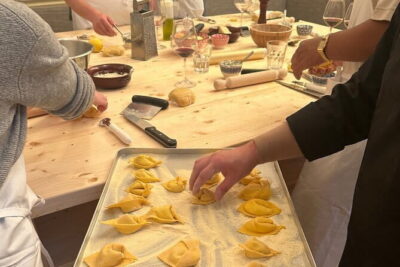
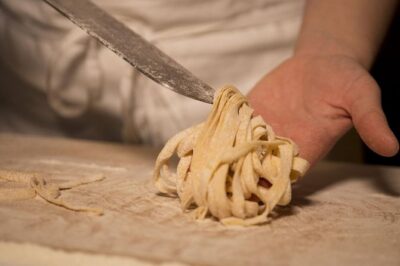
3 in 1 Cooking Class near Navona: Fettuccine, Ravioli & Tiramisu
Read our review →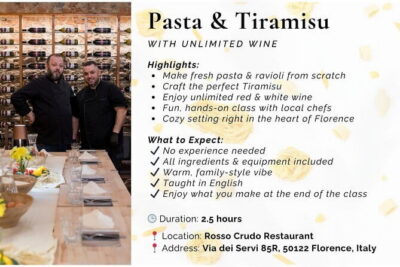
Pasta & Tiramisu Cooking Class with Unlimited Wine
Read our review →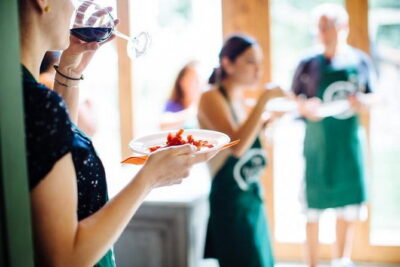
Cooking Class and Lunch at a Tuscan Farmhouse with Local Market Tour from Florence
Read our review →
Pasta Making Class with Wine, Limoncello, and Dessert
Read our review →
3-in-1 Fettuccine, Ravioli, and Tiramisu Cooking Class
Read our review →Browse the lists this tour appears in