
Reviewed · MUSEUMS
Guided tour of the salt pans of Trapani and the Salt Museum
Salt pans in Sicily, with real work behind them.
This guided outing pairs a slow walk through the white salt flats with a museum that explains how it gets made, all while you see the sea, the clay, and the pink tank colors in the same view. I love the hands-on feel of following how sea water becomes salt, and I love the scenic walk where the water can act like a mirror to the sky. One practical thing to plan for: the meeting point is in Paceco, and getting there from central Trapani may require a taxi or a car.
You also get more than just scenery. The second half takes you inside an ancient baglio for a guided visit of the Museo del Sale, including an ancient mill from the 1400s and stories about the family who ran the salt operation for generations. It runs about 1 hour 15 minutes total, in English, and it is a private tour for just your group, so you can ask questions without competing with other languages.
If you like food history, working landscapes, and a straightforward explanation of how a regional product is made, you’ll get a lot out of this. Just be aware it depends on good weather, since it includes an outdoor walk.
In This Review
- Key highlights you should not miss
- Salt Pans of Trapani, Paceco, and WWF Views on Foot
- Collecting Salt and Following Sea Water to Crystals
- Museo del Sale and the 1400s Mill Inside a Baglio
- Price and Value Compared to Other Sicily Tours
- English Guidance, Private Groups, and How Smooth It Feels
- Timing and Weather: When Sunset Light Helps
- Who Should Book the Salt Pans and Museum Tour
- Getting There from Trapani City: Paceco Matters
- Should You Book? My quick decision guide
- FAQ
- How long is the salt pans and salt museum tour?
- Where does the tour start?
- Is the admission ticket included?
- Is the tour offered in English?
- Is this a private tour?
- What happens during the salt pans portion?
- What do you see at the Salt Museum?
- Is the tour suitable for all ages?
- Does the tour run in poor weather?
- What is the cancellation policy?
- Are service animals allowed?
Key highlights you should not miss
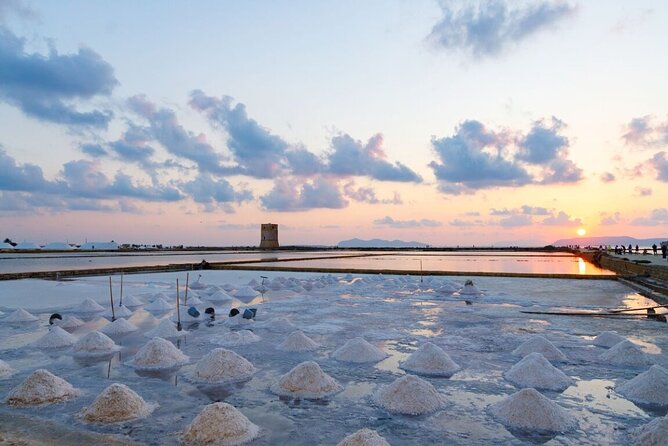
- WWF reserve walk at Riserva Naturale Saline di Trapani e Paceco, with protected plants and birds
- Salt-crystal process made visual, from sea water to salt you can collect with your hands
- Museum visit in an ancient baglio, plus the 1400s mill and tools used in the past
- Small tasting mentioned in guides and visits, so it is not only visual
- Archimedes screw called out as a particularly interesting part of the process
- Private English-guided experience, with admission tickets included for both parts
Salt Pans of Trapani, Paceco, and WWF Views on Foot
The tour starts at Via Salina Chiusa 1, in Paceco, which is where the salt pans live. You are led into the Riserva Naturale Saline di Trapani e Paceco, a WWF reserve. That matters, because this is not just a photo stop. The guide’s route is meant to show you how the salt pans function as a working system in a protected natural area.
Expect a steady, relaxed pace. There is a walk option that suits all age groups, so you are not doing a hard hike. You are also walking along the perimeter of the salt pans, so you get repeated “frames” of views, not just one long stretch of flat ground.
And yes, the color show is real. You’ll notice white salt in different tones, the blue of the sea, gray clay, and those pink tank areas that make the whole operation look almost unreal in late light. If you are the type who likes to understand what you are seeing, this part will click quickly, because the guide points out what each color and area is doing in the process.
A few more Sicily options to weigh
- Guided tour of the Trapani Salt Pans and Salt Museum
★ 4.7 · 423 reviews - Vatican: Museums & Sistine Chapel Entrance Ticket
★ 4.5 · 144,003 reviews - Vatican Museums & Sistine Chapel Tour with Optional Basilica
★ 4.3 · 67,413 reviews
Collecting Salt and Following Sea Water to Crystals
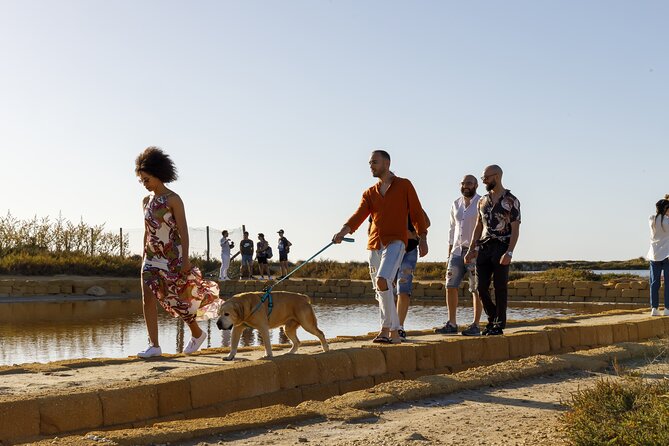
The core of the first segment is the process. The walk follows the salt pan perimeter and heads toward the banks where the water can reflect the sky like a mirror. That is more than pretty. Those mirrored sections help you connect what looks like “just water and mud” with what is actually happening underneath.
You get step-by-step explanation of how sea water turns into salt you recognize from daily life. One of the best moments is the chance to collect salt with your hands, which makes the whole story physical. It also helps you understand what changes during the process, instead of treating salt like an abstract product.
This is the kind of experience that works especially well if you are traveling with mixed interests. Even if someone is not a science person, people usually perk up when they see the working stages and how the operation builds salt gradually. And because the route is in a reserve with protected plants and birds, you are not just staring at production tanks. You’re also watching the natural side of the place.
Practical note: wear shoes you are okay getting a little dusty or salty-looking. You’ll be walking on paths around active salt areas, and you want grip and comfort. Bring sunglasses if you’re sensitive to glare from the salt and water reflections.
Museo del Sale and the 1400s Mill Inside a Baglio
After the outdoor walk, the tour shifts into history mode. The second stop is the Museo del Sale, housed in an ancient baglio, which is a traditional countryside complex. That setting helps. It does not feel like a generic room of exhibits. It feels like salt life, stored and explained in the architecture that supported it.
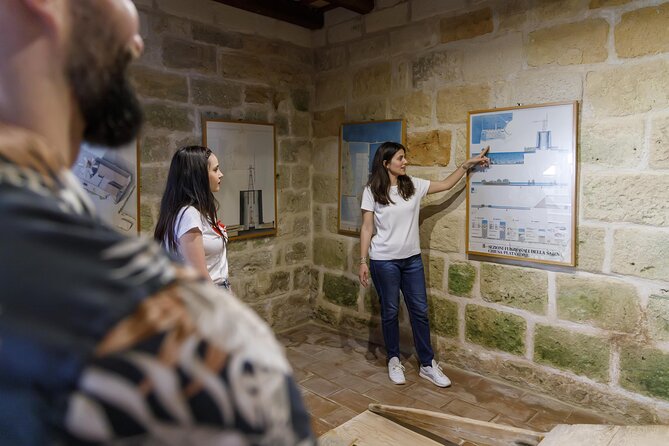
You’ll get a guided tour through the museum, including an ancient mill from the 1400s. The focus stays on salt production work, but it also zooms out into the human story. You hear about the family who managed the salt pans for generations, so the museum becomes about continuity, not just machinery.
Two things I’d highlight as “high payoff” here:
First, the museum links tools and process, so you can match what you learned outside to what you see inside. Second, the mill connection anchors the timeline. Salt farming in Trapani is long-running, and the 1400s detail helps you feel the scale of that tradition.
If you’re into technical curiosity, you may hear about the Archimedes screw as part of the production explanation. That comes up as a standout detail in the experience because it’s such a clear example of how older engineering solved a practical problem.
There is also a small tasting included. Even if you think you know what salt tastes like, this is the kind of simple add-on that makes the experience feel complete. You get to connect the crystals and the process to the end product in your hand.
Price and Value Compared to Other Sicily Tours
At about $21.77 per person for roughly 1 hour 15 minutes, this lands in the category of high value tours. Here’s why I think it is worth the money beyond the price tag:
- Admission is included for both the salt pan visit and the museum ticket. For Sicily day plans, that can make a big difference versus paying for separate entry fees.
- You are not paying for just one highlight. You get two distinct halves: an outdoor guided walk in the reserve, plus an indoor guided museum and mill.
- The experience is private for your group, not a crowded shuffle with strangers. That matters when you want explanations you can hear clearly and questions you can ask.
Also, the ratings are strong, with an average rating of 4.8 and a recommendation rate of 98%. That usually signals you’re buying an experience with real effort behind the guide portion, not just a quick pass through.
The main value trade-off is logistics. If you are staying in central Trapani, you may need a taxi ride or car to reach the meeting point in Paceco. One traveler noted a roughly 15-minute drive from downtown Trapani and paid extra for round-trip transportation. That means the “real total cost” depends on how you plan to get there.
Nearby, and just as well reviewed:
- Catania: Mount Etna Morning or Sunset Day Trip with Tasting
★ 4.8 · 4,028 reviews - Palermo: NO Mafia Walking Tour
★ 4.8 · 2,431 reviews - Palermo: Hop-on Hop-off Bus Tour 24-hour Ticket
★ 3.9 · 2,410 reviews - From Trapani: Cruise to Favignana and Levanzo with lunch
★ 4.2 · 2,286 reviews
English Guidance, Private Groups, and How Smooth It Feels
The tour is offered in English, and it is designed as a guided experience, not a self-guided walk with a map. In practice, English quality can vary from day to day depending on the guide. Still, the way the tour is structured helps: you have two stops, both with guided explanations that connect directly to what you’re seeing.
Because it is private, you avoid the common problem of losing key details in a big group. Private can also mean your pace and questions get handled more comfortably, especially during the salt pan segment when you are walking and looking around at color, water reflections, and stages.
One useful tip if you care about communication: confirm English at booking. If you want a smooth experience, it helps to know what language is actually being used on your specific date.
Timing and Weather: When Sunset Light Helps
This is a weather-dependent tour. If conditions are not good, it can be moved to a different date or refunded. The outdoor part is the reason, and it’s also why timing can make your photos, and your attention, much better.
Salt pans can look flat in harsh midday light. Later in the day, the reflections and colors tend to look more dramatic. One practical suggestion that comes up is booking a later time around sunset hours so you have a chance to admire the sky reflections after the official part.
Even if you do not chase sunsets, plan for daylight you can enjoy. The walk includes mirrored water banks and repeated views across the salt flats. That is where the experience becomes atmospheric, not just informative.
Who Should Book the Salt Pans and Museum Tour
This tour is a good fit if you want a mix of nature, food production, and human history, without heavy lifting. It works well for:
- Families, since it is described as suitable for all age groups and the pace is manageable
- Couples who want an unusual date idea that still feels educational
- Anyone interested in Sicily beyond the big monuments
- Travelers who like interactive moments, like collecting salt with your hands
It might be less ideal if you hate outdoor walking or you’re traveling without an easy way to get to Paceco. While most travelers can participate, the activity does require outdoor conditions and the right footwear.
Getting There from Trapani City: Paceco Matters

The biggest logistic question is reaching the meeting point in Paceco. The meeting address is Via Salina Chiusa 1, 91027 Paceco TP. If you are basing yourself in central Trapani, plan ahead for transport.
Based on operator notes and traveler feedback, Trapani does not provide public transportation to this specific location. That means you should budget for a taxi or have a car. If you’re traveling as a group, sharing rides can make this much cheaper and easier.
Should You Book? My quick decision guide
Book it if you want a guided explanation of how salt is produced in a real working environment, plus a museum housed in an ancient baglio with a 1400s mill. The combo is strong: outdoor walk in a WWF reserve, then an indoor history and tools story that matches what you saw outside. At about $22 with tickets included, it’s priced like a smart add-on to your Trapani visit.
Pass or rethink it if getting to Paceco is a hassle for you. If you do not have a car or are not comfortable arranging a taxi, the extra travel cost can erase the deal.
If you do have transport and you’re traveling on a day with decent weather, this is one of those Sicily experiences that feels different from the typical checklist. It turns salt into a story you can see, touch, and understand.
FAQ
How long is the salt pans and salt museum tour?
The tour is about 1 hour 15 minutes total.
Where does the tour start?
The start is Via Salina Chiusa 1, 91027 Paceco TP, Italy.
Is the admission ticket included?
Yes, admission tickets are included for both the salt pan portion and the Salt Museum.
Is the tour offered in English?
Yes, the tour is offered in English.
Is this a private tour?
Yes. Only your group will participate.
What happens during the salt pans portion?
You walk in the Riserva Naturale Saline di Trapani e Paceco along the perimeter of the salt pans, follow the salt-making process step by step, and you can collect salt with your hands. The walk is about 50 minutes.
What do you see at the Salt Museum?
You get a guided museum visit focused on salt history, including an ancient mill from the 1400s and stories about the family that ran the salt operation for generations. The museum portion is about 25 minutes.
Is the tour suitable for all ages?
The experience notes that most travelers can participate and it is presented as suitable for all age groups.
Does the tour run in poor weather?
It requires good weather. If it is canceled due to poor weather, you will be offered a different date or a full refund.
What is the cancellation policy?
You can cancel for free up to 24 hours in advance for a full refund.
Are service animals allowed?
Yes, service animals are allowed.
Latest reviews around Sicily
- The Pearl of Sicily: Private Taormina Walking Tour★ 5.0 · 179 reviews
- The Godfather tour Sicily★ 4.5 · 215 reviews
- Half-Day Pizza Making Class in Taormina★ 5.0 · 192 reviews
- Private tour of Etna and Winery Visit with Food and Wine Tasting from Taormina★ 5.0 · 188 reviews
- Taormina Food and Wine Walking Tour (Small Group or Private)★ 4.5 · 180 reviews
- Taormina and Isola Bella Day Tour with Boat Trip from Messina★ 4.5 · 146 reviews
- Pizza Cooking Class★ 5.0 · 225 reviews
- Pizza & Cannolo Making in Taormina by the Sea★ 5.0 · 144 reviews
Museums, compared.

Vatican: Museums & Sistine Chapel Entrance Ticket
Read our review →
Vatican Museums & Sistine Chapel Tour with Optional Basilica
Read our review →
Vatican Museums, Sistine Chapel & St Peter’s Basilica Guided Tour
Read our review →
Skip-The-Line Uffizi Gallery Timed Entry Ticket
Read our review →
Vatican Museums, Sistine Chapel & Basilica Tour
Read our review →
Vatican Museums & Sistine Chapel Skip-the-Line Entry Ticket
Read our review →Vatican Museums, Sistine Chapel & Basilica Tour
Read our review →