
Reviewed · SICILY TOURS
From Catania: Neapolis of Syracuse, Ortygia, and Noto Tour
Three UNESCO towns, one long, rewarding day.
This tour strings together Neapolis (Syracuse’s Greek and Roman archaeological park), Ortygia (Syracuse’s historic core), and Noto’s Sicilian Baroque, so you get the full cultural swing from antiquity to ornate stone. I especially love how the day is built around the big “wow” sights you actually came for, not just quick photo stops, and you can roam Neapolis at your own pace once you arrive.
The main drawback to plan for is time. Even with set visit windows, it is an 8 to 9 hour outing, and you do your Neapolis monument touring as a self-guided walk rather than a guided walkthrough inside the park.
In This Review
- Key things that make this tour worth your attention
- Why Neapolis, Ortygia, and Noto fit together so well
- From Catania to Syracuse: the road trip and what it means for your day
- Neapolis Archaeological Park: Greek Theatre, Roman layers, and the Ear of Dionysius
- The Greek Theatre and its massive cavea
- Latomie caves and the Ear of Dionysius
- A walk through Roman imperial presence
- Christian layers on top of ancient stone
- How to handle the self-guided hour
- Ortygia Island: walking Syracuse’s heart, from temples to Arab-shaped lanes
- Arethusa fountain: the must-see center point
- Piazza del Duomo and the Baroque palaces
- Timing reality check
- Noto’s Sicilian Baroque: the Stone Garden effect in 1.5 hours
- What to focus on in the short time
- Guides and pace: what small-group really feels like
- Price and value: is $130-ish fair for this much ground
- Practical tips to make the day smoother
- Who should book this tour, and who should skip it
- Should you book this Syracuse, Ortygia, and Noto tour?
- FAQ
- What is the duration of the tour?
- Where does pickup happen?
- What does the price include?
- Is the Neapolis park guided?
- Which languages are offered by the tour leader?
- Is lunch included?
- Is this tour good for solo travelers?
- Is the tour suitable for people with mobility impairments?
Key things that make this tour worth your attention
- Neapolis Greek Theatre’s huge cavea: you get to see one of the ancient Greeks’ largest seating bowls in person.
- Latomie and the Ear of Dionysius: limestone caves near the theatre make the ancient story feel physical.
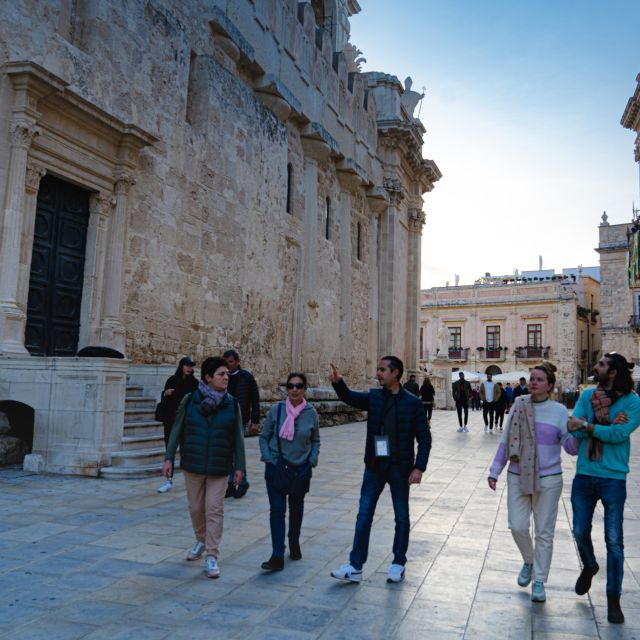
- Ortygia on foot: narrow lanes, Greek temples, Christian churches, and Arab-influenced street shapes in one compact island.
- Arethusa fountain and Piazza del Duomo: the famous fountain lands right in the center of the action.
- Noto’s Stone Garden effect: palaces and churches along Corso Vittorio Emanuele feel like a single outdoor museum.
- Small group (up to 8): easier questions, easier listening, and less time stuck waiting for someone to find the group.
Why Neapolis, Ortygia, and Noto fit together so well
Sicily can feel like a lot of places, and this route stays smart by grouping three distinct worlds into one day: Greek and Roman Syracuse, medieval and early modern Ortygia, and Noto’s Baroque rebuilding boom. Instead of bouncing around random viewpoints, you follow a clear storyline. First you read the scale of ancient power in Neapolis. Then you walk the living city in Ortygia. Finally, you end in Noto, where architecture is the headline.
I also like that you are not stuck only listening. The plan mixes a multilingual tour leader who sets context, with time for you to wander. That matters in archaeological parks and older towns, where the best moments are often when you slow down and look closely at details.
A few more Catania options to weigh
- Catania: Mount Etna Morning or Sunset Day Trip with Tasting
★ 4.8 · 4,028 reviews - Catania: Sunset Jeep Tour of Mount Etna and Lava Flow Caves
★ 4.8 · 2,113 reviews - Sicily: Etna and Alcantara Gorges Full-Day Tour with Lunch
★ 4.8 · 1,766 reviews
From Catania to Syracuse: the road trip and what it means for your day
Pickup is in Catania only (hotels and B&Bs). The transfer takes about 1.5 hours each way, so you are committing to a full-day rhythm from the start. That time is not wasted if you use it well. Ask your guide early what you should focus on in Neapolis and which “don’t miss” points tie together across the sites.
This is also where you get a first sense of how the group will move. With a small group limited to 8, the day tends to stay flexible and conversational. Guides on this route often run the explanation in multiple languages (Italian, English, Spanish), and you can usually get your questions answered without feeling like you are shouting over a crowd.
Neapolis Archaeological Park: Greek Theatre, Roman layers, and the Ear of Dionysius
This is the anchor stop. Neapolis is a UNESCO World Heritage archaeological zone, and the timing gives you about 1 hour in the park. Because the Neapolis visit is self-guided, you will not have a guide walking you point-by-point among every monument. That is a good setup if you want freedom, but it also means you should go in with a short mental checklist.
Here’s what makes Neapolis especially memorable:
The Greek Theatre and its massive cavea
You start by seeing the Greek Theatre, known for having one of the largest caveas ever built by the ancient Greeks. Even if you have seen theatres before, this one hits differently because the scale is so physical. You can stand in front of the seating area and feel how the city used architecture to control crowds and sound.
Nearby, and just as well reviewed:
- Catania: Etna Sunset Tour with Pickup and Drop-off
★ 4.8 · 1,348 reviews - From Catania: Mount Etna Sunset Tour with Tasting and Cave
★ 4.7 · 1,119 reviews - Catania: Etna Morning Excursion with Tasting and Pickup
★ 4.8 · 820 reviews - Catania: Amazing Etna Morning Tour with Pickup and Drop-Off
★ 4.9 · 799 reviews
Latomie caves and the Ear of Dionysius
Near the theatre area, you’ll also encounter the latomie, including the limestone cave called the Ear of Dionysius. Whether you take it as an ancient legend or a historical curiosity, it is the kind of stop that makes Syracuse feel story-driven. The rock face is close enough to see texture and scale, so the “myth meets geology” effect lands fast.
A walk through Roman imperial presence
Neapolis also includes Roman-era monuments, including an imperial-age amphitheatre. The key value here is contrast. You can spot how the city’s rulers and tastes changed after the Greek era. Even when your hour is short, this mix helps you understand Syracuse as more than a single ancient moment.
Christian layers on top of ancient stone
One neat detail in the park route is the Christian Church of San Nicolò ai Cordari near the theatre area. It is a reminder that these spaces were never locked away as museum relics. People kept using, reshaping, and rebuilding around the old foundations.
How to handle the self-guided hour
Because you explore at your own pace, I recommend you do a quick “two-pass” strategy. First pass: find the main anchors (the theatre area and the caves). Second pass: slow down to enjoy one or two smaller stops you did not rush through. You are more likely to come away with real images and a sense of layout, not just a checklist.
One more practical note: sometimes parts of major sites can be temporarily unavailable for maintenance. If something is closed on the day you go, your best move is to shift your attention to the open highlights and keep moving with the guide’s flow.
Ortygia Island: walking Syracuse’s heart, from temples to Arab-shaped lanes
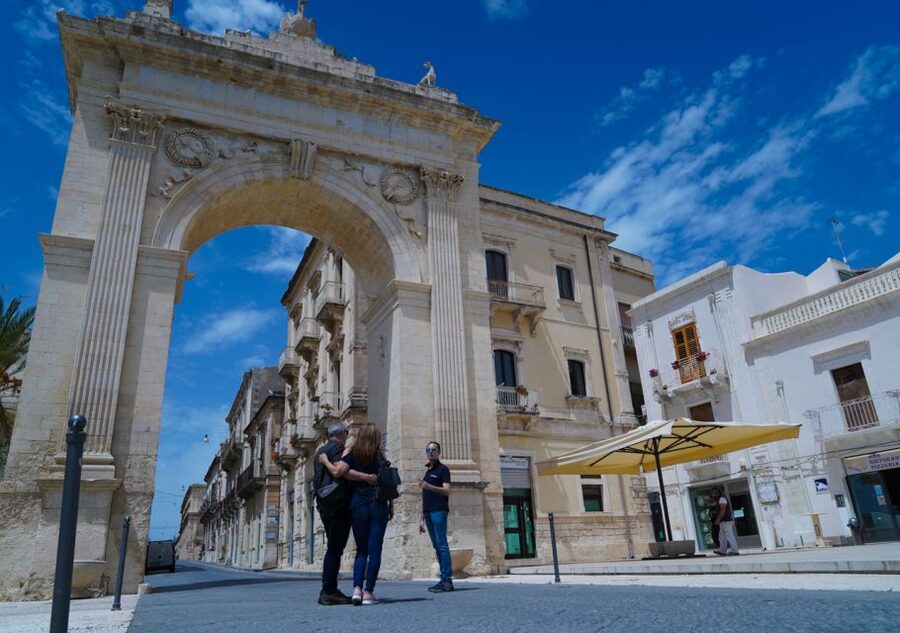
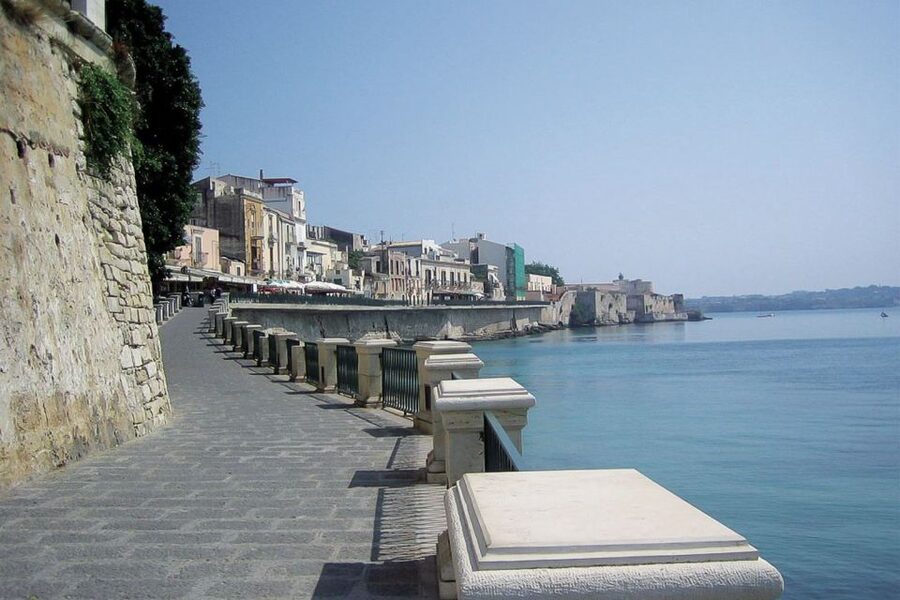
After Neapolis, you head to Ortygia, Syracuse’s historic island core. You spend about 1.5 hours here, which is the right amount for a first visit if you are comfortable walking.
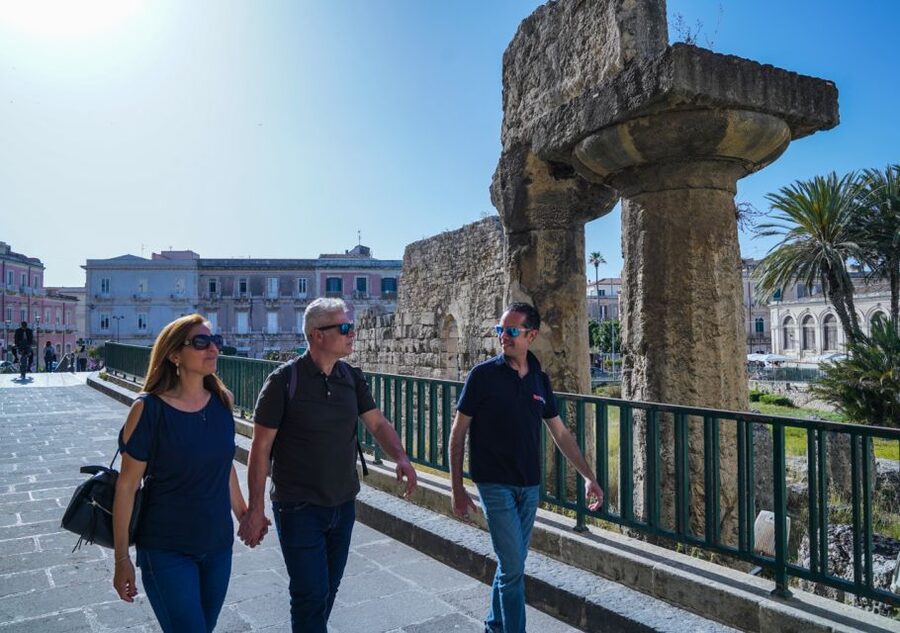
Ortygia is separated from the mainland by a narrow channel, and you can feel that shift immediately. This is not just a collection of monuments. It is a real old neighborhood, filled with Greek temples, Christian churches, and Arab-influenced streets. That blend is what makes Ortygia worth your time even if you think you only want ancient Greece.
Arethusa fountain: the must-see center point
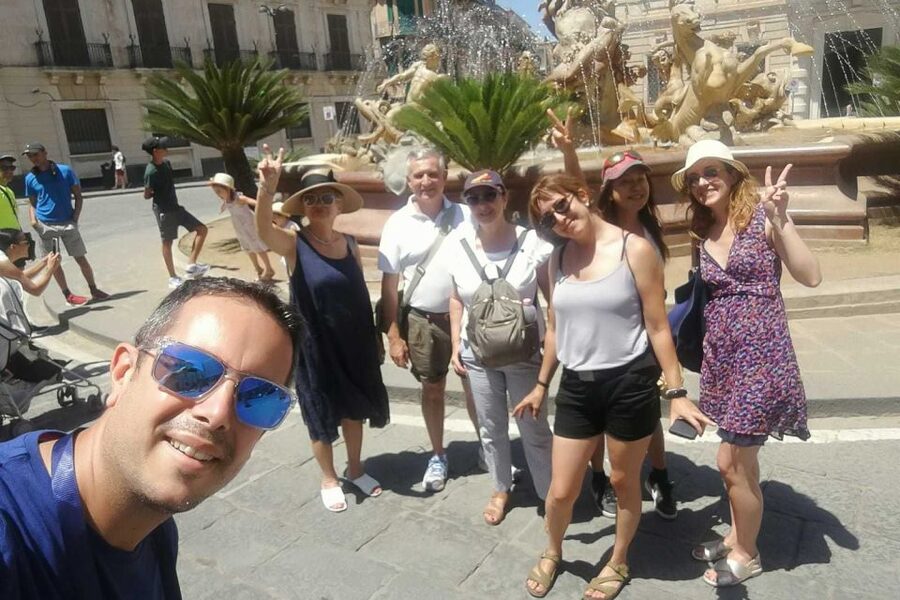
The Arethusa fountain is a key stop. It is usually the kind of place you spot on your mental map before you ever get there, and that helps. Once you stand by it, you understand why it became a landmark tied to Syracuse’s identity.
Piazza del Duomo and the Baroque palaces
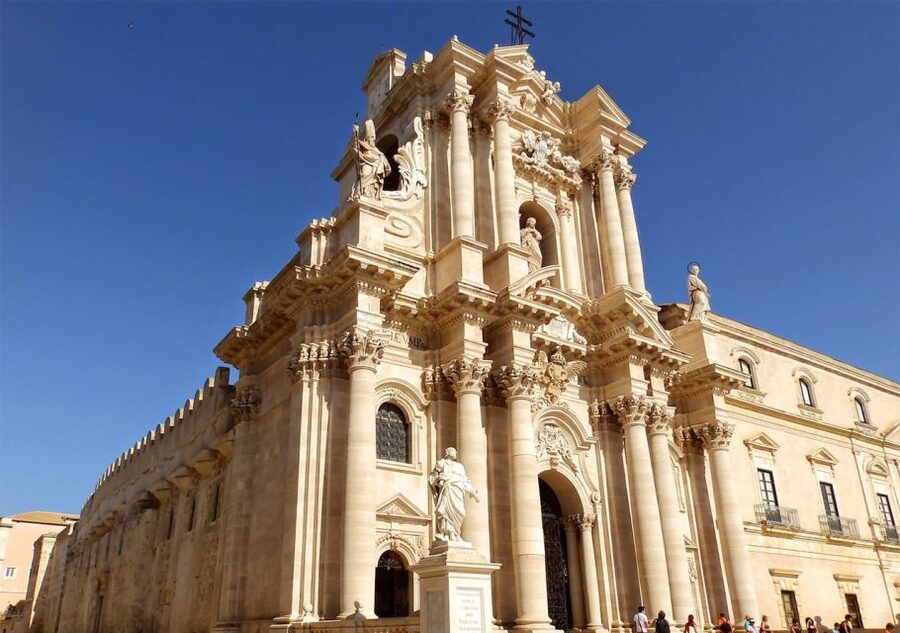
Then you move toward Piazza del Duomo, where the architecture really starts to sparkle. The palaces listed for this area include Beneventano del Bosco Palace and the Senate Palace. In practical terms, that means your Ortygia time is not only “old stones” but also ornate rebuilding that shows what the city valued later on.
Timing reality check
Ortygia’s lanes can slow you down. Streets are narrow, turns are quick, and you might want to stop for photos or browse. This tour is structured, so you should keep an eye on the meeting point and the time. You will still have enough room for a satisfying walk, but if you linger too long at one corner, you can feel the squeeze by the time you reach Noto.
Some guides on this route are also known for being flexible. If you want a small detour idea like a boat ride around Ortygia, it is worth asking in a polite, practical way while you still have time blocks available.
Noto’s Sicilian Baroque: the Stone Garden effect in 1.5 hours
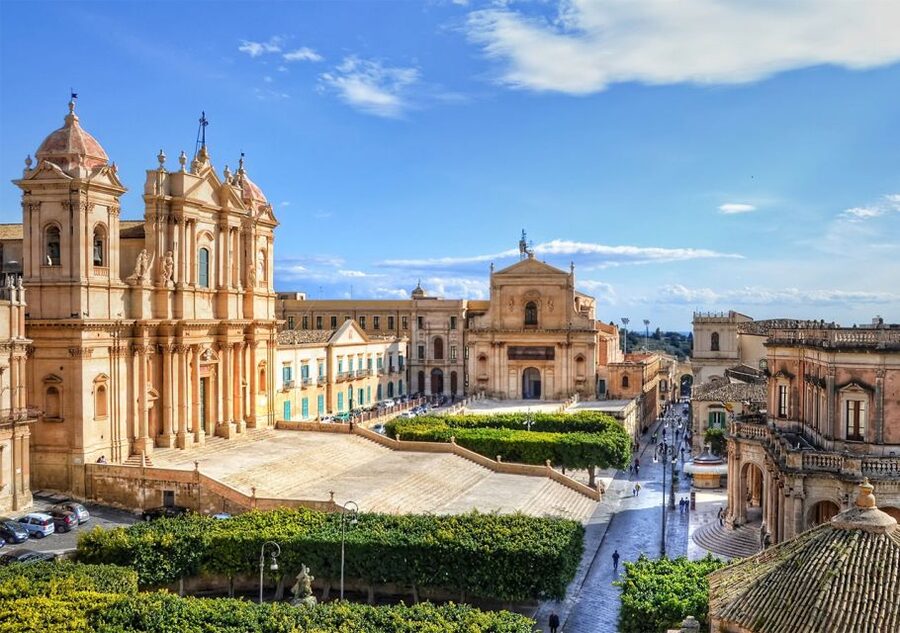
Noto is the “wow because it is beautiful” ending. You get around 1.5 hours in town, plus a guided segment of about 1.5 hours labeled for Noto itself on the schedule. Noto is known for Sicilian Baroque and it has UNESCO status (declared in 2002).
The way to understand Noto is this: it feels like an open-air museum where the buildings talk to each other. The route highlights Corso Vittorio Emanuele, a main street where palaces and churches line up in a way that makes your brain stop treating them as separate sights. The tour text describes this grouping as the Stone Garden, and that phrase is accurate. Everything is sculpted, ornate, and designed to catch light.
What to focus on in the short time
In a Baroque town, the temptation is to take photos of everything. That works for a while, then your eyes get tired. So I suggest you pick a theme before you start walking. For example:
- Watch for repeated shapes and stone decoration patterns.
- Compare church façades, then decide which one makes you pause for longer.
- Look up, not just straight ahead. In Noto, details on top often matter more than what’s at street level.
Also, Noto can be crowded during festivals or local events. If that happens on your date, don’t panic. Use the time you have to step into quieter corners or focus on one or two streets rather than trying to “see everything at once.”
Guides and pace: what small-group really feels like
This is where the reviews shine. Guides such as Nando, Lorena, Andrea, Salvo, Franco, and Francesco are repeatedly praised for being friendly, organized, and strong at explaining what you are looking at. The most useful part of that praise is not flattery. It usually translates into practical behavior: showing you the right order of monuments, answering questions without rushing, and keeping the mood upbeat even when the day runs long.
That said, pace is still pace. This is a packed itinerary:
- transfer time
- a self-guided archaeological park hour
- a walk in Ortygia
- a Baroque walk in Noto
Some visitors note that communication can be uneven if the vehicle does not include audio equipment for the back seats, or if a guide and driver roles combine in a way that slows down parking and logistics. You cannot control that, but you can protect yourself by sitting where you can see and hear the guide easily, and by keeping your expectation flexible. On this kind of Sicily day, the best moments are often the ones you did not rush into.
Price and value: is $130-ish fair for this much ground
At about $130.28 per person, you are paying for more than a bus ride. Your ticket includes:
- hotel pickup and drop-off in Catania only
- shuttle transportation
- a multilingual tour leader
- the Neapolis Archaeological Park entry ticket
- group size capped at 8
Then there is what is not included: food and drinks, and the Neapolis stop is self-guided rather than a guided walk through every monument.
So is it good value? For most visitors, yes, because you avoid two major headaches:
1) you do not have to coordinate transport across three towns on your own
2) you get an organized sequence that makes Neapolis, Ortygia, and Noto feel connected, not random
Where the price can feel less worth it is if you want a deep guided explanation inside every single Neapolis monument or if you end up spending extra money on an expensive lunch spot. For lunch, keep your wallet open and your options flexible, and you will feel like you got a fair deal.
Practical tips to make the day smoother
A few small choices can make a big difference on a long day like this.
Wear comfortable shoes. Ortygia and Noto involve walking on uneven streets and stairs. Bring weather-appropriate clothing, because you are outside for key parts of the day.
Use a “short list” approach in Neapolis. Since the park time is about an hour and self-guided, decide ahead of time what you want to photograph and what you want to understand. If you treat Neapolis like a museum, you will get overwhelmed fast.
Don’t assume every monument will be easy to find if you only have a quick window. If something is closed or hard to locate, follow the guide’s direction once you regroup and refocus on the open anchors.
If you care about sound while the van is moving, try to sit closer to the front where it is easier to hear. Some small-group tours can still have audio issues without microphones in the vehicle.
Who should book this tour, and who should skip it
This tour is a great fit if you:
- want to see Neapolis, Ortygia, and Noto in one organized day from Catania
- enjoy a mix of guided context and self-paced exploring
- like architectural contrasts, from Greek and Roman structures to Sicilian Baroque façades
It may be less ideal if you:
- have mobility limitations, since it is noted as not suitable for people with mobility impairments
- prefer a fully guided walkthrough at every stop, especially inside Neapolis
- dislike long days with limited time in each town
Should you book this Syracuse, Ortygia, and Noto tour?
I’d book it if your goal is to get the big highlights right, with pickup from Catania and a plan that connects three UNESCO-level stops. The combination of Greek Theatre scale, the Ear of Dionysius limestone caves area, Arethusa fountain, and Noto’s Stone Garden effect is a strong mix for a single day.
I’d think twice if you are the type who wants lots of time to linger in Noto or Ortygia, or if you are expecting a full guided tour inside the Neapolis park. In that case, you might feel the schedule squeeze.
If you do book, go in with comfortable shoes, a short focus list, and the mindset that this is a “best-of highlights” day, not a slow museum crawl.
FAQ
What is the duration of the tour?
The duration is listed as 8 to 9 hours. Starting times vary, so check availability for the exact departure.
Where does pickup happen?
Pickup is included for accommodations in Catania only (hotels and B&Bs). You return to Catania at the end of the tour.
What does the price include?
The price includes hotel pickup and drop-off in Catania, shuttle transportation, a multilingual tour leader, and the Neapolis Archaeological Park entry ticket.
Is the Neapolis park guided?
Neapolis Archaeological Park entry is included, but a guided tour of the Neapolis park is not included. You visit Neapolis at your own pace.
Which languages are offered by the tour leader?
The tour leader offers Italian, English, and Spanish.
Is lunch included?
Food and drinks are not included. Lunch is at your own expense after Ortygia.
Is this tour good for solo travelers?
It cannot be booked as a private tour for 1 person. If you are traveling alone, you would need to check the activity page for days when other travelers are booked so you can join the small group.
Is the tour suitable for people with mobility impairments?
No. It is listed as not suitable for people with mobility impairments.
Latest reviews around Catania
- From Catania: Mount Etna Sunset Tour with Tasting and Cave★ 4.7 · 1,119 reviews
- Mount Etna: Return Funivia dell’Etna Cable Car Ticket★ 4.0 · 240 reviews
- Mount Etna: North Upper Craters Guided Tour by 4×4 with Trek★ 4.6 · 243 reviews
- Mount Etna: Ascent to 2800m by 4×4★ 4.8 · 241 reviews
- Catania: Hop-On, Hop-Off Bus to Acicastello and Acitrezza★ 3.9 · 163 reviews
- Catania: Gulf Scuba Diving Tour with Marine Biologist★ 4.9 · 212 reviews
- Catania: Valley of the Temples & Piazza Armerina with Snack★ 4.5 · 136 reviews
- From Taormina: Private Godfather Tour with Lunch★ 4.9 · 128 reviews
Sicily Tours, compared.

Mount Etna Morning or Sunset Day Trip with Tasting
Read our review →
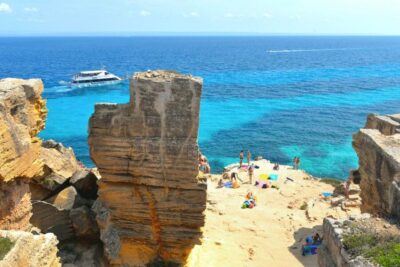
From Trapani: Cruise to Favignana and Levanzo with lunch
Read our review →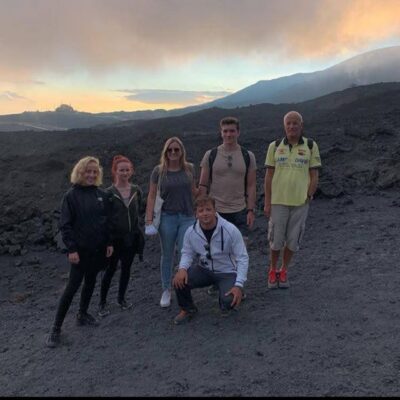
Sunset Jeep Tour of Mount Etna and Lava Flow Caves
Read our review →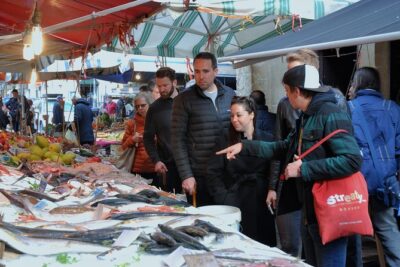
Palermo Original Street Food Walking Tour by Streaty
Read our review →
Mount Etna: Trek to 3000m with cable car and jeep
Read our review →
Segesta, Erice and Salt Pans Full-Day Excursion from Palermo
Read our review →Browse the lists this tour appears in