
Reviewed · SICILY TOURS
Benedictine Monastery of Catania – English Guided Tour
Monastery stairs lead to Rome and beyond. The Benedictine Monastery of Catania stitches together 2,000 years of site layers, from Roman rooms to today’s university life, all inside a huge late-Baroque complex. I love how the two cloisters and monumental spaces make you feel the scale of the order, not just the facts. I also like the way the tour connects architecture to daily monastic life, especially the kitchens and the cellar. One possible drawback: this type of tour is fast, so if you’re hoping for every upstairs viewpoint, you might need to pick the right time slot.
Guided well, the place turns from stone into story. I particularly liked the Ottoman-level precision of guides like Carmen and Giovanni, who keep the pace lively and answer questions without turning it into a lecture. The restoration angle also lands: the refurbishment that made today’s visit possible took more than 30 years, so you’re seeing careful conservation, not a quick paint job. If you dislike crowds or prefer long hangs in one room, the 75-minute format may feel a bit brisk.
For value, at $11 for a live English tour that includes areas not normally open, this is one of those Catania stops that punch above its ticket price. You’ll walk away with a clear sense of why the Benedictines mattered here, not just that they existed.
Key takeaways before you go
- Two cloisters that show the monastery’s rhythm of movement and light
- A lava-built cellar turned library space, where you read the building’s past in its material
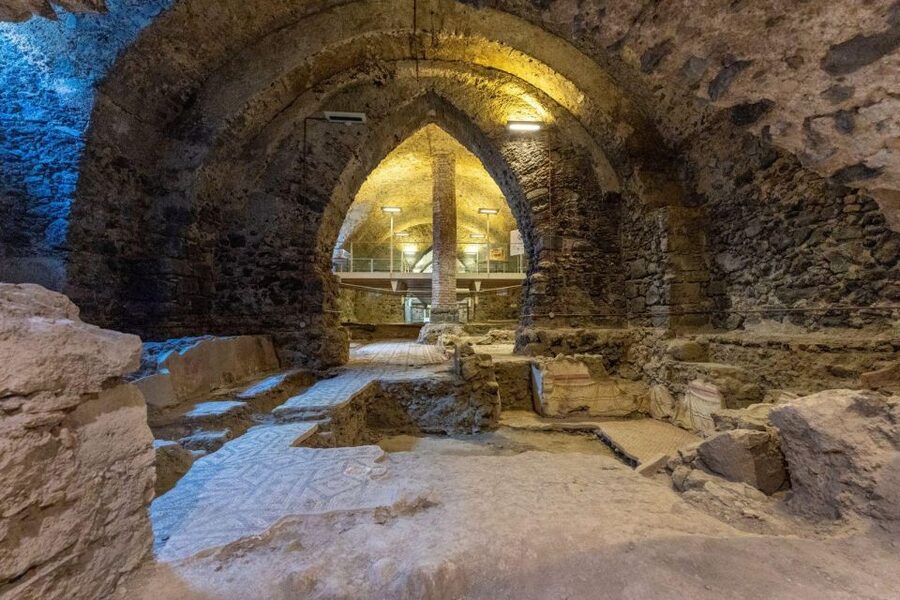
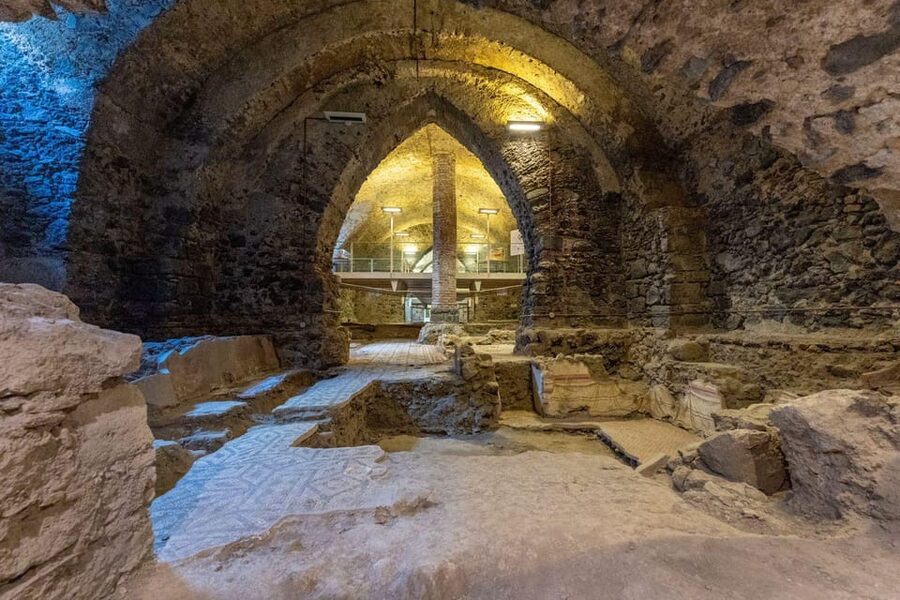
- Roman houses visible under a modern mezzanine, a rare “old under new” moment you can actually point to
- Famous late-Baroque design touches tied to architect Vaccarini and later planning
- The tour is led by guides like Carmen, Giovanni, and Nicola, often praised for clear English and humor
In This Review
- Where the Tour Begins at Piazza Dante
- San Nicolò l’Arena’s Scale in Late-Baroque Stone
- Cloisters and the Novices’ Garden: How Monastery Life Used Space
- The Kitchen and Dining Rooms, Where Order Met Daily Routine
- Roman Houses Under Modern Floors: The Wow Moment
- The Monastery Library and the Cellar Built on Lava
- Vaccarini, De Carlo, and the Long Restoration Story
- The “Not Normally Accessible” Advantage
- Duration and Pace: What 75 Minutes Really Means
- Price and Value: $11 for Architecture, Archaeology, and a Library
- English Guides, Clear Explanations, and Humorous Stories
- Who Should Book This Tour
- Should You Book the Benedictine Monastery of Catania Tour?
- FAQ
- Where is the meeting point for the English guided tour?
- How long is the tour?
- What will I see during the Benedictine Monastery of Catania tour?
- Is the tour in English?
- Are translations available if I do not speak English well?
- Is this tour wheelchair accessible?
- Does the tour include skip-the-ticket-line access?
- Can I store luggage at the meeting point?
Where the Tour Begins at Piazza Dante
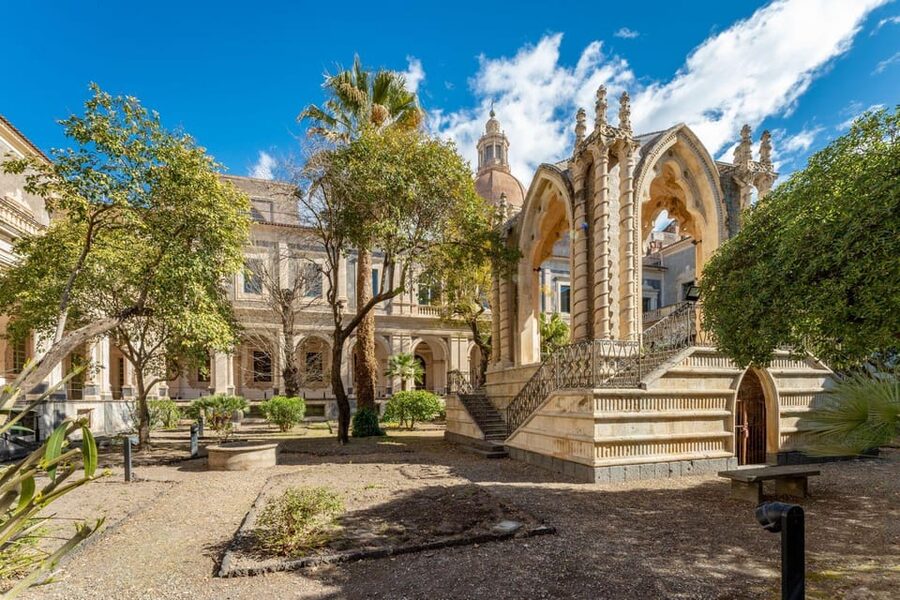
Your tour starts at the Benedictine Monastery of San Nicolò l’Arena. The meeting point is simple: once you pass the main gate on Piazza Dante, look for the info point in the courtyard on the right.
This matters more than it sounds. You’re dealing with a monastery complex, not a museum building you can wander into casually. Starting in the right place helps you get oriented fast, especially since you’ll be moving through corridors and open areas in a structured loop.
If you bring a day bag, you can use the baggage storage at the meeting point. That small detail is worth it. It lets you walk in and out without juggling.
San Nicolò l’Arena’s Scale in Late-Baroque Stone
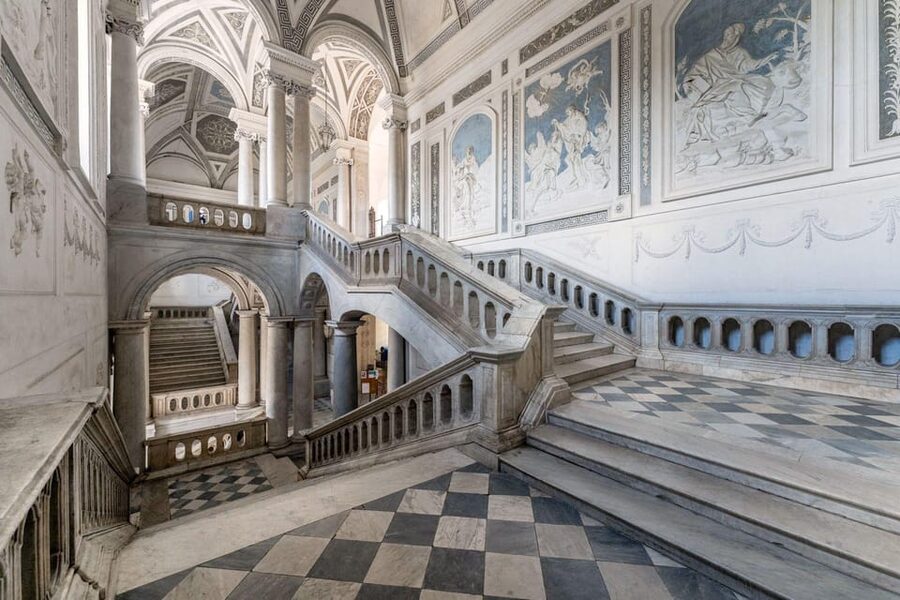
Even from the outside approach, this is a big site. Inside, the first impact is the architecture, the kind that makes you tilt your head even when you’re trying to listen.
This complex is often described as one of the biggest monasteries in Europe, and you feel it in how the spaces are arranged. The late-Baroque look is not just decoration. It’s also a clue to how the monastery represented wealth, authority, and stability during its long run.
I love that the guide doesn’t treat the buildings like disconnected rooms. Instead, you get a sense of how the monastery worked as a system, with movement between cloisters, dining and kitchen areas, and quieter garden space for novices.
A few more Catania options to weigh
- Catania: Mount Etna Morning or Sunset Day Trip with Tasting
★ 4.8 · 4,028 reviews - Catania: Sunset Jeep Tour of Mount Etna and Lava Flow Caves
★ 4.8 · 2,113 reviews - Sicily: Etna and Alcantara Gorges Full-Day Tour with Lunch
★ 4.8 · 1,766 reviews
Cloisters and the Novices’ Garden: How Monastery Life Used Space
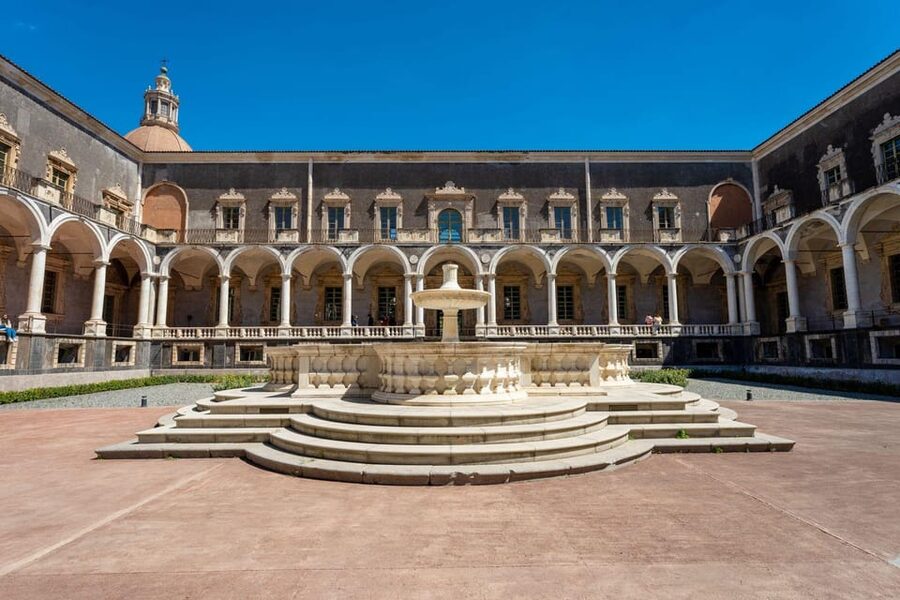
The heart of your walk is the cloisters. They’re central to Benedictine life because they form a sheltered loop around the monastery’s core. In a 75-minute tour, cloisters are exactly the kind of stop that rewards attention, because you can see the logic of the place from multiple angles.
Expect time in both cloisters. You’ll also spend time in the Garden of the Novices, which is a nice change of pace from stone and corridor. Even if you only see it briefly, it helps you picture training and daily routine, not just grand halls meant for ceremonies.
A practical note: cloisters are bright and open, so if you’re photographing, you’ll get better shots if you pause and frame deliberately. Guides often point out sightlines that you might miss if you move too fast.
The Kitchen and Dining Rooms, Where Order Met Daily Routine
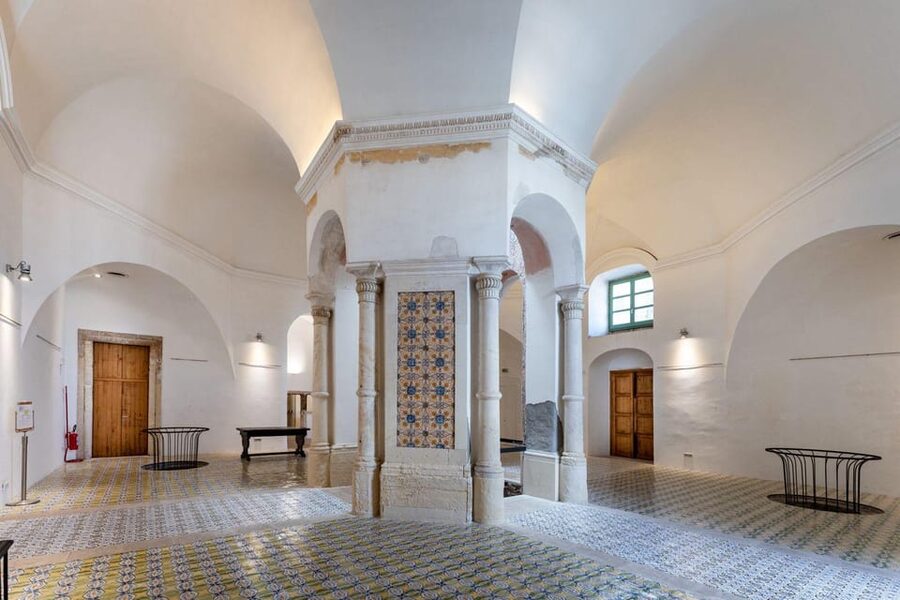
Next comes one of the stops that makes the monastery feel human: the kitchen and dining rooms. This is where you stop thinking about architecture and start thinking about schedules, food, labor, and care.
If you’re used to church interiors, the monastery kitchen can feel surprising. It’s not a “church part,” yet it’s essential to the story. Benedictine life depended on steady routines. The kitchens are one of the clearest ways to feel that.
This also connects to why the tour is worth doing with a guide. You’re not only seeing the surfaces. You’re learning how these spaces functioned together, including the way the monastery’s wealth showed up in its ability to support a large community.
Roman Houses Under Modern Floors: The Wow Moment
One of the most memorable parts of this tour is the Roman House visible under a modern mezzanine. That mezzanine is used by university students as part of the library space, which creates a rare living link between past and present.
This is one of those “stop and point” moments. You get an actual visual relationship between Roman-era remains and the modern structure hovering above them. It’s a gentle reminder that cities grow upward and outward for centuries, layering old foundations with new needs.
If you like archaeology without the dead quiet of a textbook, this section hits the sweet spot. The guide helps you read what you’re looking at, so you’re not left guessing why one wall matters and another doesn’t.
Nearby, and just as well reviewed:
- Catania: Etna Sunset Tour with Pickup and Drop-off
★ 4.8 · 1,348 reviews - From Catania: Mount Etna Sunset Tour with Tasting and Cave
★ 4.7 · 1,119 reviews - Catania: Etna Morning Excursion with Tasting and Pickup
★ 4.8 · 820 reviews - Catania: Amazing Etna Morning Tour with Pickup and Drop-Off
★ 4.9 · 799 reviews
The Monastery Library and the Cellar Built on Lava
The monastery’s most important library spaces are a highlight. The tour includes the library housed in an area connected to the former monastery structures, including areas tied to the Department of Humanities at Unict.
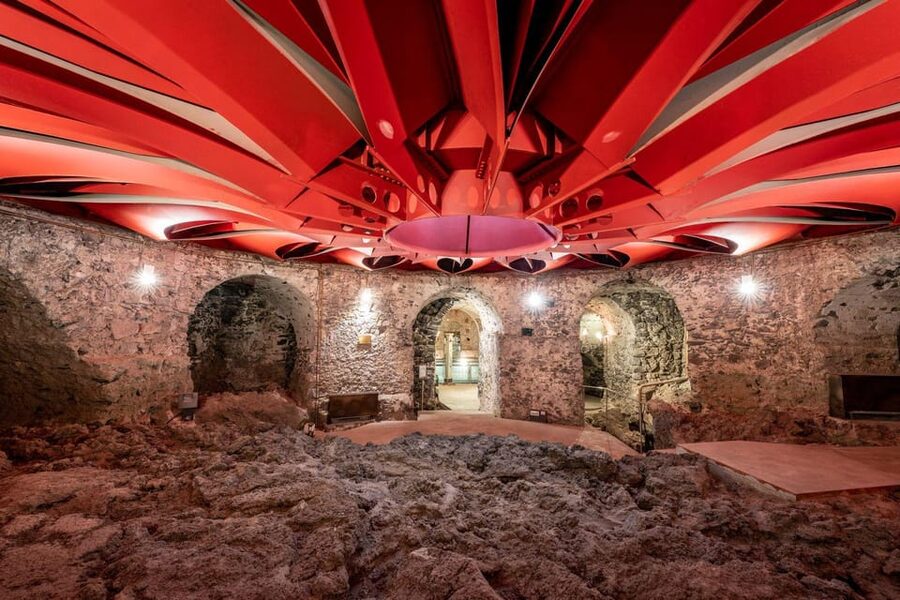
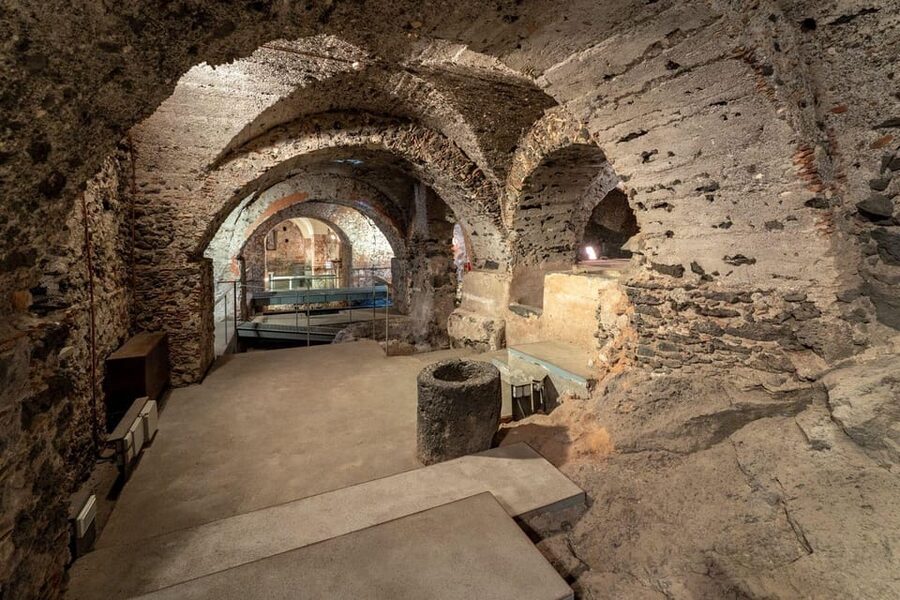
Then you move into something that feels very Sicily: the cellar built on the lava. Lava is one of the region’s signature materials, and seeing it used here changes how you think about the site. It’s not just a poetic detail. It’s about cooling, stability, and the practical choices of builders working with local geology.
In warm months, the lower levels can be a lifesaver. One of the repeated impressions from visitors is that the bottom floors feel cooler than you’d expect, which turns the tour into a welcome break from Catania heat.
Vaccarini, De Carlo, and the Long Restoration Story
Monasteries don’t last 2,000 years without change. What makes this stop especially interesting is that you’re looking at a building that was restored carefully, not simply rebranded.
You’ll hear about the work of architect Vaccarini, which helps explain the late-Baroque character you see around you. Then you’ll also hear how the contemporary refurbishment made access possible, including the work of Giancarlo De Carlo.
The restoration of the monastery took more than 30 years. That single fact reframes the entire visit. You’re not just touring relics. You’re seeing an active conservation project that allows you to visit parts that normally stay off-limits.
This is also why the tour feels “different” from a quick skip-through. The guide builds the timeline as you move: Roman layers below, monastic structures in the middle, and today’s university life above and beside you.
The “Not Normally Accessible” Advantage
A big reason this tour rates so high is simple: it gets you into areas most people would not find on their own. That includes parts of the monastery that are not ordinarily accessible.
A guided hour-and-a-quarter is the right length for that. You don’t wander too long, so you stay focused. You also get enough time to understand what you’re seeing before you’re pushed back outside.
Skip-the-line access is part of the value too. If you’re trying to build a tight itinerary in Catania, saving time on tickets helps you spend more time on the walk itself.
Duration and Pace: What 75 Minutes Really Means
This tour runs about 75 minutes. It’s long enough to connect several site zones, but short enough that you keep moving.
If you like to linger, you’ll want to use brief pauses wisely. Take a moment when the guide points out a specific detail, then keep going. When you stop without a reason, the tour can feel like a sprint even though it’s not.
One more small heads-up: there can be schedule or route differences in what you can reach inside a living university-monastery complex. In particular, if an upstairs viewing platform is on your wish list, you might find that access depends on the exact tour time. It’s worth tempering expectations so you leave happy rather than frustrated.
Price and Value: $11 for Architecture, Archaeology, and a Library
Let’s talk money honestly. At about $11 per person, you’re paying for:
- A live English guide
- Access to sections that aren’t normally open
- A structured route through multiple time periods
- Skip-the-line convenience
- A focused look at both monastic and Roman elements, plus modern conservation
In Catania, where you’ll find plenty of “see a church” options, this one gives you variety. You get cloisters, kitchens, archaeological remains, a library setting, and a lava cellar. You also get the context that ties it together.
And because it’s inside a functioning university environment, the story doesn’t stop at monks. You can literally see how the site’s purpose shifted without erasing the past.
English Guides, Clear Explanations, and Humorous Stories
This is one of those tours where the guide really changes the experience. Many visitors specifically mention guides with excellent English, and a number of names come up repeatedly, including Carmen, Giovanni, Nicola, and others.
What I like about these guides, based on the feedback, is the balance:
- Clear explanations of architecture and the monastery’s role
- Room for questions
- A sense of humor that keeps the hour from dragging
That’s important because this monastery is big and layered. A good guide helps you connect the dots quickly, so you’re not just collecting random facts.
Who Should Book This Tour
This is a strong choice if you:
- Have limited time in Catania and want a high-impact cultural stop
- Like architecture but also want real context
- Enjoy seeing how ancient remains coexist with modern use
- Want a cool break in warmer weather thanks to the underground areas
It may not be the best fit if you want a slow, do-it-yourself wander for hours. This tour is built for a guided route and an efficient timeline through the site.
Should You Book the Benedictine Monastery of Catania Tour?
Yes, if you want one of the most efficient “wow to understand” experiences in Catania.
For the price, you get access you likely wouldn’t manage alone, plus a clear story that moves from Roman rooms to monastic daily life to today’s university library. The combination of cloisters, kitchens, Roman houses under a mezzanine, and the lava cellar is hard to beat in 75 minutes.
If you care a lot about reaching every possible viewpoint, choose your time slot carefully and keep your expectations flexible. Otherwise, this is an easy recommendation, especially if you appreciate places where history is still doing something in the present.
FAQ
Where is the meeting point for the English guided tour?
Meet at the info point in the courtyard on the right, as soon as you pass the main gate on Piazza Dante.
How long is the tour?
The tour lasts about 75 minutes.
What will I see during the Benedictine Monastery of Catania tour?
You’ll visit key areas including the two cloisters, the novices’ garden, the kitchens and cellars, the library area, the Roman house visible under a modern mezzanine, and more parts of the monastery complex that are typically not accessible.
Is the tour in English?
Yes, it is a live guided tour in English.
Are translations available if I do not speak English well?
If English is not your main language, written translations in French or Spanish can be provided.
Is this tour wheelchair accessible?
Yes, the tour is wheelchair accessible.
Does the tour include skip-the-ticket-line access?
Yes, it includes skip the ticket line.
Can I store luggage at the meeting point?
Yes, baggage storage is available at the meeting point.
Latest reviews around Catania
- From Catania: Mount Etna Sunset Tour with Tasting and Cave★ 4.7 · 1,119 reviews
- From Catania: Neapolis of Syracuse, Ortygia, and Noto Tour★ 4.7 · 234 reviews
- Mount Etna: Return Funivia dell’Etna Cable Car Ticket★ 4.0 · 240 reviews
- Mount Etna: North Upper Craters Guided Tour by 4×4 with Trek★ 4.6 · 243 reviews
- Mount Etna: Ascent to 2800m by 4×4★ 4.8 · 241 reviews
- Catania: Hop-On, Hop-Off Bus to Acicastello and Acitrezza★ 3.9 · 163 reviews
- Catania: Gulf Scuba Diving Tour with Marine Biologist★ 4.9 · 212 reviews
- Catania: Valley of the Temples & Piazza Armerina with Snack★ 4.5 · 136 reviews
Sicily Tours, compared.

Mount Etna Morning or Sunset Day Trip with Tasting
Read our review →
From Trapani: Cruise to Favignana and Levanzo with lunch
Read our review →
Sunset Jeep Tour of Mount Etna and Lava Flow Caves
Read our review →
Palermo Original Street Food Walking Tour by Streaty
Read our review →
Mount Etna: Trek to 3000m with cable car and jeep
Read our review →
Segesta, Erice and Salt Pans Full-Day Excursion from Palermo
Read our review →Browse the lists this tour appears in