
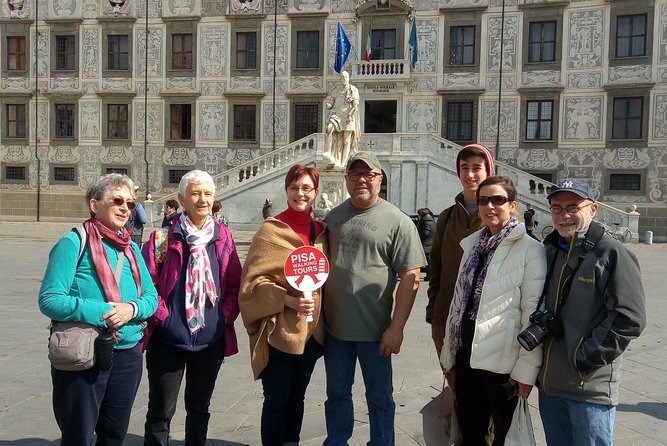
Reviewed · WALKING TOURS
2-Hour Small-Group Walking Tour of Pisa Off The Beaten Path
Pisa has layers beyond the Leaning Tower. This 2-hour small-group walk in Pisa takes you off the main tourist paths and links the city’s squares, river views, and public art into one easy route, led by David di Giacomo. I especially love the headsets, so I could hear David clearly without craning my neck, and I love the relaxed small-group pace that makes questions feel normal instead of rushed. One thing to consider, though: it’s a compact walk with lots of commentary, so if you prefer lighter, minimal facts, you might find the detail level slightly intense.
You start at Pisa Centrale, right at the fountain outside the station, where David holds a sign for Pisa Explorer. From there the tour threads through classic spots and then detours into places most people skip, including a Keith Haring mural that’s a big deal for fans of modern street art. The whole time, the group size stays capped at 15, and the pace is built for you to stop and look, not just pass by.
The biggest drawback is also the nature of the experience: it ends at Piazza del Duomo near the bottom of the Leaning Tower after only 2 hours, so you’re not getting ticketed museum time or long stays inside major sites. If you want extended time in the Cathedral or tower interiors, plan to do that on your own after the walk.
In This Review
- Key things I’d bet you’ll enjoy
- Why this Pisa walk feels like a shortcut to the real city
- Getting started at Pisa Centrale, Fountain meeting spot and tour flow
- Stop 1: Fontana della Stazione di Pisa, your orientation anchor
- Stop 2: Piazza Vittorio Emanuele II, city history in a civic square
- Stop 3: Murale Tuttomondo di Keith Haring, modern art with a specific Pisa story
- Stop 4: Corso Italia, a lively street you’ll remember
- Stop 5: Ponte di Mezzo and the Arno riverbanks, the view that explains the city
- Stop 6: Borgo Stretto on the north bank, Medieval Pisa at street level
- Stop 7: Piazza dei Cavalieri, political power and late Renaissance architecture
- Stop 8: Piazza dei Miracoli, external visit to the Cathedral and Leaning Tower zone
- What the small-group size and headsets really change for you
- Time and pace, why 2 hours feels short but works
- Value for $31.46: what you get, and what makes it worth it
- Practical tips so you get the most out of your walk
- Should you book the off-the-beaten-path Pisa walk?
- FAQ
- What is the meeting point for the tour?
- What time does the 2-hour tour start?
- Where does the tour end?
- Is this tour conducted in English?
- Is transportation included?
- How long is the guided portion?
- Does the tour include headsets?
- What is the group size?
- Are admission tickets required?
- Can I cancel for a refund?
- Are service animals allowed?
Key things I’d bet you’ll enjoy
- Up to 15 people keeps the walk friendly, not crowded
- Headsets help you follow the guide smoothly from the front
- Small street-to-street route means you actually learn your bearings
- Keith Haring’s Tuttomondo mural gets context right where you’re standing
- River views at Ponte di Mezzo set up the Medieval Pisa story in minutes
- Ends at Piazza del Duomo so you can roll right into your next stop
Why this Pisa walk feels like a shortcut to the real city
Pisa can trick you. Yes, the Leaning Tower and the Cathedral Square are iconic, but if you only see that postcard zone, you miss what makes Pisa feel like a living place. This tour is built to do the opposite. It gives you a focused introduction, then pushes you into the streets that connect those famous landmarks to the rest of the city.
I like how quickly it orients you. You’re not just told what to see. You’re walked past the visual cues that help you understand where things are in relation to each other. By the time you reach Piazza dei Miracoli, you’re already thinking in neighborhoods and eras, not just checking off sights.
The other practical win is that it’s designed for easy following. Headsets let you hear David di Giacomo clearly as you move, even if the group slows down for photos or questions. For a city you can walk in half a day, that kind of audio clarity matters.
And because the group is capped at 15, the vibe stays conversational. Based on what I’d expect from a guide like David, you’re likely to get answers that help you keep exploring after the tour, not just a list of facts that disappear the second you move on.
A few more Pisa options to weigh
- Tuscany Day Trip from Florence: Siena, San Gimignano, Pisa and Lunch at a Winery
★ 5.0 · 21,634 reviews - Reserved Entrance to Leaning Tower of Pisa & Cathedral
★ 4.5 · 10,391 reviews - Florence: Pisa, Siena and San Gimignano Day Trip with Lunch
★ 4.6 · 9,771 reviews
Getting started at Pisa Centrale, Fountain meeting spot and tour flow
Meeting at Pisa Centrale is smart. It’s a central point and easy to find if you arrive by train, and the start time is set at 10:00 am. You’ll meet at the fountain outside Pisa Centrale, and David holds a sign that says Pisa Explorer. That sign matters. In a place with lots of foot traffic, it reduces the stress of “Where is the group?”
From the station area, the tour begins by moving into Piazza Vittorio Emanuele. That first shift is useful, because it gets you out of the transit zone quickly and into the civic spaces where the story of Pisa makes sense.
For you, the benefit is simple: you start with movement, you build momentum, and you aren’t stuck in a single plaza waiting out the whole first phase.
Stop 1: Fontana della Stazione di Pisa, your orientation anchor
The first stop is Fontana della Stazione di Pisa, right outside the station. This might sound like a random starting point, but it works as an orientation anchor. You get a quick introduction to how Pisa’s layout connects to the main pedestrian areas and the river.
Since your tour is only about 2 hours total, the guide uses the early minutes to set direction. You don’t waste time figuring out where the tour is headed next. You also have a “reset” moment to settle the group before you start the longer walking segments.
If you’re arriving solo, or you’re trying to learn Pisa fast, this kind of start helps you feel confident navigating later. By the time you reach the river, you’ll recognize the connections instead of feeling like you walked through blur.
Stop 2: Piazza Vittorio Emanuele II, city history in a civic square
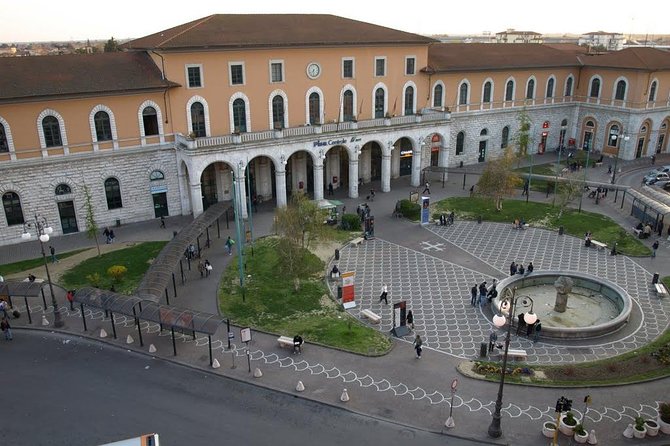
Piazza Vittorio Emanuele II is where the narration starts in earnest. You’ll get an introduction to the history of Pisa and its territory right in a real public square, not in a museum room.
This works well for first-time visitors because it gives your later stops meaning. When you later see the political and religious power centers around Piazza dei Cavalieri and Piazza dei Miracoli, you already have a baseline understanding of how the city formed and why those areas mattered.
The time here is about 10 minutes. That’s enough to set the framework without turning the walk into a lecture marathon. It’s also a good chance to ask questions. If you’re curious about why Pisa developed the way it did, this is when the guide can connect the dots.
Nearby, and just as well reviewed:
- Cinque Terre Day Trip with Optional Hiking or Pisa
★ 5.0 · 8,486 reviews - Florence: Pisa, Siena, San Gimignano, and Chianti Experience
★ 4.5 · 8,393 reviews - Pisa, Siena and San Gimignano Day Trip with Lunch & Wine Pairing
★ 4.5 · 6,006 reviews - From Florence: Siena, San Gimignano, Pisa & Lunch at Winery
★ 4.8 · 4,538 reviews
Stop 3: Murale Tuttomondo di Keith Haring, modern art with a specific Pisa story
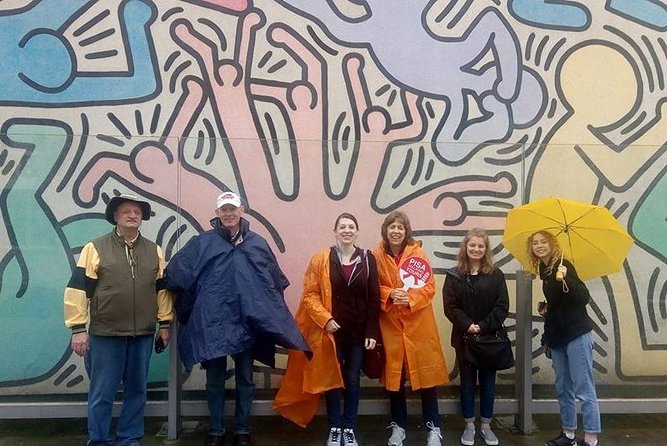
Next you’ll see Murale Tuttomondo di Keith Haring. The details here are the kind that make it feel worth the detour: Keith Haring painted it in Pisa in 1989, it was the largest he painted, and it was also his last.
That matters because the mural isn’t just a visual stop. It’s a story beat. You’ll get context while you’re standing close enough to see the mural’s scale and style.
Also, this is a good “off the beaten path” moment. Many Pisa itineraries focus only on medieval and Renaissance highlights. This gives you a time jump into late 20th-century art, which makes Pisa feel less frozen in time.
Practical tip: If you’re traveling in hot weather, you’ll likely appreciate the stop-and-look rhythm. It breaks up the walking without feeling like wasted time.
Stop 4: Corso Italia, a lively street you’ll remember
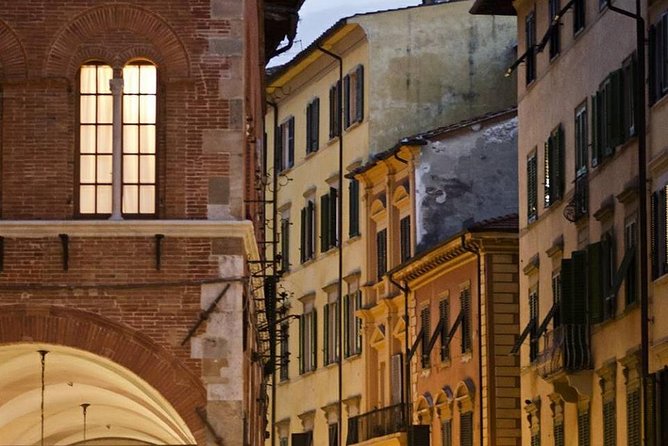
From the mural, the walk continues along Corso Italia, the lively main pedestrian and commercial street. This segment is about being in motion and letting the city’s everyday feel come through.
You’ll spend about 20 minutes here, so it’s not a quick “pass through.” It gives you time to get a sense of where people actually go and how the pedestrian flow connects to the older parts of town.
Why this is valuable: it prevents Pisa from turning into a set of isolated monuments. After Corso Italia, you’ll know the difference between a scenic photo stop and a street that functions like a city artery.
If you want to keep exploring after the tour, this is the kind of street you’ll likely circle back to, because it’s naturally where you find shops and regular foot traffic.
Stop 5: Ponte di Mezzo and the Arno riverbanks, the view that explains the city
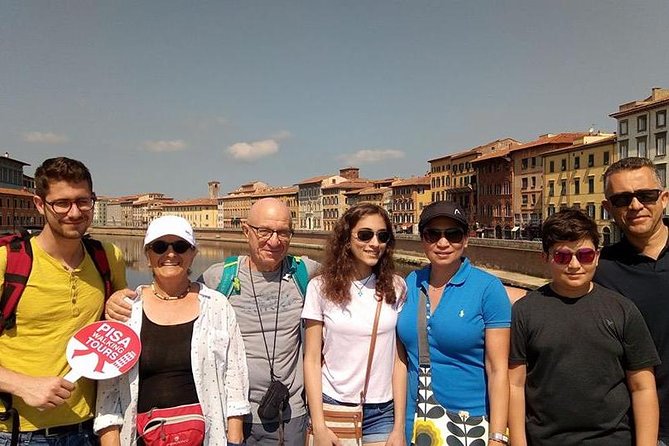
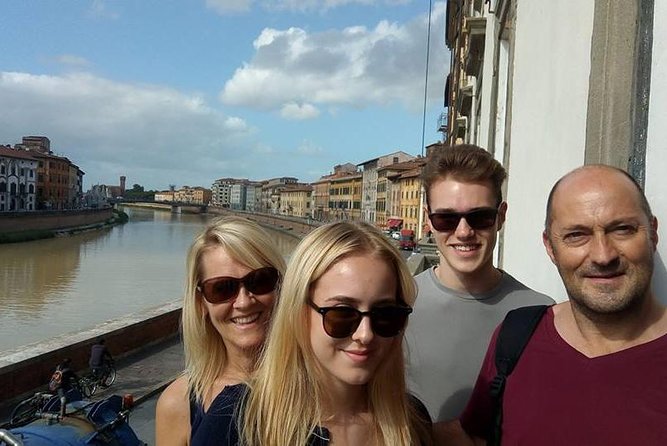
At the end of Corso Italia, you reach the Arno riverbanks and Ponte di Mezzo, the main bridge of the city center. Here you’ll admire beautiful buildings, including Palazzo Blu, and take in the river view.
This is one of the most important conceptual stops on the walk. Pisa is a river city, and the Arno is more than scenery. It shaped movement, commerce, and where power clustered.
The tour gives you about 20 minutes in this area, which is the right amount of time for:
- photos from a stable viewpoint
- a pause to follow the guide’s explanation of how Pisa’s center works
- taking in the riverfront streets you’ll walk next
If you’re the type who likes to understand what you’re seeing, Ponte di Mezzo is where it starts clicking. You can stand there and connect the pieces in your mind.
Stop 6: Borgo Stretto on the north bank, Medieval Pisa at street level
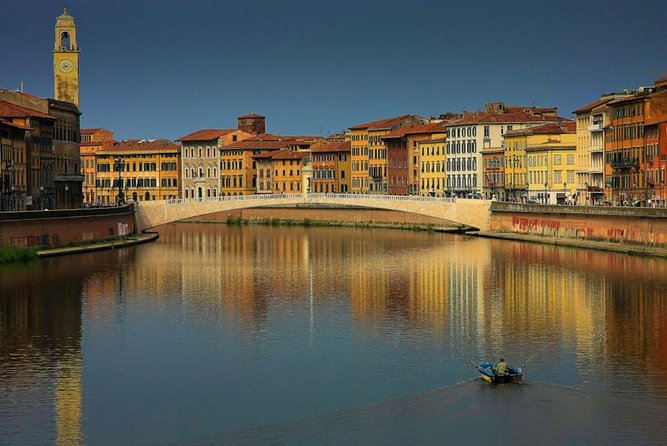
Once you cross the river, you move along the north bank to Borgo Stretto. This is described as the busy area in the heart of Medieval Pisa, and that description feels accurate when you’re actually walking it.
You’ll spend about 20 minutes here, so it’s not just a photo moment. It’s a chance to experience the street-level vibe of the old city: dense urban fabric, busy foot traffic, and the sense that you’re moving through a historical core.
The value here is that you’re not only seeing “old stuff.” You’re walking through the way people move through it now. That’s what turns medieval architecture from a concept into something human.
If you’re traveling with family, this segment is also a good energy level. It’s active enough to keep attention without demanding intense museum focus.
Stop 7: Piazza dei Cavalieri, political power and late Renaissance architecture
Next comes Piazza dei Cavalieri. This plaza was once the political center of the Medieval Maritime Republic of Pisa, and today it’s known for interesting late Renaissance architecture.
You’ll have about 20 minutes here. That length is ideal, because a plaza like this needs time for viewing angles. You can look across the space, get a feel for the layout, and then understand why it mattered politically in earlier centuries.
What I like about this stop is the way it connects power to place. It’s easier to remember history when it has a setting you can mentally revisit. After this, Piazza dei Miracoli won’t feel like an isolated highlight. It will feel like the other side of Pisa’s major public story.
Stop 8: Piazza dei Miracoli, external visit to the Cathedral and Leaning Tower zone
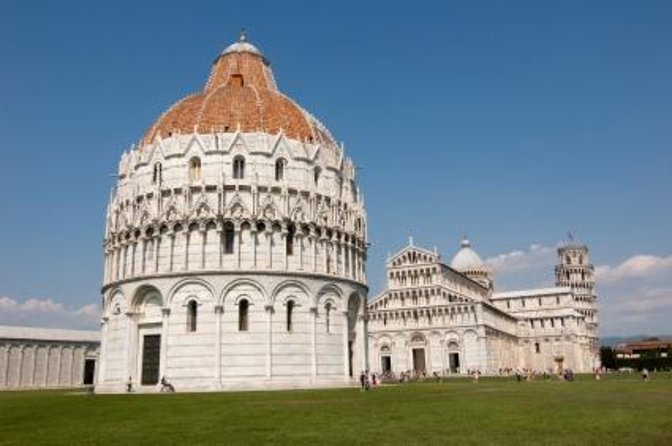
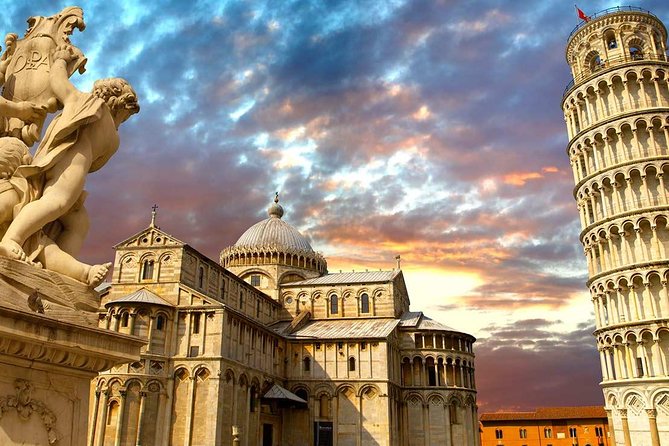
Finally, the tour ends at Piazza dei Miracoli, the UNESCO protected monumental complex with the Cathedral of Pisa and the Leaning Tower, also called the Square of Miracles.
This is an external visit, with about 20 minutes at the end of the walk. The service ends around noon, and the tour ends at the bottom of the Leaning Tower in Piazza del Duomo.
I like ending here because the walk is already done and your brain is switched on. You arrive with context, so you’re not just staring at the most famous angle. You notice relationships between structures and you understand why this area is so important.
Keep in mind the limitation: you’re not here for long interior time during the tour itself. If you want to go inside or climb, plan that as a separate activity after the walk.
What the small-group size and headsets really change for you
A tour can promise a lot, but the small details decide if it’s enjoyable. In this case, two things repeatedly make the experience smoother.
First, the group limit of 15. That keeps the pace manageable and reduces the feeling of being herded. It also makes it easier for you to hear directions and keep track of where you are in the group.
Second, the headsets. When a guide is speaking in front, the earset system lets you focus on walking and looking instead of fighting to hear. It’s also helpful for photo pauses, because you can keep listening while you stop.
Add David di Giacomo into the mix, and you get the kind of guiding that feels interactive. The tone from his style, as reflected in feedback, tends to be warm and responsive, with humor mixed in. If you ask a question, it’s more likely to turn into a real explanation instead of a quick nod and resume.
Time and pace, why 2 hours feels short but works
Two hours in Pisa sounds short, then you realize how much walking and stopping you get in that time. Your stop times are spread out across multiple areas, with most segments around 5 to 20 minutes each.
That structure prevents two common problems:
- you do not spend too long stuck in one location
- you do not sprint through everything with no context
The tradeoff is the “not enough time” feeling. It’s easy to think you could linger at every stop. You will probably want more time at the river and in the Cathedral Square zone, and you might also want to extend the medieval streets after the walk ends.
That’s not a failure. It’s a design choice. Think of this as your guided on-ramp. It gives you direction, then lets you choose where to spend extra time with your own rhythm.
Value for $31.46: what you get, and what makes it worth it
At $31.46 per person, this tour sits in a very reasonable range for a guided walk, especially because it includes headsets and a local guide for the full 2 hours. You’re also not paying extra admission at the stops listed, since admissions are free for the tour activities.
What makes the value stand out is the mix of:
- guided context at key civic, street, and river locations
- time-saving structure for learning the city layout quickly
- a small group size that keeps the experience relaxed
If you’re only staying a day or you want a smart introduction without spending the afternoon guessing, this pricing can feel like a shortcut. You pay to buy clarity, then you spend your remaining time turning that clarity into your own itinerary.
Practical tips so you get the most out of your walk
You’ll have the best experience if you treat this like a walking orientation plus storytelling session.
Wear comfortable shoes, because you’re moving through multiple neighborhoods and bridges. Bring water and sun protection, since parts of the walk may be exposed. If you’re sensitive to heat, consider planning your Pisa days with breaks, and use the tour’s natural stop-and-look breaks as your pacing cues.
Also, when you arrive, locate David at the start area early. The meeting point is outside a busy transport hub, and that early minute prevents confusion later.
Finally, decide what you want next. This tour ends near the Leaning Tower zone. If you want to go inside or climb, reserve that time right after the tour so you’re not scrambling to set up later.
Should you book the off-the-beaten-path Pisa walk?
Book this tour if you want a smart, human-sized introduction to Pisa that goes beyond the obvious. It’s a great fit if you:
- want to learn your bearings fast
- enjoy street-level history and city stories
- like having your questions answered in real time
- prefer a guide’s route rather than improvising for hours
Skip it only if you’re hunting for major interior access, long museum time, or a slow, stand-alone photo marathon. This is an efficient guided walk. It’s meant to set you up for the rest of your day at Piazza del Duomo.
If you’re trying to make one decision in Pisa, this is the kind of purchase that buys time back. You’ll finish with a better sense of the city and a clearer plan for what to do next.
FAQ
What is the meeting point for the tour?
The tour meets at Pisa Centrale, at the fountain outside Pisa Centrale train station. The guide will hold a sign saying Pisa Explorer.
What time does the 2-hour tour start?
The start time is 10:00 am.
Where does the tour end?
The tour ends at Piazza del Duomo, at the bottom of the Leaning Tower.
Is this tour conducted in English?
Yes, the tour is offered in English.
Is transportation included?
No, transportation to and from the attractions is not included.
How long is the guided portion?
It is approximately 2 hours.
Does the tour include headsets?
Yes, headsets are included so you can hear the guide clearly.
What is the group size?
The tour has a maximum of 15 travelers.
Are admission tickets required?
The stops listed show admission ticket free for the tour activities.
Can I cancel for a refund?
Yes. You can cancel up to 24 hours in advance for a full refund.
Are service animals allowed?
Yes, service animals are allowed.
More Walks around Pisa
- Pisa: Guided Walking Tour with Optional Leaning Tower Ticket
★ 3.8 · 225 reviews - Pisa: 2-Hour Walking Tour
★ 4.8 · 147 reviews - Milan: Guided Walking Tour & Last Supper Visit with Ticket
★ 4.7 · 5,409 reviews - Naples: Street Food Walking Tour with Local Guide
★ 4.8 · 4,256 reviews
Latest reviews around Pisa
- Florence and Pisa from Rome: Enjoy a Full Day Small Group Tour★ 4.5 · 687 reviews
- From Rome to Tuscany: Discover Florence and Pisa in One Day★ 4.5 · 804 reviews
- Square of Miracles guided tour with Leaning Tower ticket (option)★ 4.5 · 108 reviews
- Chianti Half-day Wine Tour in the Tuscan’s Hills from Pisa★ 5.0 · 123 reviews
- Pisa all inclusive: Baptistery, Cathedral and Leaning Tower guided tour★ 4.5 · 473 reviews
- Pisa: Beyond the Tower (1h round-trip tour)★ 5.0 · 238 reviews
- Pisa’s Ultimate Food Tour: Full Tuscan Meal by Do Eat Better★ 5.0 · 263 reviews
- PRIVATE tour in Carrara marble quarries with 4×4 vehicles★ 4.5 · 233 reviews
Walking Tours, compared.
Guided Walking Tour & Last Supper Visit with Ticket
Read our review →
Rialto Bridge & Offbeat Unusual Venice Walking Tour
Read our review →
Private 3 hrs Venice Tour: St Mark’s, Walking tour & Boat tour
Read our review →
Skip the line: Uffizi and Accademia Small Group Walking Tour
Read our review →Browse the lists this tour appears in